Chiang Mai Photo Spots Guide: old-city temples at seven, Doi Suthep and the forest temples
Chiang Mai is the cool, slow half of a Thai trip, and a city of mornings. Inside the moat the temples are at their best in the first hours, when the brick is warm with low sun and the lanes are still quiet; on the slopes of Doi Suthep the forest temples hold soft light long after that; and the mountain temple at the top is calmest before the tour vans arrive. What spoils it is less the hour than the month — from about February to April the haze can hide the mountains for weeks — and a session that forgets these are working temples, not sets.
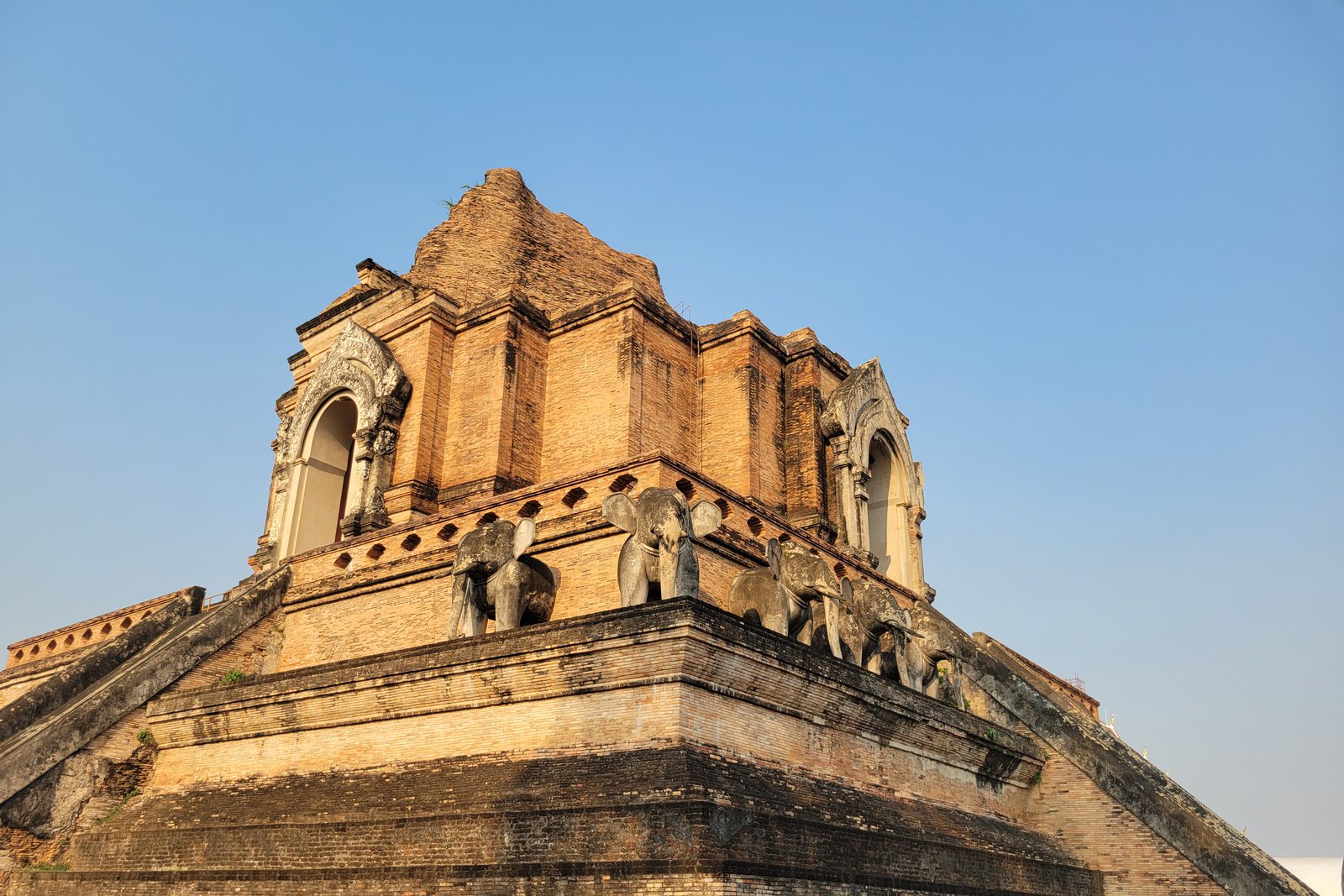
Wat Chedi Luang at seven
The great brick chedi of Wat Chedi Luang, in the middle of the old city, was broken by an earthquake in the sixteenth century, and the ruin is more striking than a complete tower would be. Early light is the reason to be here at seven: the sun comes in low across the grounds and turns the brick from grey to rose, and the monks crossing the courtyard in saffron are going about their morning, not posing. Check the opening hours before you go.
The temple rules are the same as anywhere in Thailand, and they are meant: shoulders and knees covered, shoes off before entering a hall, never climbing on the ruin or any Buddha image, never pointing your feet at an image or a monk, and keeping your head lower than the Buddha's. A woman does not touch a monk or hand him anything directly. The small shrine of the city pillar in the grounds is closed to women, and a sign at its entrance says so. Kisses and lifts belong outside the temple walls.
Next door, Wat Phan Tao's hall is built of dark teak, and its carved front holds the same soft light at any hour. It is a small temple and a quiet one; the frame is the wooden facade and the doorway, and the interior is left to the people who have come to pray.
Wat Phra Singh and the carved halls
At the western end of the old city, Wat Phra Singh has some of the finest carved wooden halls inside the moat: gilded gables, deep eaves, the steep tiered roofs of the north. The halls stay softly lit at any hour, which makes this the temple to keep for later in the morning, when the brick at Wat Chedi Luang has gone flat. Inside, follow the signs about photography, and photograph a sacred image on its own rather than posing with it.
Chiang Mai's Sunday walking-street market runs from Tha Phae Gate to Wat Phra Singh on Sunday afternoons and evenings, which makes that half of the old city crowded and slow. Plan an old-city session for the morning, or for another day.
Tha Phae Gate and the moat before the traffic
Tha Phae Gate is the east gate of the old city: a stretch of restored brick rampart with the moat in front of it. Early in the morning the low sun comes from behind the camera and lights the face of the wall, and the square in front is empty before the traffic starts circling the moat. It is the frame that says Chiang Mai in one picture, and it is gone by mid-morning, when the square fills.
The moat corners and the remaining stretches of wall make quieter frames along the same circuit. In mid-April the moat and the old-city streets are where Chiang Mai celebrates Songkran, the Thai New Year, a public holiday from 13 to 15 April: water is thrown in the streets, nobody stays dry, cameras included.
Wat Umong: tunnels in the forest
At the foot of Doi Suthep, west of the city, Wat Umong is a forest temple where monks still study, and it feels like it: tall trees, a quiet lake, and brick tunnels with Buddha images set in niches along the walls. The light under the trees stays soft all day, which makes it the honest answer to what to shoot at noon. Voices stay low, the images in the tunnels are photographed on their own, and the couple frames belong to the trees and the tunnel mouths rather than the shrines inside. It is the calmest setting in the city for an engagement session in Chiang Mai.
Wat Pha Lat: the forest temple on the mountain
Higher up the slopes of Doi Suthep, Wat Pha Lat is a forest temple with water running over the rocks and the city laid out below. Most people walk up on the Monk's Trail, a forest path from the top of Suthep Road that takes most walkers under an hour; the temple can also be reached by road, which is how the camera bags usually travel. A walk up in the heat ends in sweat, so the photographer plans which way you arrive.
It is a working monastery, small and quiet, and it asks for the same restraint as the old city: covered shoulders and knees, nothing posed with the images, voices down. On a clear day the view over the city is the frame; in the haze months it is simply not there. It is one of the places in Chiang Mai where a proposal works without an audience.
Wat Phra That Doi Suthep at the top
At the top of the mountain, at about a thousand metres, Wat Phra That Doi Suthep is reached by a 306-step staircase lined with naga serpents, or by a funicular beside it. The staircase is the frame, and it is calmest early, before the tour vans arrive. Foreign visitors pay an entrance fee; shoulders and knees are covered, and shoes come off before the inner terrace around the golden chedi. On a clear morning the terrace looks out over the whole valley; in the haze months the valley disappears.
An arranged shoot on temple ground starts with asking the temple, and Doi Suthep is a place of pilgrimage before it is a viewpoint: keep the posed frames to the staircase and the outer terrace, and let the chedi be photographed on its own.
Outside the city: Bo Sang, Mae Kampong and the rice fields
Bo Sang, about half an hour east of the city, is the village of hand-painted paper umbrellas, and the workshops where painters sit at their tables are as photogenic as the umbrellas themselves; ask before photographing someone at work. Further east, about an hour and a half by road, Mae Kampong is a hill village of wooden houses among coffee and tea, with mist in the valley on cool-season mornings — never guaranteed. It is a lived-in village, so homes and kitchens stay private.
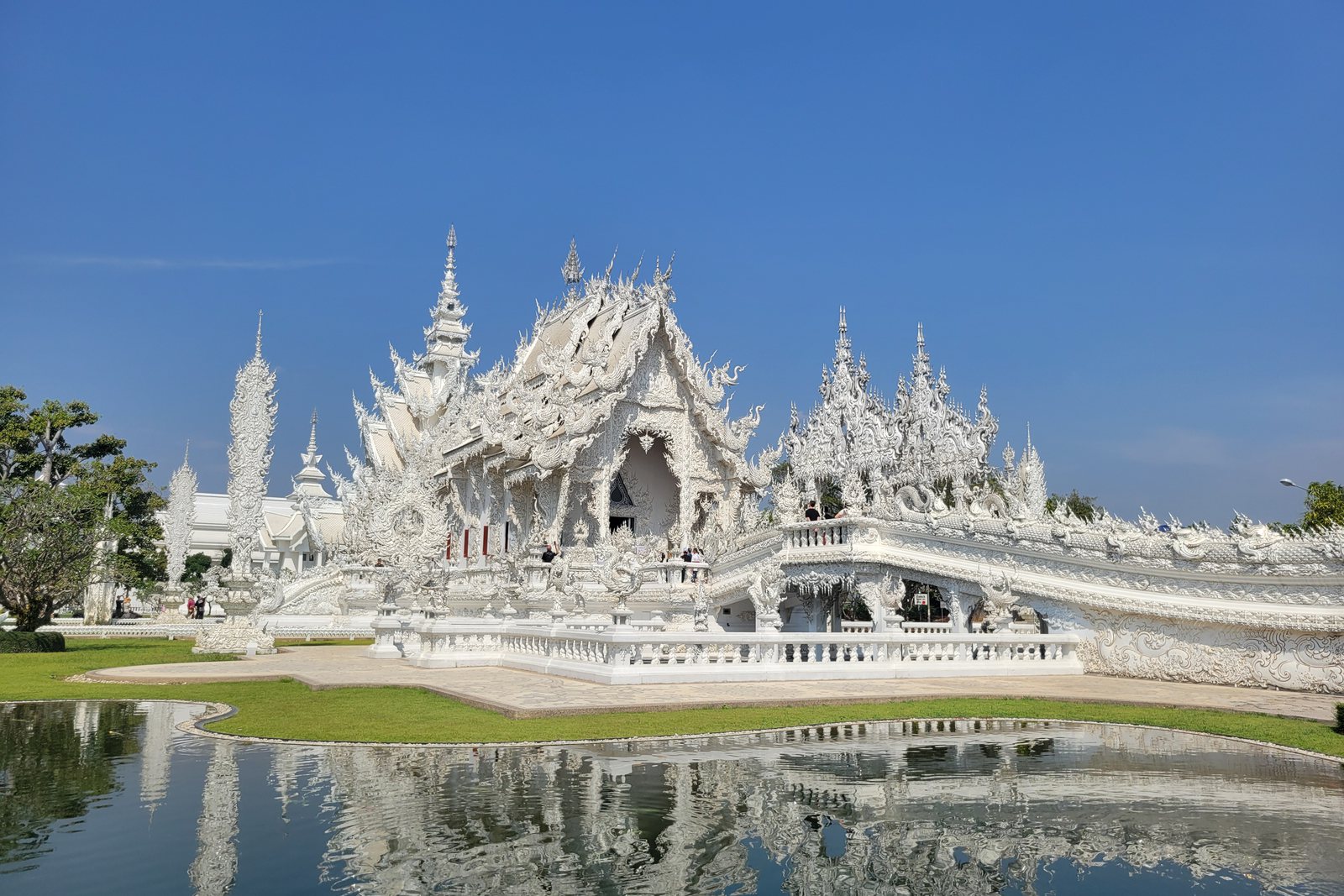
The rice fields around the city run on the rains: green from about August, gold towards the harvest in late October. And three hours or more north by road, the art temples of Chiang Rai deserve a night of their own rather than a rushed day trip.
The north's own calendar
November to January, sometimes into early February, is the season Chiang Mai is made for: cool, clear mornings that want a light layer, the clearest skies of the year and the mountain views at their sharpest. From about February to April, smoke from seasonal burning hangs over the north, usually worst in March; the mountains can disappear for weeks and the sky goes flat and white. If your trip falls then, plan the viewpoints for another month and keep the session to close frames — old-city lanes, temple courtyards, teak halls, the tunnels at Wat Umong — and check the air-quality index the day before, above all with small children or anyone with asthma. The rains run from about May to October and turn the valley green.
The November full moon usually brings Loy Krathong and, in Chiang Mai, Yi Peng on the same nights: small offerings floated on the river, paper lanterns hung across the streets and crowds on the riverbanks. It is beautiful, crowded and regulated. Sky lanterns are banned in much of the city and near the airport, releases happen at organised events and flights are rescheduled, so check the current year's rules — and never release a lantern outside an authorised event. The date moves with the moon; check it for your year.
The airport sits just outside the old city, and no drone may fly within nine kilometres of an airport without approval, which takes in most of the city. Ask whether the photographer flies a registered drone rather than bringing your own.
Planning a Chiang Mai photoshoot
Start at seven. An old-city session — Wat Chedi Luang, Wat Phan Tao, Tha Phae Gate — fits into an hour and is over before the heat; the forest temples and Doi Suthep make a second, longer morning with a car. Both suit a couples session in Chiang Mai and the unhurried pace of the north; see what a couples photoshoot usually covers.
Bring a light shirt or a sarong for every temple, shoes that slip off and, in the cool season, a layer for the first hour. Book the cool months early, and keep a spare morning if the session depends on a view.
A photographer who works here knows which temple opens its gates first, which hall allows photography and whether the mountain is visible today. Read the destination page for Chiang Mai, check how it works, and browse photographers online.
Want professional photos in Chiang Mai?
Browse portfolios, compare packages, and book a verified local photographer in minutes.