What to Wear for a Photoshoot in Thailand: heat, short golden hours and temple dress
What you wear for a photoshoot in Thailand has to survive four things: heat that builds by mid-morning, light that is soft only briefly at either end of the day, temples that ask for covered shoulders and knees, and the sea, which tends to get into the session whether or not it was planned. What works is simple: light natural fabrics that don't show the heat, colours that sit with the place, a layer for the temples, shoes that come off — and a session timed so that the clothes are not fighting the sun.
The light you are dressing for
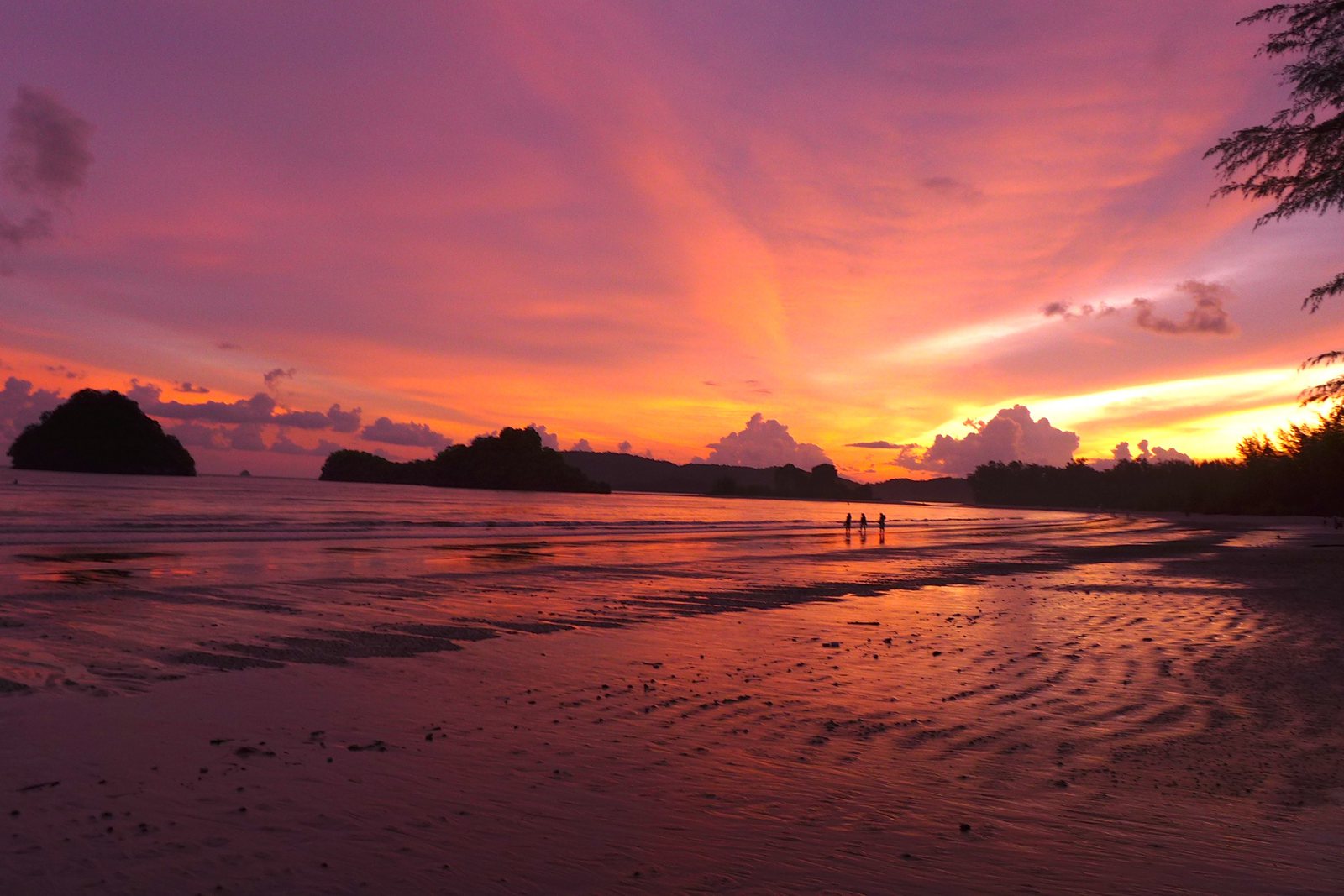
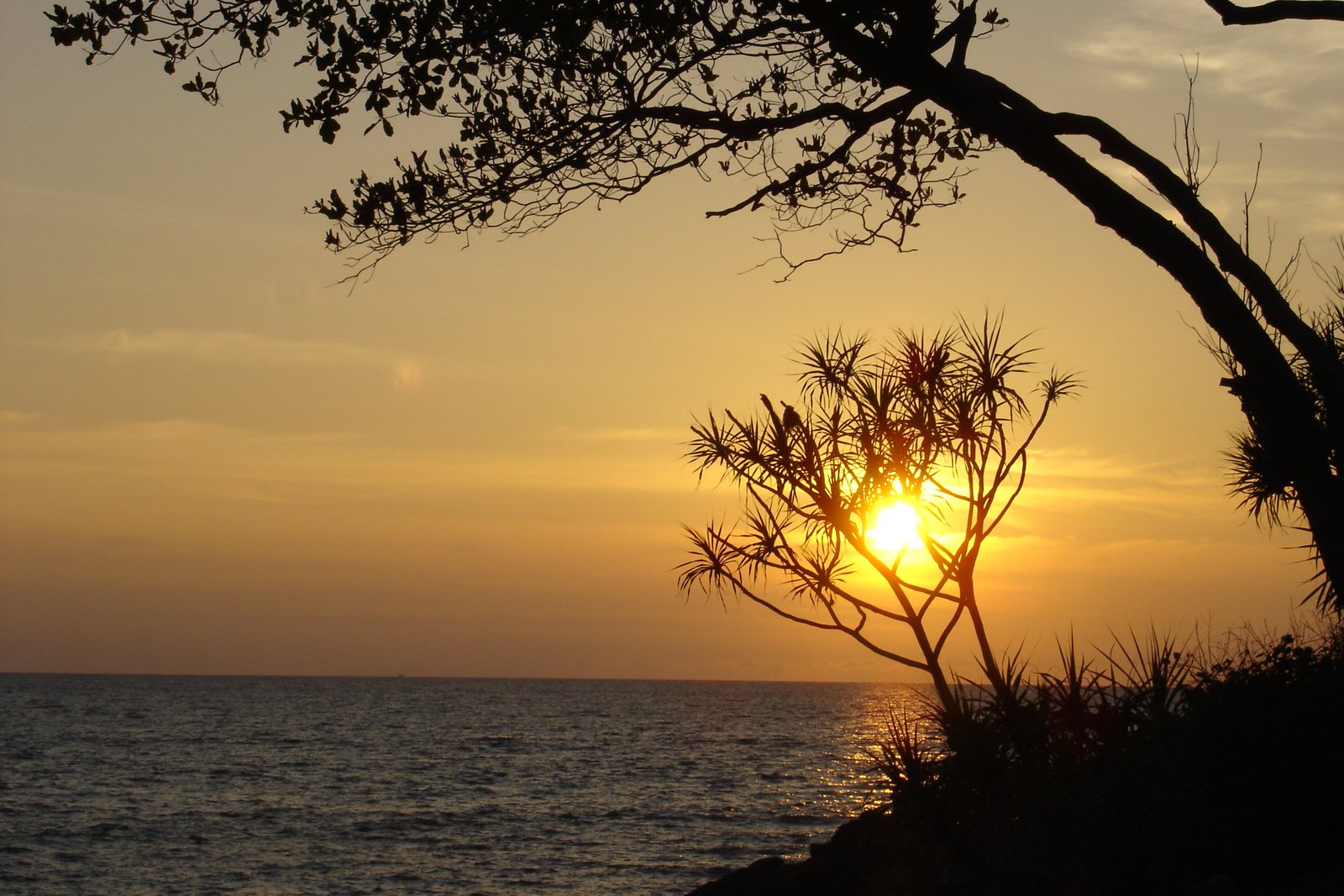
The sun rises and sets between roughly six and seven o'clock all year, and it climbs fast. The soft, low light lasts only a short while; by mid-morning the heat and the hard overhead light have taken over, with shadows falling straight down into the eyes. An hour that starts at sunrise or ends at sunset gives more than two at noon. In Bangkok sunset moves by only about an hour across the year, so a photographer plans an evening session by the day rather than by the season.
That light favours plain, matte fabrics in middle and light tones, which glow when the sun is low; shiny satin and sequins flare, and very dark clothes lose their shape in the shade. A hat is for the walk there: its brim throws a shadow across the face, so it comes off for the frames. So do sunglasses, which after a week in the sun leave pale rings — one more reason to book the session early in the trip.
Heat: fabrics that don't show it
The hot season runs from about mid-February to mid-May, with April the hottest month, and even in the cooler months the middle of the day is hot. Linen and cotton, cut loose rather than fitted, breathe and move; synthetic fabrics trap the heat and cling. Sweat shows most on mid-grey and pale blue and least on white, on deep colours and on small prints. Linen creases, which looks relaxed rather than untidy in pictures — let it.
In the hot season, keep the session to the first hour after sunrise or the last before sunset, and count the walk from the car as part of it: a ten-minute climb to a viewpoint can do more damage to a shirt than an hour of shooting. Bring water, a small towel and blotting papers, and put the outfit on as close to the location as you can. Make-up in this humidity wants to be light and set; hair that frizzes will frizz, so choose a style that is meant to move.
Colours that sit with the place
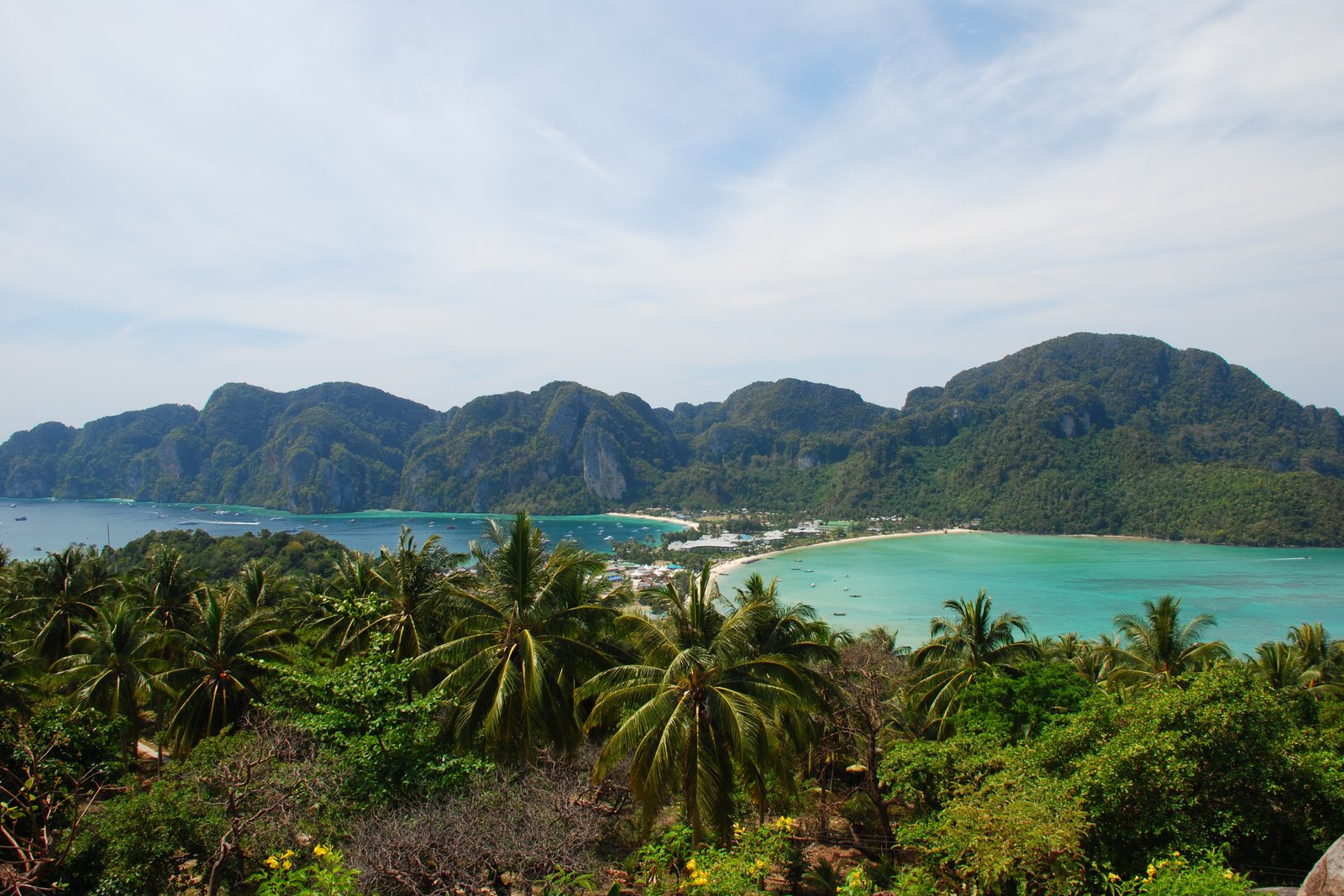
Thailand's backdrops are strong, so clothes do best when they step back from them. Against Krabi's grey limestone, green water and pale sand — Railay, the Phi Phi islands — white, cream, sand, soft terracotta and dusty blue work, while bright green disappears into the jungle. At the temples, against white stucco, gold and glazed tiles, solid colours hold their own where busy prints fight the decoration. Ayutthaya's ruins are weathered red brick, pale stucco and green lawns: cream, white, olive and navy sit well, while brick-red and orange vanish into the walls and into the saffron cloth draped over the Buddha images.
In Phuket Old Town, the Sino-Portuguese shophouses of Thalang Road and Soi Romanee are painted in pastels: wear neutrals, or one solid colour that contrasts with the wall rather than a shade that matches it. After dark in Bangkok's Chinatown the neon does the colouring; white and pale fabrics pick up every sign, and black disappears. Couples look best coordinated rather than matched — one palette, two different outfits — and logos, neon and fine stripes are better left in the suitcase.
Temple dress for both of you
For any route with a temple in it, shoulders and knees are covered — for everyone, men included — and dress is checked at the gate of the big Bangkok temples. The easy solutions: a light shirt over a dress, a sarong over shorts, trousers or a long skirt in a fabric that breathes. Nothing see-through, nothing cut low. The Grand Palace is the strictest site in the city — shoulders and knees covered, no photography inside the chapel of the Emerald Buddha — and not a place for a session.
Shoes come off before entering a hall, so slip-ons save time at every door; laces at a temple with several halls are a small misery. Temple rules apply in a wedding dress or a costume exactly as in shorts: no posing with a Buddha image, never higher than its head, never pointing your feet at an image or a monk, and kisses and lifts outside the temple walls. Rules for photographers are set temple by temple, so the photographer checks each one before the day.
Beaches and boats
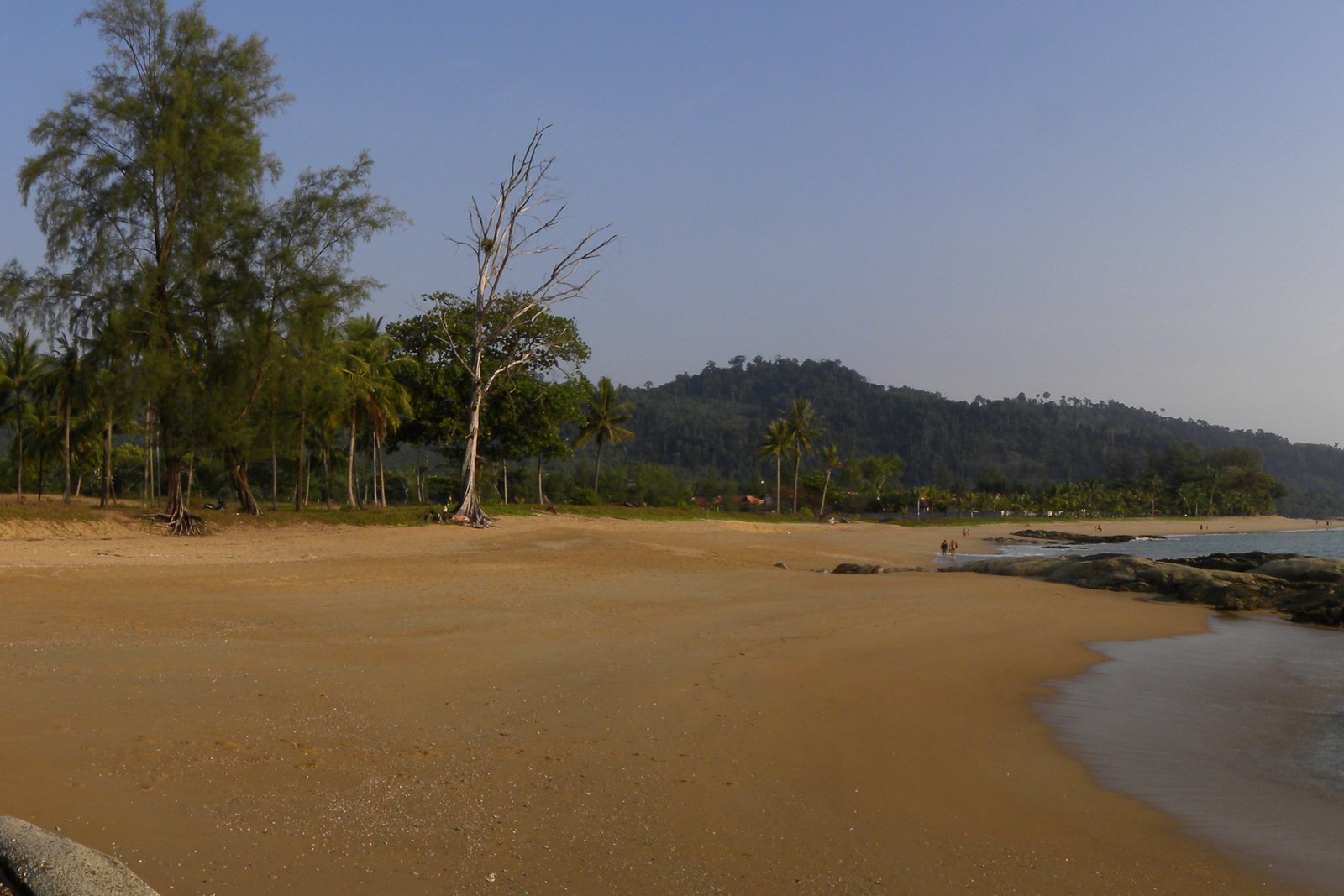
Sand at midday is hot underfoot, one more reason the beach session belongs to the end of the day, when barefoot is the look and the sand has cooled. Many island sessions start by wading out to a longtail, so wear something that doesn't mind salt water and carry the outfit for the pictures in a dry bag. On the boat the wind undoes hair and lifts skirts, and a hat without a strap ends up in the sea. Long hems look beautiful on a beach in the wind and come back wet and sandy: knee-length, or a maxi you can gather in one hand, is the practical compromise. Pale, thin fabrics turn see-through when wet.
The rule that matters most: the session never follows the snorkelling trip. Salt, sunburn and a day in the sun show in every frame — red shoulders, white strap lines, hair stiff with salt — so put the session before the boat day, or give it a day of its own. Bring repellent for the dusk end of an evening session, above all near mangroves and gardens.
Rain, and a plan B under cover
From about mid-May to mid-October, rain in Bangkok usually comes as a heavy afternoon downpour rather than a grey day, and the hour after it — streets shining, air washed clean — is one of the best of the day. Plan for it: a fabric that dries fast, sandals that grip on wet tiles, and a plan B under cover. In Bangkok that means temple cloisters; in Phuket Town, the covered walkways along the shophouses of Thalang Road; in Chinatown, the wet tarmac that doubles every sign. On the islands the plan B is usually another day, because the boat, not the rain, is the problem.
Dressing children for the heat
Children feel the heat first and the boredom second, so their session is short — about an hour — in the first hour after sunrise or the last before sunset. Dress them in light cotton they can run in, with a hat for the walk there and water within reach. Bring a spare outfit, because children end up in the sea whether it is planned or not. On the Andaman coast in the rainy months, a red flag means nobody swims, children included. Sandals with straps beat flip-flops on rocks and boat steps.
Cool mornings in the north
Chiang Mai and Chiang Rai keep their own calendar. From November to January, sometimes into early February, mornings are cool enough for a layer: bring a jacket or a cardigan that works in the pictures, not only one to take off before them. Wat Phra That Doi Suthep stands at about a thousand metres at the top of a 306-step staircase, which is the frame and also a climb, so the outfit goes on at the top. From about February to April the north sits under the haze of the burning season, worst in March; the light turns flat and white, and clear, solid colours help where the sky does not.
Thai traditional dress
Renting Thai traditional dress, chut thai, with the dressing and often the hair included, has become a popular way to be photographed at the temples. The shops cluster near Wat Arun in Bangkok and around the ruins in Ayutthaya, where the trend took off with the 2018 TV drama Love Destiny. Build the dressing time and the shop's return time into the slot you book, and check its terms first: hours, sizes and what is included vary from shop to shop. Layered costume is warm, so book an early slot, ahead of the heat and the crowds.
Temple rules apply in costume exactly as they do in shorts, and temples set their own rules for photographers: since January 2026 Wat Arun has required photographers who work with costume-rental shops to complete its etiquette training. Check that it still applies when you book.
Planning what to wear for a Thailand photoshoot
Pack two outfits, not five: one for the temple part of the day and one for the beach or the street, each in a breathable fabric and a colour that sits with the place, plus a light layer that covers the shoulders and shoes that come off. Send the photographer a picture of both before the day; they know which suits the light at your hour.
For couples, see what a couples photoshoot usually covers; with children, a family photoshoot, and for a beach evening with them on the west coast of Koh Lanta, family sessions on Koh Lanta. For the Old Town and the west-coast sunsets, read the destination page for Phuket. Check how it works, and browse photographers online.
Want professional photos in Phuket?
Browse portfolios, compare packages, and book a verified local photographer in minutes.