Island-Hopping Photoshoots in Thailand: boats, tides and timing between the islands
On Thailand's islands, two timetables decide a session more than the photographer does: the boats and the tide. The light is best in the first hour after sunrise and the last before sunset, and an island at either end of the day belongs to whoever slept on it — the day boats arrive later. A sandbar is a picture only at low tide. And a crossing that runs every day in February can be cancelled at short notice in September. What ruins an island session is rarely the weather on the beach. It is a boat that left without you, a sandbar under water, or a crossing booked for the day before your flight home.
The boats, from longtail to car ferry
Longtails do the short hops: narrow wooden boats with an engine mounted on a long propeller shaft at the back — loud, open and wet. They take you from Ao Nang or Krabi Town to Railay, a short ride along the cliffs; from Sairee Beach to Koh Nang Yuan, ten to twenty minutes; and around Phi Phi at first light, when a hired boat runs under the cliffs of Phi Phi Leh before anything else is on the water. Often there is no pier: you wade out to the boat and wade in at the other end, so wear shorts or a skirt you can lift and shoes you can take off. The ribbons and garlands tied to the bow are offerings to the boat's guardian spirit, and boat crews do not step, sit or stand on it — ask the boatman before anyone poses there.
Ferries and speedboats do the crossings between islands. From Phuket or Krabi to Phi Phi, the big ferries take about two hours and the speedboats about one. In the Gulf, Koh Phangan is about half an hour by boat from Samui and Koh Tao about an hour and a half; from the mainland, the boats to Koh Tao leave from Chumphon and take about two hours. Koh Lanta is reached by road from Krabi with a short car-ferry crossing on the way, two to three hours in all depending on the queue at the ferry. Near Bangkok, Koh Larn is about 45 minutes by ferry from Bali Hai pier in Pattaya — check the last boat back before you plan a sunset there.
Airports, and the islands without one
Phuket and Koh Samui have their own airports, and Krabi has one on the mainland. Phi Phi, Koh Lanta, Koh Phangan and Koh Tao have none. Lanta's nearest airport is Krabi; Phi Phi is a boat from Phuket or Krabi; Phangan and Tao are boats from Samui or the mainland, and in rough weather those boats are the only way off. Khao Lak, on the mainland, is about an hour and a half by road north of Phuket airport, and its offshore islands, the Similans, are a day trip by speedboat — open only from mid-October to mid-May.
So put an island session early in your stay there, never on the last afternoon.
The first hours belong to whoever slept there
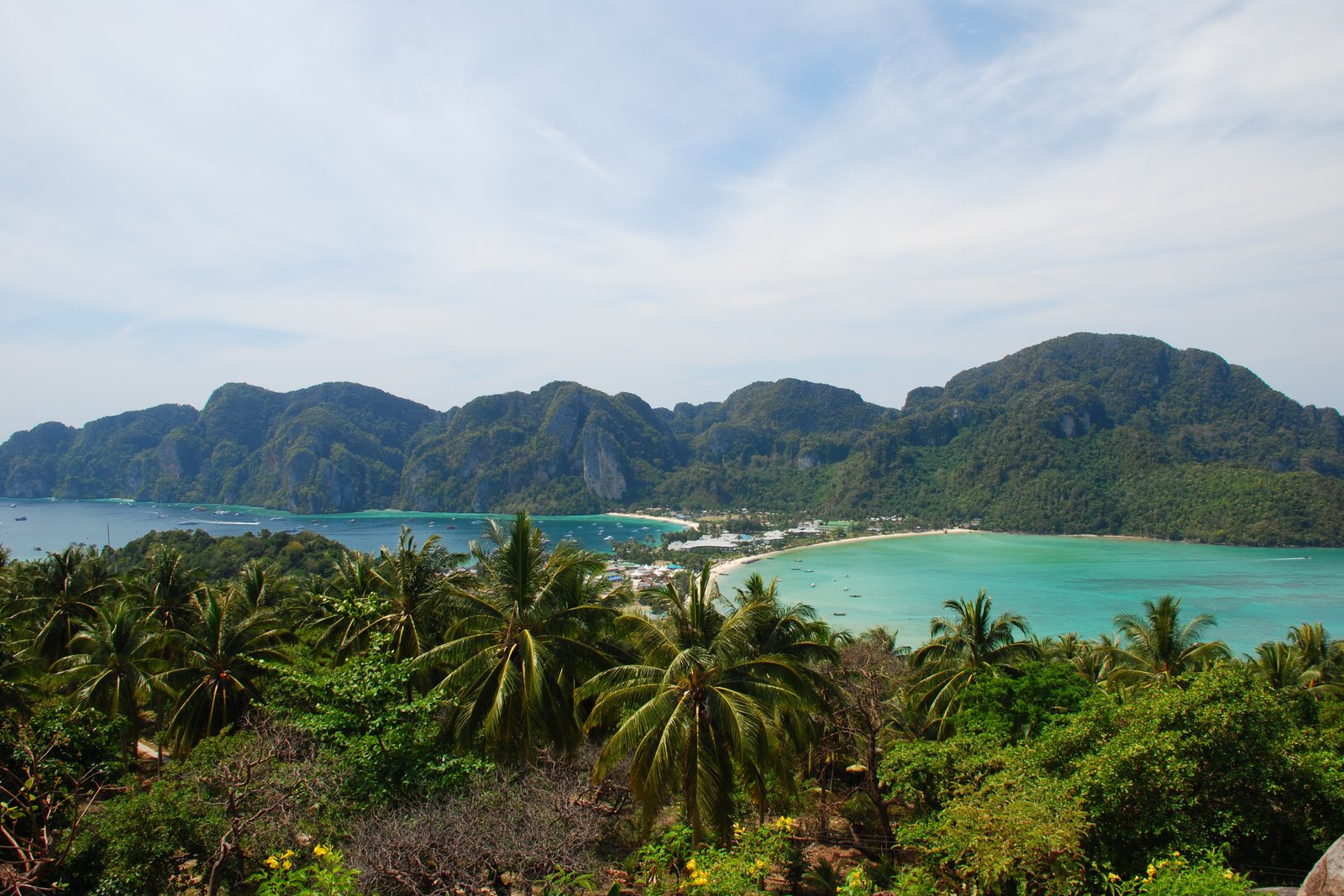
The ferries and tour boats from Phuket and Krabi need an hour or two to cross, so the island's early light is for whoever spent the night on Phi Phi Don. That means the viewpoint above the village at sunrise, looking down on Ton Sai Bay and Loh Dalum on either side of the island's narrow sandy waist, then a longtail to Phi Phi Leh before the tour boats: Pileh Lagoon between its cliffs, then Maya Bay.
Maya Bay is run under national-park rules. Boats no longer enter the bay; they moor on the other side of the island, and visitors walk in on a boardwalk. Swimming is not allowed, time on the beach is limited, and the bay closes for about two months every year — 1 August to 30 September in 2025 and 2026 — so check the current dates before you plan around it. On Koh Tao the same logic applies to Koh Nang Yuan, which is quietest early in the day, before the day boats from Samui and Phangan arrive: go as early as its hours for day visitors allow, and make the steep climb to the viewpoint before the heat.
Tides: the sandbars that come and go
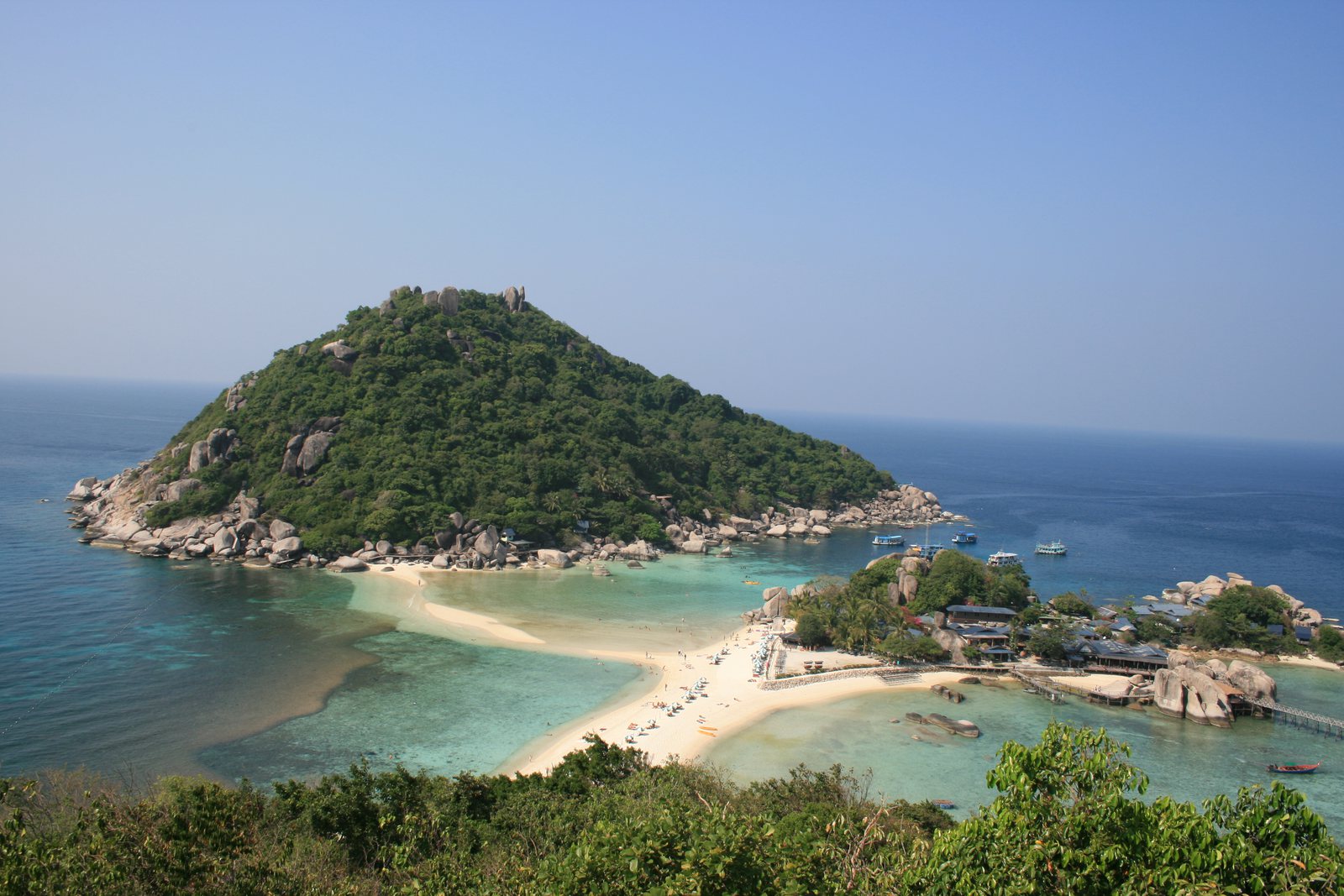
Three of the best-known island pictures are walks across water, and all three depend on the tide. Thale Waek, in Krabi, is the sandbar that surfaces between Koh Tup and Chicken Island at low tide, so you can walk out between the islands; it is above water for only a couple of hours, and the islands lie inside a national park. On Koh Phangan's north-west coast, the islet of Koh Ma is tied to the beach at Mae Haad by a sandbar that surfaces at low tide. And Koh Nang Yuan's three small islands are joined by a curving sandbar that narrows, and can go under, at high tide.
The low tide moves every day, so the date you book decides the hour: on one day it falls at dawn, on another in the hardest light of midday. The photographer reads the tide table for your date and sets the start time from it. If the low water and the good light do not meet on your day, the session goes somewhere else and the sandbar waits for another morning. Keep an eye on the water coming back: the walk back is planned, not improvised.
Seasons on the water
The two coasts run opposite calendars, and the boats follow them. On the Andaman side — Phuket, Krabi, Phi Phi, Khao Lak, Koh Lanta — the dry season from about November to April is when the sea is flat and the longtails run without drama. The southwest monsoon, from about mid-May to mid-October and usually wettest in September, brings swell, red flags on the west-coast beaches and boat trips cancelled at short notice. The speedboats to Lanta are cut back from May to October, and the Similans close.
The Gulf islands — Samui, Phangan and Tao — are dependable from about January to August and driest from February to April, which makes them the summer answer while the Andaman is in its monsoon. Their rough season is October to December, with November usually the wettest month, when ferries can be cancelled; for Phangan and Tao, ferries are the only way off. On Koh Phangan, check the full moon as well as the forecast: the Full Moon Party fills Haad Rin and the ferries every month around it, so plan around it or well away from it.
National parks and a private island
Much of the water worth photographing is national park: Mu Ko Phi Phi, the Similans, Ang Thong off Samui, Mu Ko Lanta at Lanta's southern tip. Foreign visitors pay their own entrance fee, and photography done as paid work inside a park can need the park's permission and a fee of its own; the photographer clears that in advance, which is one more reason to plan the boat day with them. Since 2021 Thailand's marine national parks have banned sunscreens containing oxybenzone, octinoxate, 4-MBC or butylparaben, so read the label before a park day.
Koh Nang Yuan is different: it is privately run, with its own entrance fee, its own hours for day visitors and a ban on plastic bottles and cans; bags can be checked at the pier, so bring a refillable bottle.
Packing for a session on the water
A dry bag for everything that has to stay dry: phone, papers, the change of clothes. A towel. Shoes that come off, for the wade out and the wade back. Hair tied for the ride and let down for the frame — a longtail at speed undoes any styling, and the wind takes unfastened hats overboard. Salt spray dries white on dark fabric, so the outfit for the pictures travels in the bag and goes on at the beach. If you get seasick, a speedboat in any swell will find it: take something before you board and eat lightly.
The most common mistake is the order of the day. A full day of snorkelling, sun and salt shows in every frame — sunburn, tired eyes, salt-stiff hair — so the session never goes on the evening after a long boat trip. Put it first, on the morning of the boat day, or give it a day of its own.
Three island mornings that work
On Phi Phi: a night on Phi Phi Don, the viewpoint at sunrise, a longtail to Pileh Lagoon and Maya Bay. In Krabi: the first longtail from Ao Nang to Railay, Phra Nang Cave Beach under its cliffs while it is still calm, and Thale Waek on another morning, when the tide is low early. On Koh Tao: the longtail from Sairee to Koh Nang Yuan, the viewpoint before the heat, and Sairee Beach again for the sunset. Koh Lanta needs no boat at all for its best session: the stilt houses of Lanta Old Town in the soft morning light on the east coast, and a west-coast beach at sunset.
Planning an island photoshoot
Choose the coast by the month, then the island, then the tide. Agree the start time with the photographer once the tide table for your date is known, give an hour or two to one place done properly rather than three islands rushed, and leave a spare day before any onward flight. Rescheduling for weather is free for both sides, and on the islands the reason is usually a cancelled boat rather than rain.
Read the destination pages for Phi Phi, Koh Tao, Koh Lanta and Krabi; for a walk across the water to Koh Ma, see proposals on Koh Phangan. See what a couples photoshoot usually covers, check how it works, and browse photographers online.
Want professional photos on the Phi Phi Islands?
Browse portfolios, compare packages, and book a verified local photographer in minutes.