Family Photoshoot in Thailand: the quiet beaches that work with small children
A family photoshoot on a Thai beach succeeds or fails on two things: the beach and the hour. The right beach is long and flat, shelves gently into warm, shallow water, and has nothing between the sand and the sea — no row of deckchairs, no road, no jet skis — so a child can run fifty metres without anyone shouting. The right hour is the first after sunrise or the last before sunset, when the sand is cool enough for bare feet and nobody is squinting. Get both right and a toddler who will not sit still becomes the best part of the pictures. Get either wrong and the session is an hour of hot, tired children in hard light. Here are the beaches that behave well with small children, and the rules that matter more than any of them.
What makes a beach work with children
Width matters more than beauty. A wide beach gives children a stage and the photographer the distance for frames of the whole family walking, running or swinging a child between two parents. Gentle shelving means the paddling frames happen safely at the edge, where wet sand reflects the light. Quiet matters twice over: fewer strangers in the background, and fewer distractions for a three-year-old. And the beach should be close to where you are staying — a long transfer before the session uses up exactly the patience the photographs need. One beach done properly beats a cross-island route every time.
Khao Lak: kilometres of sand to yourselves
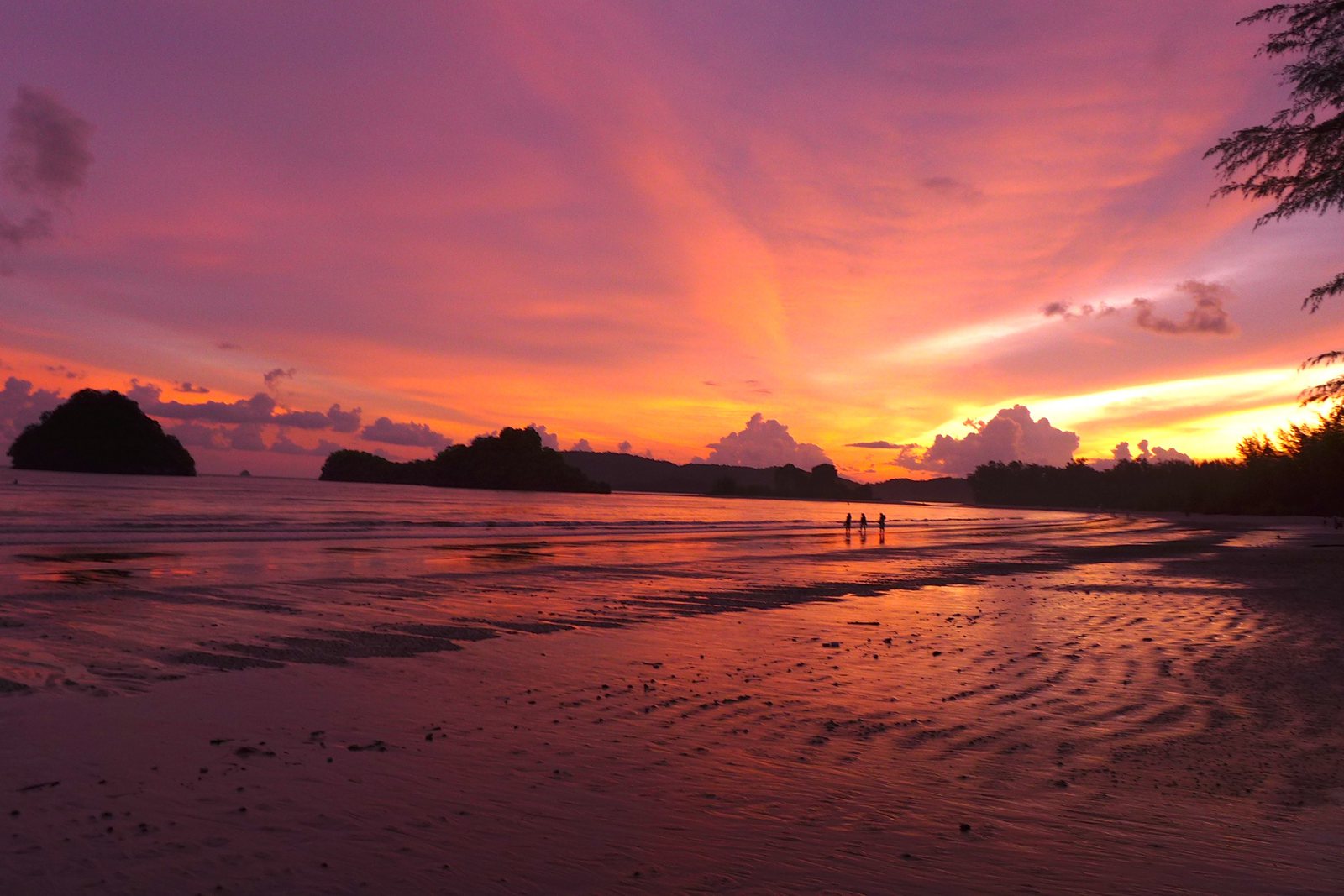
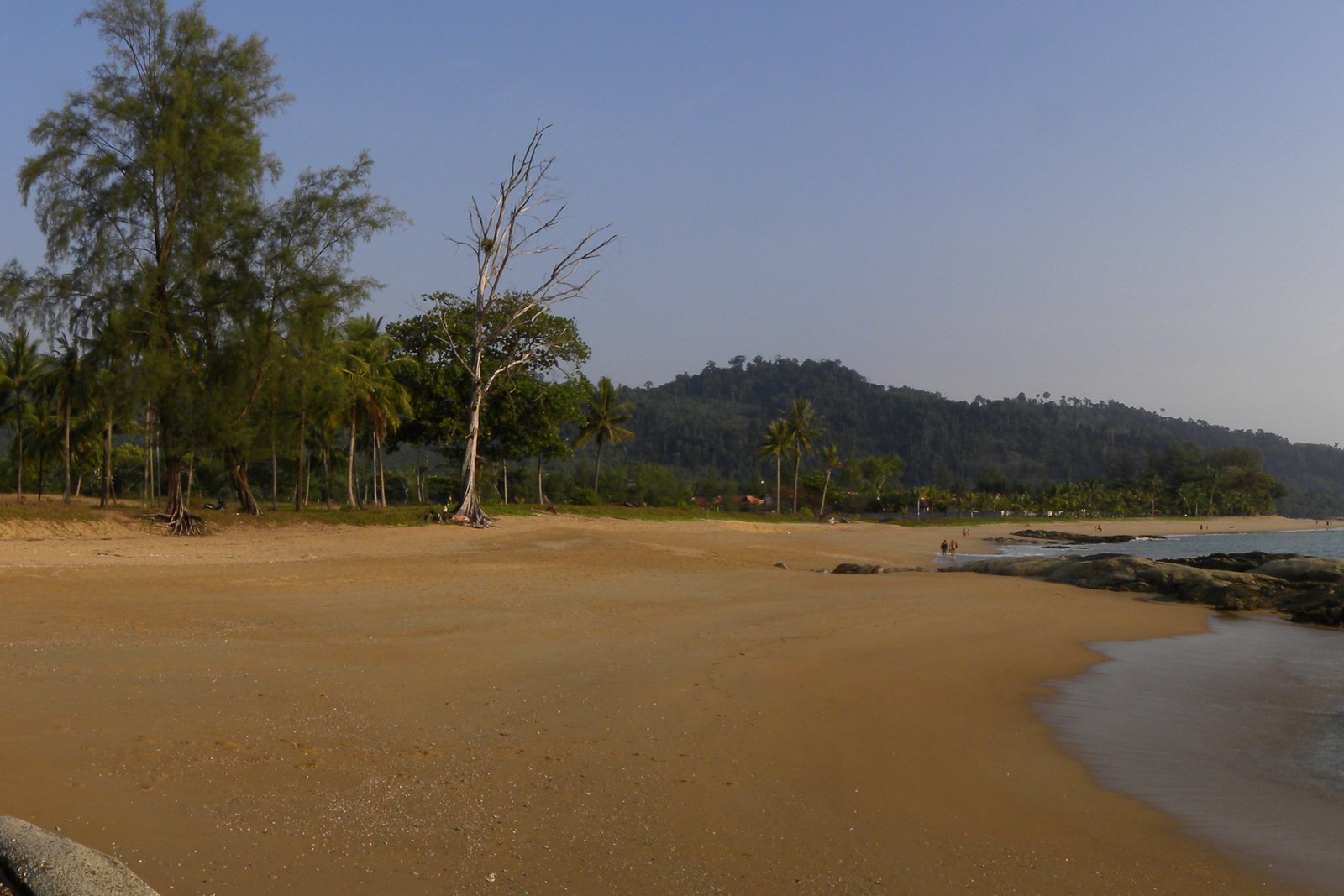
Khao Lak, about an hour and a half by road north of Phuket airport, is the Andaman coast at its calmest: a string of long sandy beaches backed by forested hills, low-rise buildings and room to walk for kilometres. Bang Niang and Nang Thong are wide and flat, and children run without a deckchair in the way. The beaches face west, so the session is the last hour before sunset, when the light turns soft and golden and the sun goes down into the sea behind the family. In the dry months, from about November to April, the water is calm enough for paddling at the edge.
Behind the coast there are waterfalls in the forest, a cool idea for a hot morning, and at the southern end Khao Lak–Lam Ru National Park protects a forested headland with rocky coves. Foreign visitors pay their own entrance fee, and photography done as paid work inside a park can need the park's permission, which the photographer clears in advance. Keep the session away from the evening after a Similan trip: the islands, open from mid-October to mid-May, are a long boat day, and tired children show it. See family sessions in Khao Lak.
Koh Lanta: gentle beaches and the Old Town piers
Koh Lanta is the island families choose for its pace. The west coast is one long beach after another, gently shelving, with little traffic on the road behind. Klong Dao, at the northern end near Saladan, stays shallow far out, which suits toddlers and makes for long, safe paddling frames; Long Beach has firm sand at low tide for running. Sunsets go straight into open sea.
The east coast is a different setting. Lanta Old Town is a single street of wooden shophouses and stilt houses over the water, with wooden piers where children watch the fishing boats come in. It faces the sunrise and suits a morning session, but people live and work on those piers, so the photographer asks before anyone steps onto one. At the island's southern tip the national park has monkeys: wild animals, so snacks stay zipped in the bag and nobody feeds them.
Lanta has no airport. From Krabi, the nearest, it is two hours or more by road with a short car-ferry crossing, which can queue in the busiest weeks, and the speedboats are cut back from May to October. See family sessions on Koh Lanta.
Hua Hin: a sunrise beach close to Bangkok
Hua Hin is the beach Thai families choose for themselves, about three hours from Bangkok by road. The beach faces east, so this is the sunrise option: long, flat sand for kilometres along the bay, morning light coming in low off the Gulf, and ponies walking the tideline. It suits children who wake at dawn anyway, and the session is over before the heat. At the southern end of the bay, Khao Takiab has a resident troop of monkeys: watch them from a distance, with no food in sight. The town's small wooden railway station, red and cream, makes a short second stop in any light.
The town is a weekend escape from Bangkok, so a weekday morning gets the quietest sand. Hua Hin gets less rain than most of the coast, and its wet months come late, heaviest around September and October. See family sessions in Hua Hin.
Phuket: Kata and Nai Harn, with a plan B
Phuket is the easy choice for families who want an international airport and short transfers. In the south, Kata and Nai Harn have room to run: wide bays with gentle sand at the water's edge in the dry season, green hills around Nai Harn, and the sun setting over the Andaman. Arrive about an hour before sunset and work the ends of the beach, where the sand is emptiest. The Old Town's painted Sino-Portuguese shophouses are the plan B for a wet afternoon: shaded walkways, colour on every front and no sea to watch. See family sessions in Phuket.
Pattaya: a morning on Koh Larn
Pattaya is about two hours by road from Bangkok, and for a family its best side is out on the water. The ferry to Koh Larn from Bali Hai pier takes under an hour, and for small children it is half the fun. Tawaen and Samae beaches are sandy and gently shelving, with clearer water and paler sand than the city beaches. Go early, ahead of the day trippers, shoot before the midday heat and be back on the mainland for lunch. Jet skis work the busiest stretches, so the photographer keeps the family at a quieter end of the beach. If you plan to stay longer, check the last boat back. See family sessions in Pattaya.
The season: red flags and the two coasts
On the Andaman coast — Khao Lak, Koh Lanta, Phuket — the dry season runs from about November to April, with the calmest sea. The southwest monsoon, from about May to October, brings big surf and red flags on the west-coast beaches. A red flag means no swimming, literally, and on those days the photographer keeps the session on the sand. The beaches are emptier and greener then, and the frames can still be good, but nobody paddles.
Hua Hin and Pattaya follow the central calendar: cool and dry from November to February, heat building to its peak in April, rains from about mid-May to mid-October, in Hua Hin lighter and later. The Gulf islands — Koh Samui and its neighbours — are wettest from October to December, November the peak, which makes Samui the summer answer for a family while the Andaman has its monsoon. The cooler months are the most comfortable with children; the weeks around Christmas and New Year are the busiest of the year, so book early.
The hour, the heat and what to bring
The sun rises and sets between roughly six and seven o'clock all year and climbs fast, so book the first hour after sunrise or the last before sunset, and keep the session to about an hour. Small children give their best twenty minutes early on, so the important family frames come first and the free play after.
Bring water, a hat for the walk to the beach, sunscreen put on well ahead so it does not show white on faces, and a spare outfit for every child — they end up in the sea whether it is planned or not. Coordinated colours work better than matching outfits, and bare feet work best of all. Feed children before the session rather than during it, and plan around naps rather than through them.
How a photographer keeps children moving
Children photograph badly when they are told to stand still and smile, and well when they are busy. A photographer who works with families on beaches gives them jobs: race to the water and back, find a shell for each parent, jump the small waves, dig a hole for a parent's feet, walk away down the beach holding hands. Parents swing a child between them, lift one into the air, carry another on their shoulders. The posed group frame comes early and fast, before attention runs out; everything after it is play with a camera nearby. Expect at least one meltdown and keep going — a crying child scooped up by a parent is often the picture a family keeps.
Planning a family photoshoot in Thailand
Choose the coast for your month, then one beach close to where you are staying, then the hour: sunrise on east-facing Hua Hin, sunset on the west-facing Andaman beaches. About an hour is right for small children; older ones manage ninety minutes. Avoid the evening after a boat day and the day of a flight, and keep a spare day in the monsoon months — rescheduling for weather is free for both sides.
See what a family photoshoot usually covers, check how it works, and browse photographers online.
Want professional photos in Hua Hin?
Browse portfolios, compare packages, and book a verified local photographer in minutes.