Andaman or Gulf? Choosing the coast for a Thailand photoshoot by the monsoon
Thailand has two beach coasts, and they take their rain from different monsoons. On the Andaman side — Phuket, Krabi, the Phi Phi islands, Khao Lak, Koh Lanta — the dry months run from about November to April. On the Gulf islands across the peninsula — Koh Samui, Koh Phangan, Koh Tao — the dependable months run from about January to August. Choose the coast for your month before you choose the beach. What spoils a beach session in Thailand is rarely the rain itself; it is the sea that comes with it: a red flag on the sand, the longtail that does not go out, the ferry that does not sail on the day before your flight.
Two coasts, two calendars
The Andaman coast faces west, onto the Andaman Sea, and takes the southwest monsoon from about mid-May to mid-October, usually wettest in September. The Gulf islands lie on the other side of the peninsula and take most of their rain from the northeast monsoon instead: dependable from about January to August, driest from February to April, wettest from October to December, with November the peak.
Side by side, the two calendars overlap more than people expect. From about January to April both coasts work, and the choice is about the kind of place you want rather than the weather. From mid-May to August the Gulf is the answer while the Andaman is in its monsoon. In November and December it is the other way round: the Andaman is starting its best season just as the Gulf takes its heaviest rain. September and October are the awkward months.
The Andaman from November to April
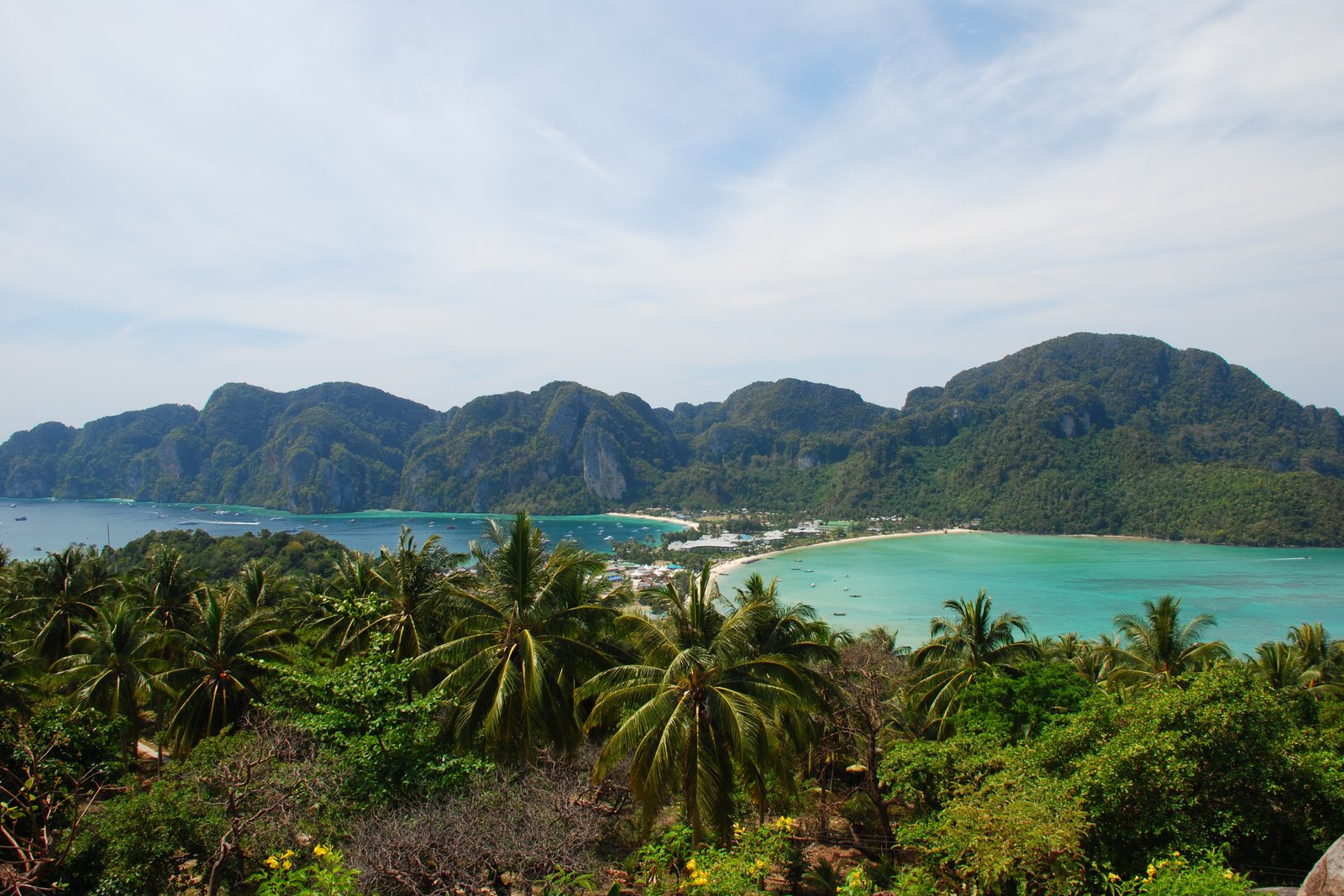
In the dry season the sea is flat and clear, the longtails run without drama and the west-facing beaches end the day with the sun going down into open water. In Krabi, Railay is reachable only by boat — a longtail from Ao Nang or Krabi Town — and Phra Nang Cave Beach at its tip is calmest early in the morning, before the boats bring the day visitors. The viewpoint over the two bays of Phi Phi Don is a first-light climb for the same reason: by mid-morning the day boats from Phuket and Krabi have arrived.
Maya Bay, on Phi Phi Leh, is part of a national park: boats moor on the other side of the island and visitors walk in on a boardwalk, swimming is not allowed and time on the beach is limited. Off Khao Lak, the Similan Islands are open from mid-October to mid-May. Foreign visitors pay national-park entrance fees, and photography done as paid work inside a park can need the park's own permission and a fee of its own, which the photographer clears in advance.
The weeks around Christmas and New Year are the busiest of the year: book early, and keep the famous beaches for the first hour of the day.
The Andaman in the monsoon
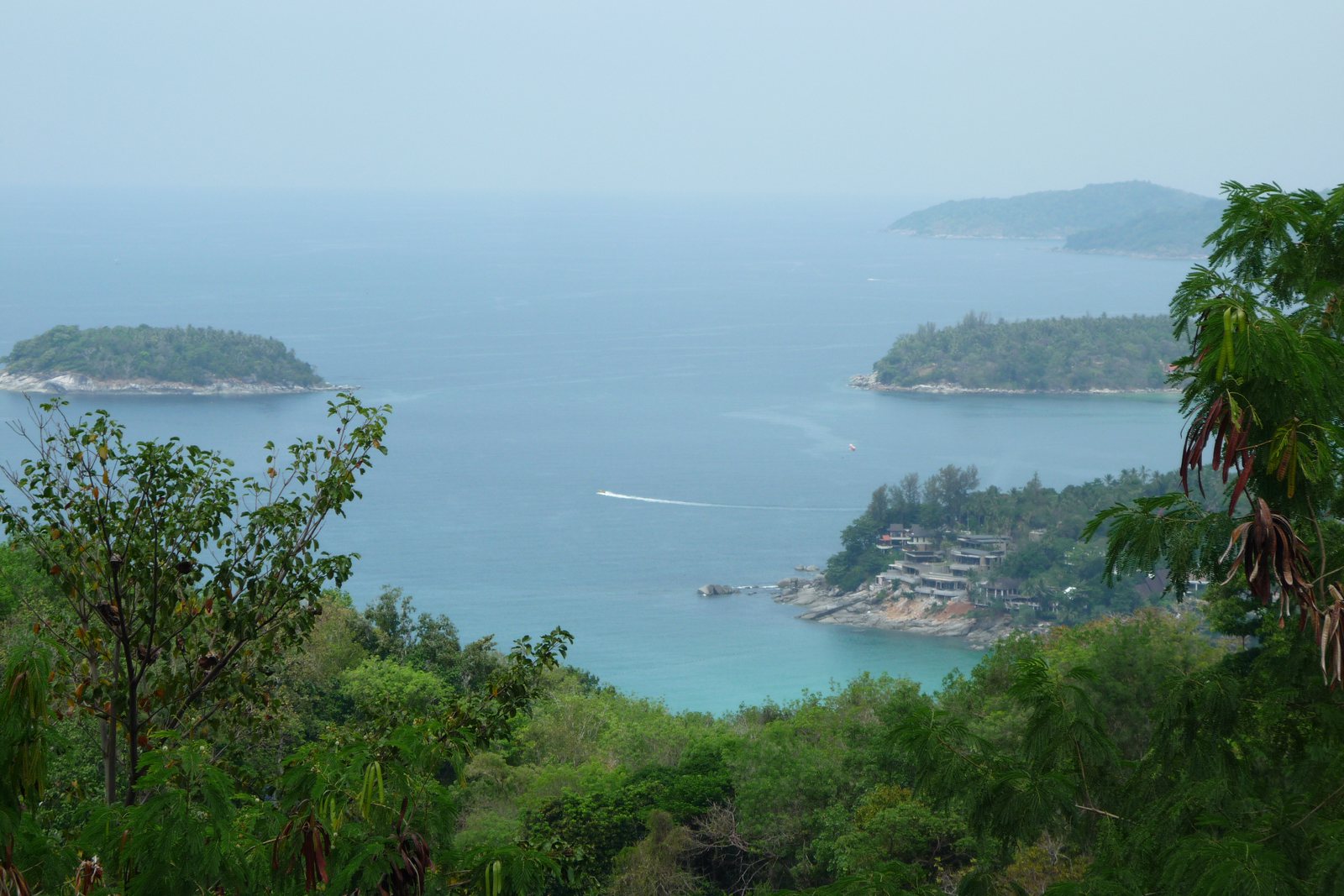
From about mid-May to mid-October the southwest monsoon sets in. On many days that means heavy showers with clear spells between them rather than a grey week, and the cliffs and forest are at their greenest while the beaches are close to empty. The sea changes most: the surf builds, the west-coast beaches fly red flags — a red flag means no swimming, literally — and boat trips are cancelled at short notice. Speedboats to Koh Lanta are cut back from May to October; the island has no airport (Krabi's is the nearest) and is otherwise reached by road with a car-ferry crossing. Maya Bay has closed every year for about two months (from 1 August to 30 September in 2025 and 2026), so check the current dates; the Similan Islands stay closed until mid-October.
A monsoon session on this coast is built on land and kept close to shelter. In Phuket the plan B is the Old Town: the Sino-Portuguese shophouses of Thalang Road and Soi Romanee, pastel walls and shuttered windows, which photograph well in the soft light of an overcast morning. On Koh Lanta it is the east coast — Lanta Old Town's wooden shophouses and stilt houses over the water, on the sheltered side of the island. People live and work in both, so doorways stay clear and you ask before stepping onto a pier. Railay depends on whether the longtails go out that day, decided on the morning, not the week before.
The Gulf islands from January to August
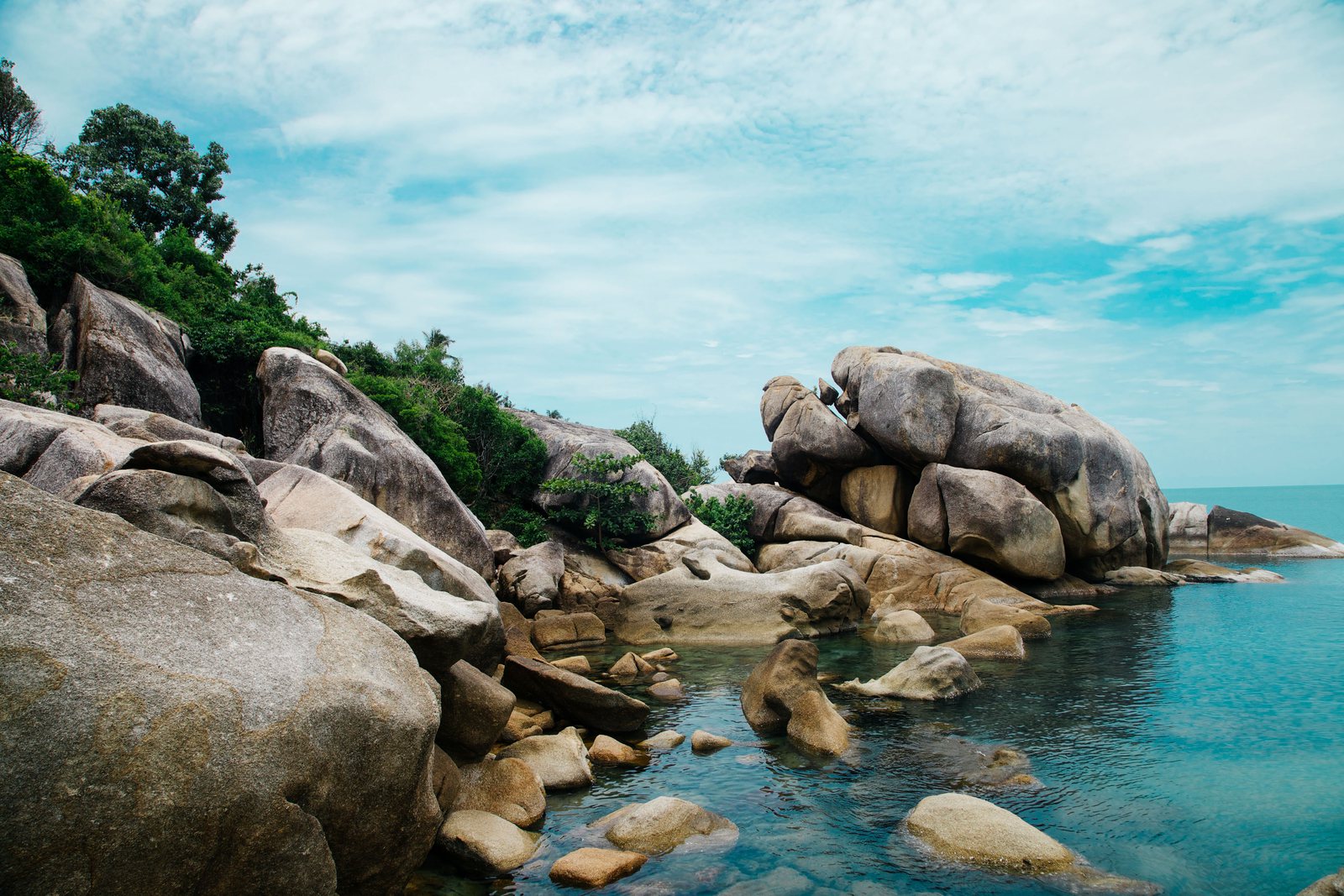
Koh Samui is the largest of the three islands and the easiest to reach, with its own airport. Chaweng and Lamai on the east coast are busy; for a session the quieter corners work better — coconut groves behind the sand, granite boulders on the headlands, the calm north-coast bays facing Koh Phangan. The west coast gets the sunsets, the east coast the sunrises, and Bophut's Fisherman's Village, a row of old wooden shophouses along the beach, is at its best in the late afternoon. It is the obvious island for a couples session on Koh Samui in the European summer.
Koh Phangan, about half an hour by boat from Samui, has no airport. On the north-west coast the islet of Koh Ma is tied to Mae Haad beach by a sandbar that surfaces at low tide, so the tide table decides when the session starts. The Full Moon Party takes over Haad Rin's Sunrise Beach every month around the full moon, with thousands of people and full ferries: plan around it, or stay well away from it.
On Koh Tao, about an hour and a half by boat from Samui, the picture everyone knows is Koh Nang Yuan, three islets joined by a curving sandbar, seen from the viewpoint after a short, steep climb. It is privately run, with an entrance fee, its own hours for day visitors and a ban on plastic bottles and cans; its sandbar needs the tide table, and it is quietest early.
The Gulf in its wet season
From October to December the northeast monsoon brings the Gulf its heaviest rain, and November is usually the wettest month of the year. Rough seas can cancel the ferries, and Koh Phangan and Koh Tao, with no airport, are reached only by boat. On Samui the plan B is Bophut's Fisherman's Village between showers and the coconut groves, which still photograph under a grey sky; the sensible answer in November and early December is to move west, where the Andaman's best months are starting.
Pattaya and Hua Hin: the mainland in between
Two mainland beach towns within a road trip of Bangkok need no ferry at all. Pattaya, about two hours away by road, follows Bangkok's calendar: cool and dry from November to February, rains from about May to October. Its main beach faces west for the sunset, and Koh Larn, a ferry ride from Bali Hai pier, has the clearer water. Hua Hin gets less rain than most of the coast, and its wet months come late, heaviest around September and October. Its beach faces east, which makes it a sunrise town and an easy one for families with early risers. Neither replaces Railay; both suit a short trip, or a month when the islands are uncertain.
Pairing the coast with Bangkok and the north
November and December: Bangkok and the north are cool and clear, and the Andaman is opening its season — the classic pairing is Bangkok, Chiang Mai, then Phuket or Krabi. January and February: almost everything works; the north is at its clearest until about early February, the Andaman is dry and the Gulf is dependable again. March and April: the north lies under smoke from seasonal burning, usually worst in March, Bangkok heats up towards its April peak, and the Gulf islands are at their driest — the beach is the better half of the trip. Songkran, the Thai New Year, is a public holiday from 13 to 15 April: water is thrown in the streets and nobody stays dry, cameras included. May to August: the Gulf, with Bangkok's afternoon downpours planned around and the north turning green.
September is the Andaman's wettest month, while the Gulf's heaviest rain does not begin until October, which makes the Gulf the better side of a September trip — still with a back-up plan. By late October the Andaman's monsoon is ending, the Similans have reopened and the rice fields around Chiang Mai are turning gold towards the harvest.
Planning a beach photoshoot in Thailand
The sun rises and sets between roughly six and seven o'clock all year and climbs fast, so the soft light is short on both coasts: the Andaman's west-facing beaches belong to the last hour of the day, the Gulf's east coasts to the first. A session that needs a boat or a tide — Railay, Koh Nang Yuan, the Koh Ma sandbar — needs longer than an hour, and the sea sets the start. In the monsoon, on either coast, leave a spare day before an onward flight rather than taking the last boat on the morning of departure. For a honeymoon split between two islands, see what a honeymoon photoshoot usually covers.
Rescheduling for bad weather is free for both sides on the platform — a rule about the booking, not a promise about the sky — so agree a back-up plan with the photographer when you book: a sheltered street, a later day, another beach. Read the destination page for Koh Samui, check how it works, and browse photographers online.
Want professional photos in Krabi?
Browse portfolios, compare packages, and book a verified local photographer in minutes.