Smoke Season in Chiang Mai and Chiang Rai: when the haze comes and what still works
From about February to April, smoke from seasonal burning settles over Chiang Mai and Chiang Rai, and it is usually worst in March. For a photoshoot it changes everything that depends on distance: the mountains disappear for weeks, the sky goes flat and white, and the valley from Doi Suthep is simply not there. It changes much less at arm's length. A temple courtyard, a teak doorway, a lane of the old city or a workshop full of painted umbrellas photographs almost the same in March as in December. This is the honest version: who should think twice about these months, what still works, what does not, and when to come instead.
What the haze looks like
The smoke does not arrive on a date, and it does not sit at the same density every day, but from about February it builds, and by March the north often looks as if someone has turned the contrast down. Distance goes first. The ridge of Doi Suthep, which stands over the west of the city on a clear day, fades and then vanishes. The sky over the rooftops is a pale, even white with no blue in it, and on the worst days a low sun loses its edge long before it reaches the horizon.
It comes with heat. The hot season runs from about mid-February to mid-May, with April the hottest month, so a haze-season session is also a short, early one. You cannot plan a viewpoint around a clear morning in March; you can only be glad if one comes.
Who should care most
Anyone with asthma, and families travelling with small children, are the people for whom these months matter beyond the photographs. If either describes your group and you have a choice of dates, choose another month. If you do not, check the air-quality index the day before the session and again in the morning, and decide with the photographer whether to go ahead, shorten it or keep it to a single close location. A gentle family session in Chiang Mai — the umbrella makers, the moat and gates of the old city — belongs to the cool season for exactly this reason.
What still works: the old city at close range
The old city inside the moat is where a haze-season session lives, because almost nothing there needs a horizon. Wat Chedi Luang's great brick chedi, broken by an earthquake in the sixteenth century, fills the frame from close up and needs no sky behind it. The carved wooden halls of Wat Phra Singh and the dark teak hall of Wat Phan Tao stay softly lit at any hour, and the lanes between them, with their potted plants and shophouse doors, are a backdrop at walking pace. The flat white sky even helps here: it is soft, even light, with no squinting and no hard shadows across a face.
The temples ask the same in every season. Shoulders and knees are covered for everyone, shoes come off before a hall, and nobody climbs on a ruin or a Buddha image or poses above one. Never point your feet at an image or a monk, keep your head lower than the Buddha's, and photograph a sacred image on its own rather than posing with it. A woman does not touch a monk or hand him anything directly. Kisses and lifts belong outside the temple walls, and voices stay low. Inside a hall, follow the signs: photography is not allowed everywhere.
Wat Umong, Bo Sang and the night bazaar
At the foot of Doi Suthep, Wat Umong is a forest temple where monks still study, with tall trees, a quiet lake and brick tunnels with Buddha images in niches along the walls. The light under the trees is soft in every season, and in the haze it barely changes. The couple frames belong to the trees and the tunnel mouths; the images inside are photographed on their own. It is the calmest setting for an engagement session in Chiang Mai in any month, and in March it is the best one.
Bo Sang, about half an hour east of the city, is the village of hand-painted paper umbrellas. The workshops, with painters at their tables and finished umbrellas opened out to dry, are all colour and close detail — exactly what holds up under a white sky. Ask before photographing someone at work.
After dark the haze matters least of all. The night bazaar, between the old city and the Ping River, is lights, stalls and movement at close range, and a session that starts at a temple in the soft late afternoon can end there.
What does not work in the haze
Anything that is a view. The valley from the terrace of Wat Phra That Doi Suthep, at about a thousand metres, is the first casualty; the naga staircase still works as a frame, but the reason most people climb it is gone. The same is true of the view over the city from Wat Pha Lat, of the hill village of Mae Kampong with its morning mist, and of any wide frame with mountains in it. Rice fields are no help either: they turn green with the rains, from about August, not in the dry months.
In Chiang Rai the losses are the same kind. The sea of mist below Phu Chi Fa, on the Lao border, is a cool-season picture, and so is the wide river landscape of the Golden Triangle, where the Ruak meets the Mekong. The tea slopes of Doi Mae Salong need a distance the smoke takes away.
Chiang Rai's temples under a white sky
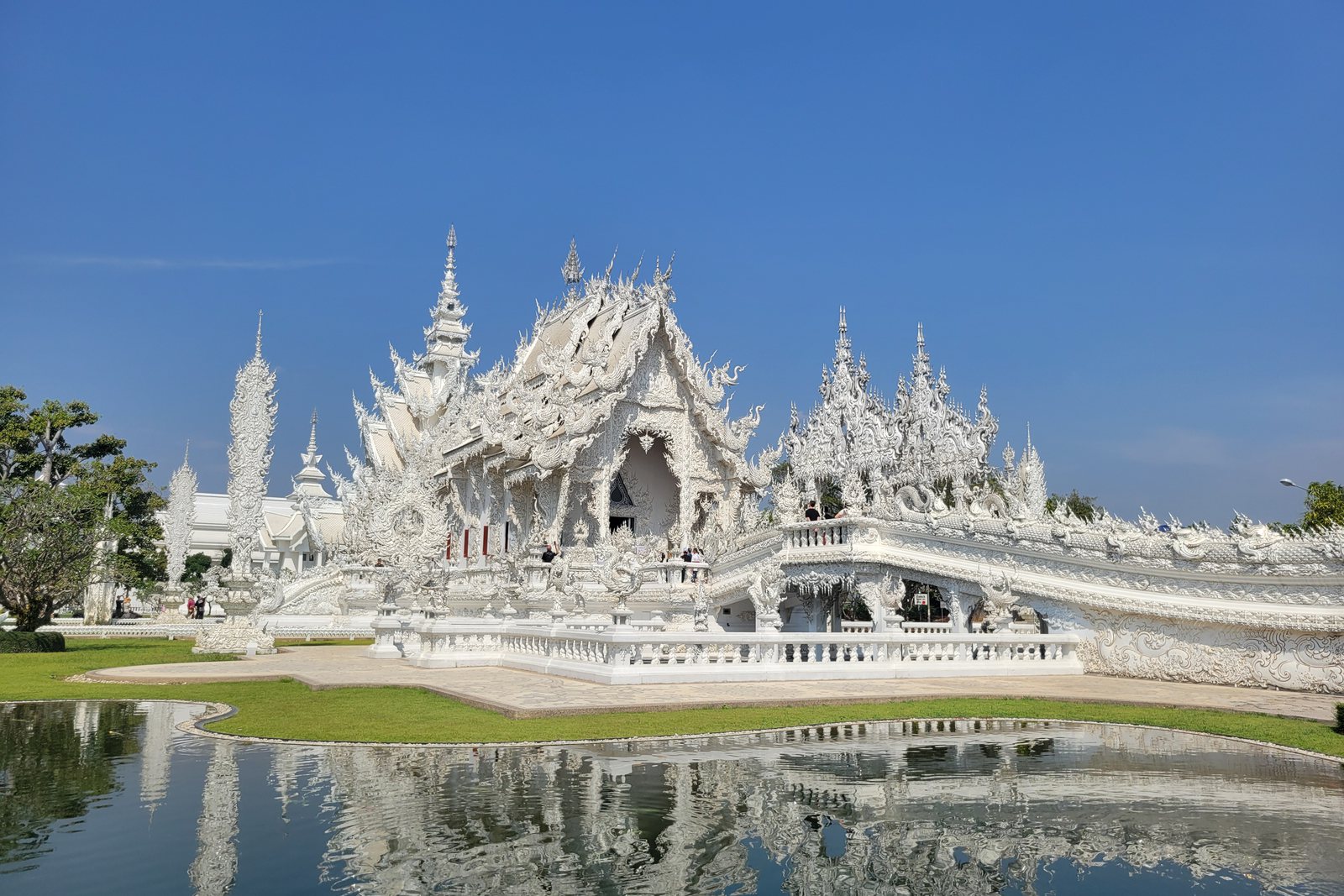
Chiang Rai's three famous buildings come through the haze better than its views, because each is about surface and detail. Wat Rong Khun, the White Temple, is white stucco and mirrored glass above a pond, with a bridge over a sea of reaching hands; close frames and the bridge still work, while a wide frame against a white sky loses the building's edge. Arrive at opening, before the tour groups and the midday glare. Shoulders and knees are covered, shoes come off before going inside, and there is no photography inside the main hall. Wat Rong Suea Ten, the Blue Temple, is deep blue and gold inside and out, a colour that holds in flat light; follow the signs about photography inside. Baan Dam, the Black House, is dark wooden halls, horns and bones — a museum rather than a temple, and a mood that suits a grey day.
When to come instead
The north's own season runs from the end of the rains in October through January, sometimes into early February: cool mornings that want a light jacket, the clearest skies of the year and the mountains at their sharpest. From about November to February the valleys can fill with mist at dawn — at Phu Chi Fa, around Mae Kampong — never guaranteed, so keep a second morning free if the session depends on it; the cool season is also when a proposal at Phu Chi Fa makes sense. The rains run from about May to October and turn the rice fields green from about August and gold towards the harvest in late October.
November brings its own crowd. Loy Krathong and, in Chiang Mai, Yi Peng fall on the full moon of the twelfth Thai lunar month, usually in November: small offerings float on the river, lanterns hang across the streets, and sky lanterns are banned in much of the city and near the airport, with releases at organised events — check the current year's rules, and never release one outside an authorised event. The weeks around Christmas and New Year are the busiest: book early.
If the trip has to fall in March
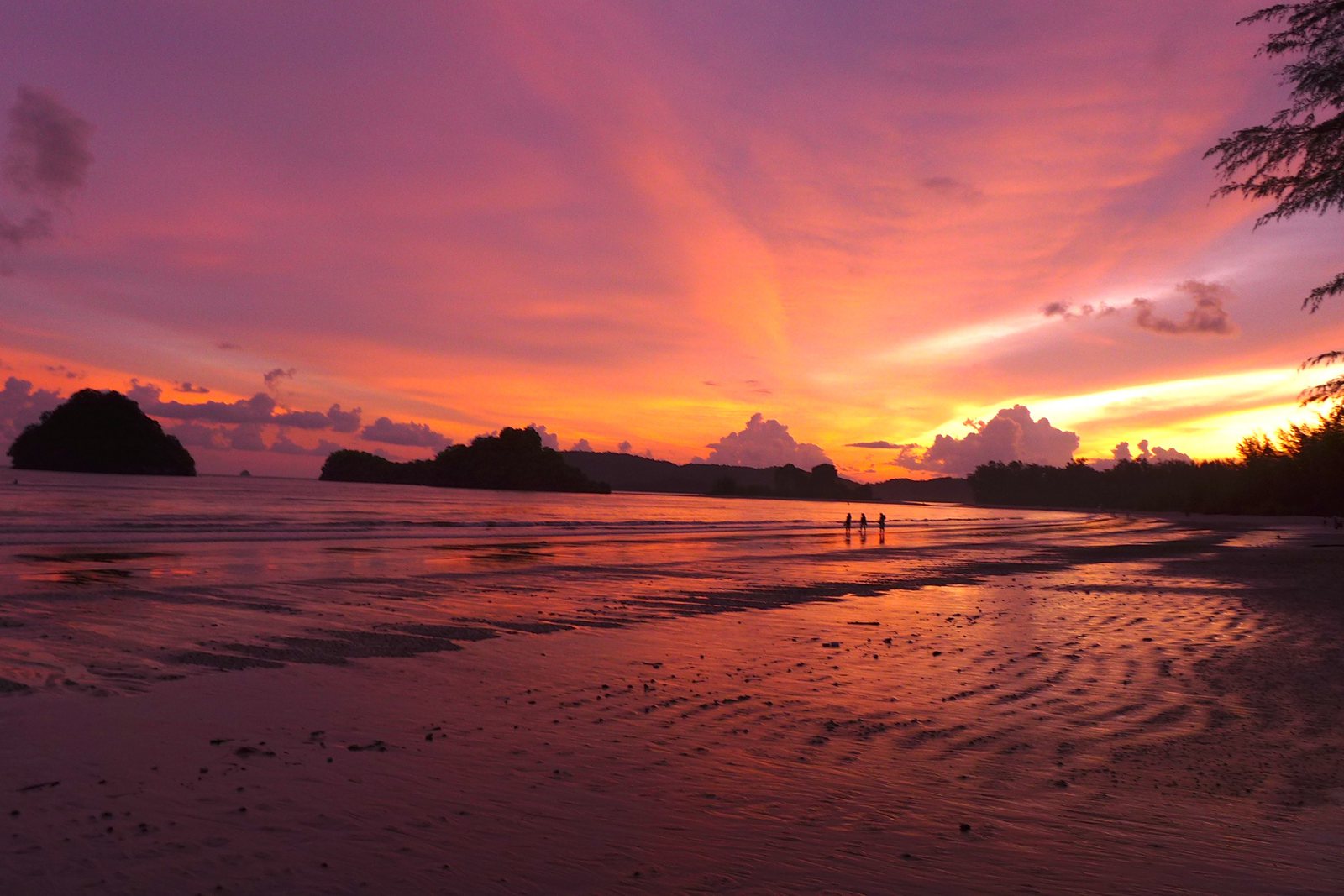
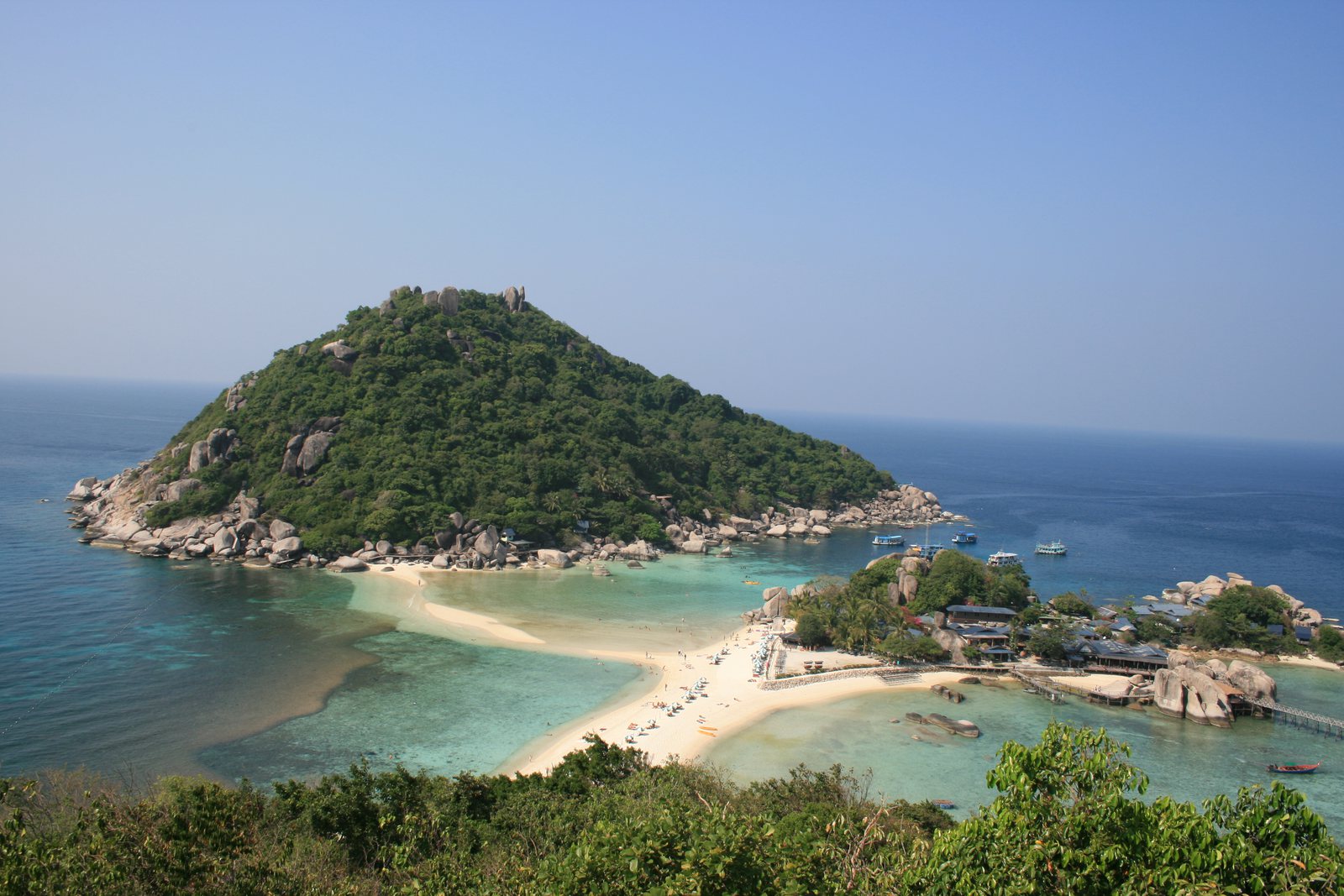
Then put the session on a coast. The Gulf islands are at their driest from February to April — Koh Samui has its own airport — and the Andaman is still in its dry season until about April. Keep Chiang Mai for the temples and the old city at close range, early in the day, and let the beach carry the wide frames. If you are in the north in mid-April, Songkran, the Thai New Year, is a public holiday from 13 to 15 April, and the moat and old-city streets are where Chiang Mai celebrates it: water is thrown in the streets, and nobody stays dry, cameras included.
Planning a photoshoot in the north
In any month, start early: an hour in the old city covers Wat Chedi Luang, Wat Phan Tao and the lanes before the heat. In the haze months keep the plan close — one or two temples, Wat Umong, Bo Sang — and leave the mountain for another trip. In the cool season add Doi Suthep or a morning in the hills, and keep a spare morning if the session depends on a view. Bring a light shirt or a sarong for every temple, shoes that slip off and, from November to January, a layer for the first hour.
A photographer who works here knows whether the mountain is visible today, which hall allows photography and how the air looks this week. Rescheduling for bad weather is free for both sides; agree when you book what happens if the air is poor on the day. Read the destination page for Chiang Mai, check how it works, and browse photographers online.
Want professional photos in Chiang Mai?
Browse portfolios, compare packages, and book a verified local photographer in minutes.