Temple Etiquette for a Photoshoot in Thailand: dress, Buddha images, monks and permission
Temples are the backdrop most travellers want in Thailand, and they are working religious sites first. Almost everything that goes wrong on a temple shoot happens in one of two places: at the gate, where a couple is turned back for bare shoulders, or in front of a Buddha image, where a pose that would be harmless anywhere else is an offence. The rules are simple, they are meant, and at the big temples they are checked. Rules for photographers on top of them are set temple by temple. Here is what to wear, how to behave around images and monks, where the camera stops, and what the photographer clears before the day.
What to wear, and what to carry
Shoulders and knees are covered for everyone, men included. The easy way to do it is to plan the outfit around the temple rather than change for it: a dress with sleeves and a hem below the knee, or a light shirt over a sleeveless dress and a sarong over shorts, carried in a bag for the temple stops. Nothing see-through. Shoes come off before entering every hall, so wear shoes that slip off; at a temple with several halls you will take them off and put them on again many times in an hour. At the door, step over the raised threshold rather than on it, and take off hats and sunglasses inside.
Dress is checked at the gate of the big temples, and the strictest site in Bangkok is the Grand Palace: shoulders and knees covered, and no photography inside the chapel of the Emerald Buddha. It is not a place for a session.
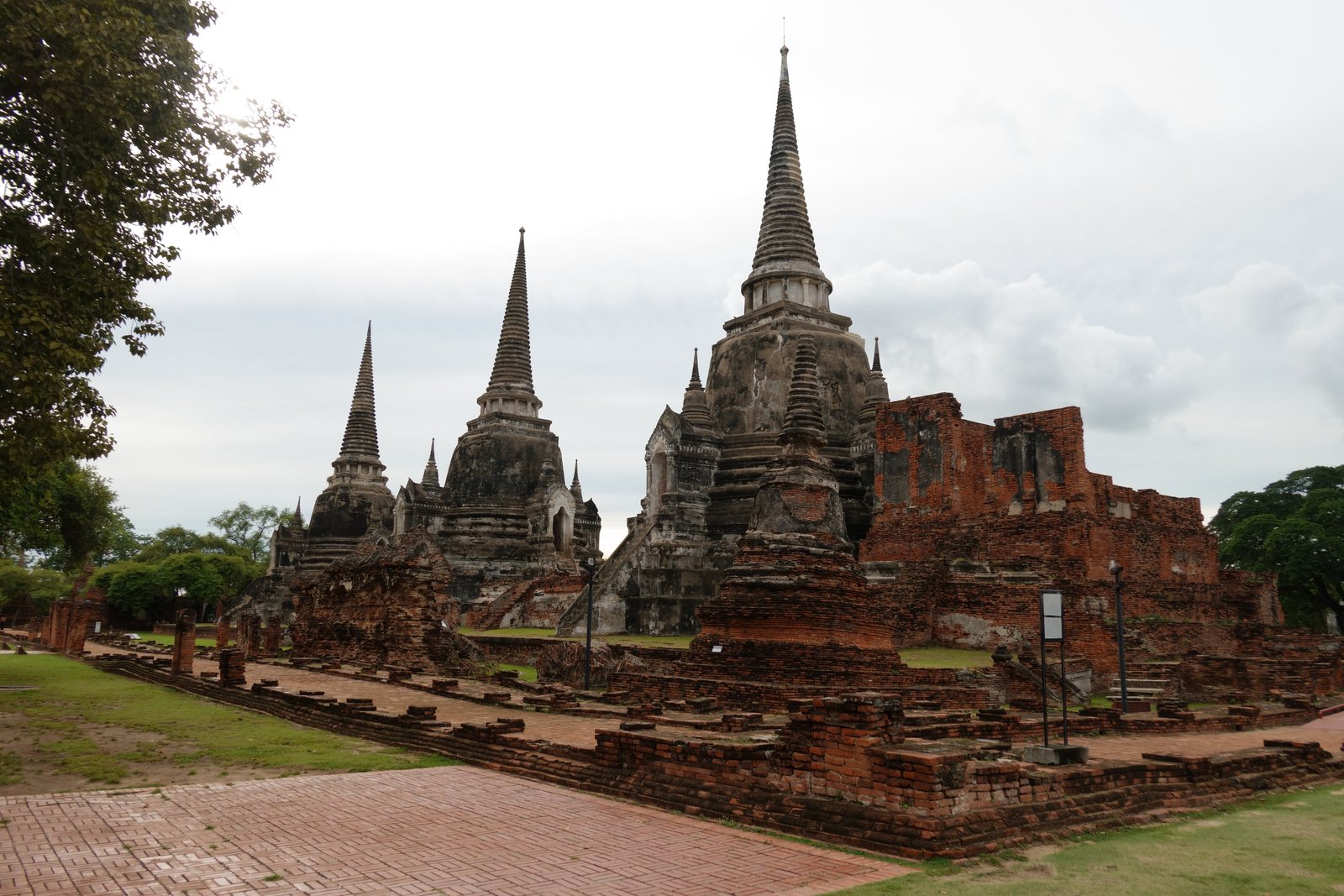
Thai traditional dress is rented near Wat Arun and around the ruins of Ayutthaya, popular since the 2018 TV drama Love Destiny. A costume changes nothing about the rules: temple etiquette applies in costume exactly as it does in a sundress.
Buddha images: photographed on their own
A Buddha image is an object of worship, not a monument, and that decides how it appears in a frame. Never climb on one or pose above one. Never point your feet at an image or a monk: when you sit on the floor of a hall, tuck your feet behind you. Keep your head lower than the Buddha's. At Ayutthaya's Wat Mahathat, visitors kneel or crouch to photograph the sandstone Buddha head held in the roots of a tree, so that no head in the frame is higher than the Buddha's, and the guards are firm about it.
Photograph a sacred image on its own rather than posing with it. That rules out the arm around a statue, the selfie with a Buddha over your shoulder and the couple framed in front of an altar. Do not turn your back on an image to frame yourself against it; when you leave a hall, step back a little before you turn. Ruins count too: a weathered Buddha in Ayutthaya is still sacred, and a broken chedi is not a climbing frame. The couple frames belong to the courtyards, gateways, cloisters and the street outside the walls.
Monks
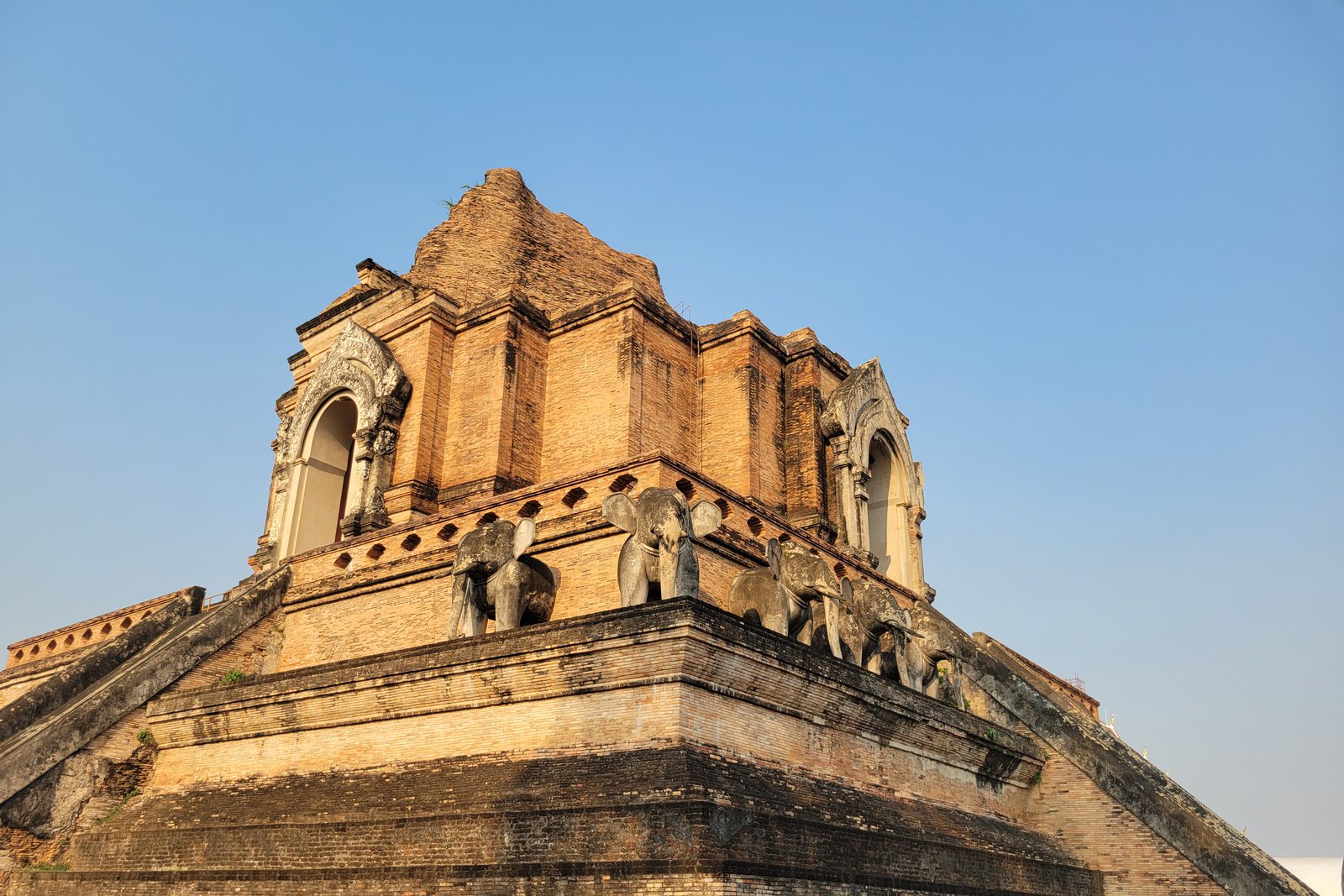
Monks live in the temples you photograph, and the morning is their working day. A woman does not touch a monk or his robes, and does not hand him anything directly: she gives it to a man to pass on, or sets it down for the monk to pick it up. Some shrines are closed to women — the small shrine of the city pillar at Chiang Mai's Wat Chedi Luang is one, and a sign at the entrance says so.
A monk crossing a courtyard is going about his day, not posing. Do not direct him into a frame, do not block anyone who is praying or making an offering, and ask before photographing anyone up close.
Kisses, lifts and voices
Kisses, lifts, dips and running-hand-in-hand shots belong outside the temple walls; inside, voices stay low and phones stay silent. Nobody eats or smokes while walking the grounds. The best sessions use this rather than fight it: the quiet, respectful frames inside — walking a cloister, sitting on the steps of a courtyard, looking up at a chedi — and the playful ones on the river bank or in the lane outside.
Where the camera stops
Photography is banned inside many halls. Two of the best-known bans are the chapel of the Emerald Buddha at the Grand Palace and the main hall of the White Temple, Wat Rong Khun, in Chiang Rai, where shoulders and knees are covered and shoes come off before going inside. Elsewhere the signs decide: one hall allows photographs, the next does not, and where it is allowed, the interior still belongs to the people praying in it. Follow the signs and do not ask the photographer to bend them.
Professional shoots: rules set temple by temple
A couple with a phone and a couple with a photographer are not always treated the same. Wat Ratchabophit in Bangkok banned wedding and commercial shoots on its grounds in September 2024. Since January 2026, Wat Arun has required photographers who work with costume-rental shops to complete its etiquette training; check that it still applies when you book. Foreign visitors pay an entrance fee at many of the famous temples, and a ceremony or an arranged shoot on temple ground starts with asking the temple first.
That is why the photographer clears each site before the day. A photographer who works there regularly knows which temples welcome a session, which ones say no and which ones want to be asked.
Temples at the top of a staircase
Two temples that travellers climb for the view sit at the top of long staircases, and both are working monasteries before they are viewpoints. In Krabi, the Tiger Cave Temple's twelve hundred-odd steps climb to a golden Buddha and a view over the whole limestone plain, best at sunrise before the heat. Above Chiang Mai, Wat Phra That Doi Suthep is reached by a 306-step staircase lined with naga serpents; shoes come off before the inner terrace around the golden chedi.
Heat makes people peel off a layer on the way up. Carry the cover-up to the top and put it back on before the summit: the rules at the top are the same as at the gate. Keep the posed frames to the staircase and the outer terrace, and let the chedi be photographed on its own.
The other permissions: national parks and drones
Many beach and mountain locations sit inside national parks. Foreign visitors pay their own entrance fee, and photography done as paid work inside a park can need the park's (DNP) permission and a fee of its own. The photographer clears it in advance; it is not something to sort out at the gate.
Drones are hard for a visitor, never simply allowed. Every drone must be registered with both NBTC and CAAT through the UAS Portal, carry third-party insurance and have approval before each flight, submitted at least three days ahead. Flights are daylight only, in sight, at least 30 metres from people, not over towns or crowds without authorisation and not within nine kilometres of an airport without approval; parks and temples add their own rules. Registration for visitors needs a Thai SIM and can take up to two weeks, and the rules have been tightened and relaxed several times since 2025. Ask whether the photographer flies a registered drone rather than bringing your own.
Planning a temple photoshoot in Thailand
Opening time is the hour for temples: before the tour groups, before the heat, while the light is low and the grounds are quiet. An hour covers one temple and the lane outside it; a day trip to Ayutthaya, with costume and a ruin or two, suits an engagement session in Ayutthaya in the cool months or the last two hours of light.
Plan the outfit for the rules, bring shoes that slip off and water, and agree with the photographer which frames happen inside the walls and which happen outside. Read the destination pages for Bangkok and Ayutthaya, check how it works, and browse photographers online.
Want professional photos in Ayutthaya?
Browse portfolios, compare packages, and book a verified local photographer in minutes.