Hua Hin Photoshoot Guide: a sunrise beach town, the wooden station and Khao Takiab
Hua Hin is the gentle, older seaside. It grew into a resort after the southern railway reached it in the 1910s, it sits about three hours south of Bangkok by road, and it has kept a slower pace than the islands. Its beach faces east, which makes it a sunrise town: the sand runs for kilometres along the bay and the first light comes in low off the Gulf, straight onto whoever is standing at the waterline. What spoils a Hua Hin session is planning it like an island one — a sunset on the sand, when the sun goes down behind the town rather than into the sea — or holding it on a Saturday, when the town fills with weekenders from the capital. Come on a weekday, and come early.
Sunrise on the long beach
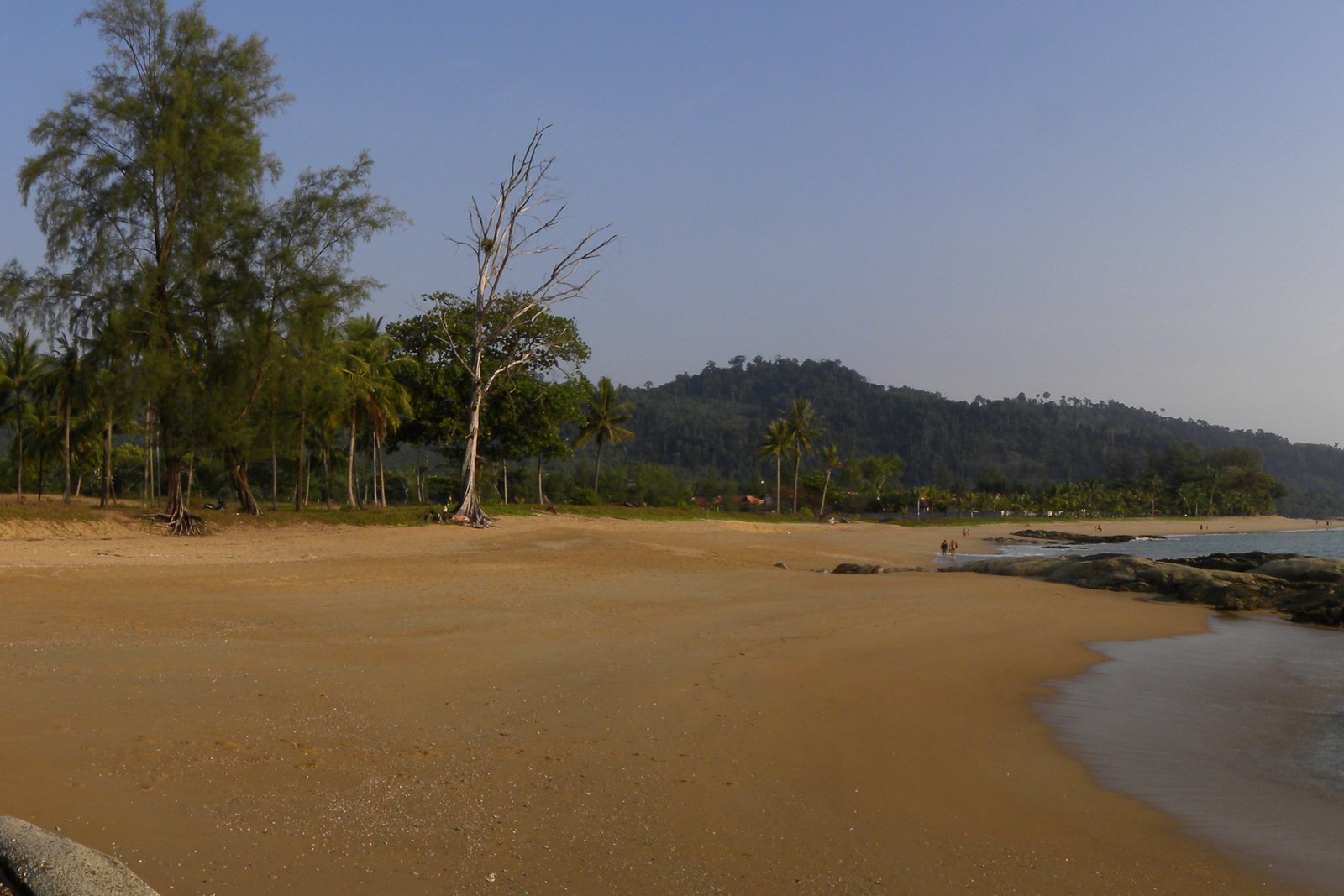
The beach is the reason to come, and the morning is the reason to be on it. The sun rises out of the Gulf, so the first half-hour gives you the two pictures a west-facing beach cannot: a couple or a family in silhouette against a sky going from pink to gold, and then, as the sun clears the horizon, warm light falling straight onto faces. The sand is long, flat and wide — room to run, room for a toddler to wander off and be followed, room for a group without strangers in the frame.
Riders lead ponies along the tideline, and they belong in the picture: a pony walking past in the background says Hua Hin as clearly as any landmark. Ask before photographing a rider up close.
The light turns hard quickly — the sun rises between roughly six and seven o'clock all year and climbs fast — so an hour after sunrise the best of it is gone. That is made for families with early risers: a session at first light, breakfast afterwards, and the heat of the day spent elsewhere. The family sessions in Hua Hin page has more on how a morning like that runs.
The old fishing quarter in the morning
In the old part of town, the fishing quarter stands on the water: wooden piers and the buildings along them raised on stilts over the sea, boats tied up below, the morning light coming across the water under the boardwalks. It is the second half of a morning session, a short walk from the sand, and the texture the sand cannot give — weathered planks, ropes, peeling paint, the Gulf seen between posts.
It is a working waterfront and people live there. Stay on the walkways, keep off the boats unless someone invites you, and ask before photographing anyone at work. The light here is best early, while the sun is still low enough to reach under the eaves.
The wooden railway station
Hua Hin's railway station is a small red-and-cream wooden building, one of the prettiest in the country, and it works in any light: the painted woodwork and the platform look the same at nine in the morning as at four in the afternoon, which makes it the answer to the hours when the beach is too bright. Since December 2023 the trains have used a new elevated station, built as the line was doubled, and the old wooden building has been kept as a historic building — so the old platform is calmer than it once was. Check what is open on the day.
Shoot the building and the platform: a couple walking the old platform, a family lined up in front of the façade, the colours of the woodwork behind. Stay off the rails wherever they remain, and leave space for other visitors — it is one of the town's best-known frames, and you will rarely have it entirely to yourself.
Khao Takiab, Chopstick Hill
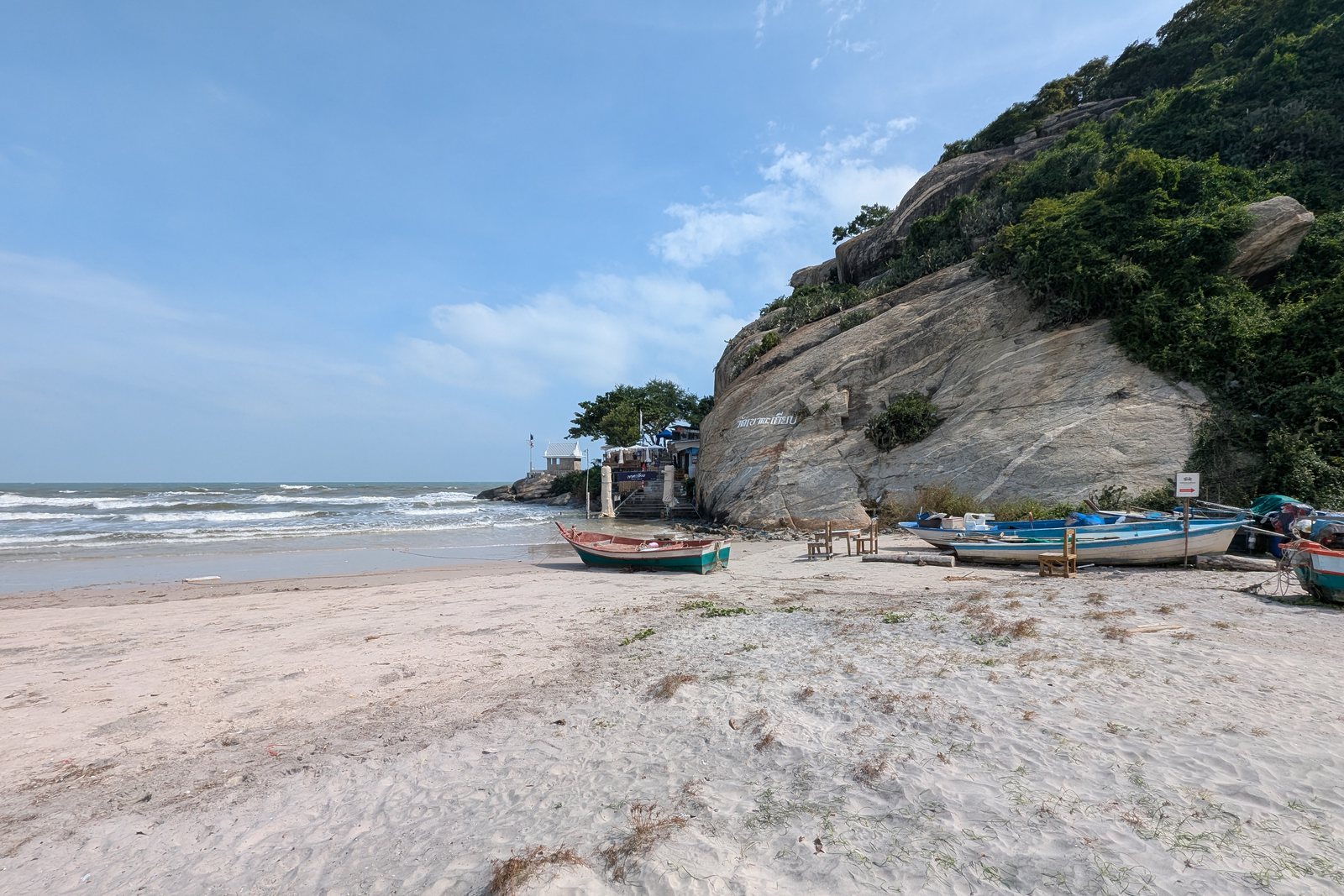
At the southern end of the bay, Khao Takiab — Chopstick Hill — closes the beach with a rocky headland. At the foot of the hill a standing Buddha about twenty metres tall faces the water, and a temple sits on the hill above, reached by steps. This is temple ground: shoulders and knees covered, the Buddha photographed on its own rather than as a backdrop to a pose, nobody climbing anything to get higher than the image, and the kiss kept for the beach below.
The hill has a troop of monkeys, and they are wild animals that go for bags. Keep food out of sight, close every zip, carry nothing loose in your hands, and keep the ring in a pocket — never in a box you take out on the hill. Watch them from a distance; do not feed them.
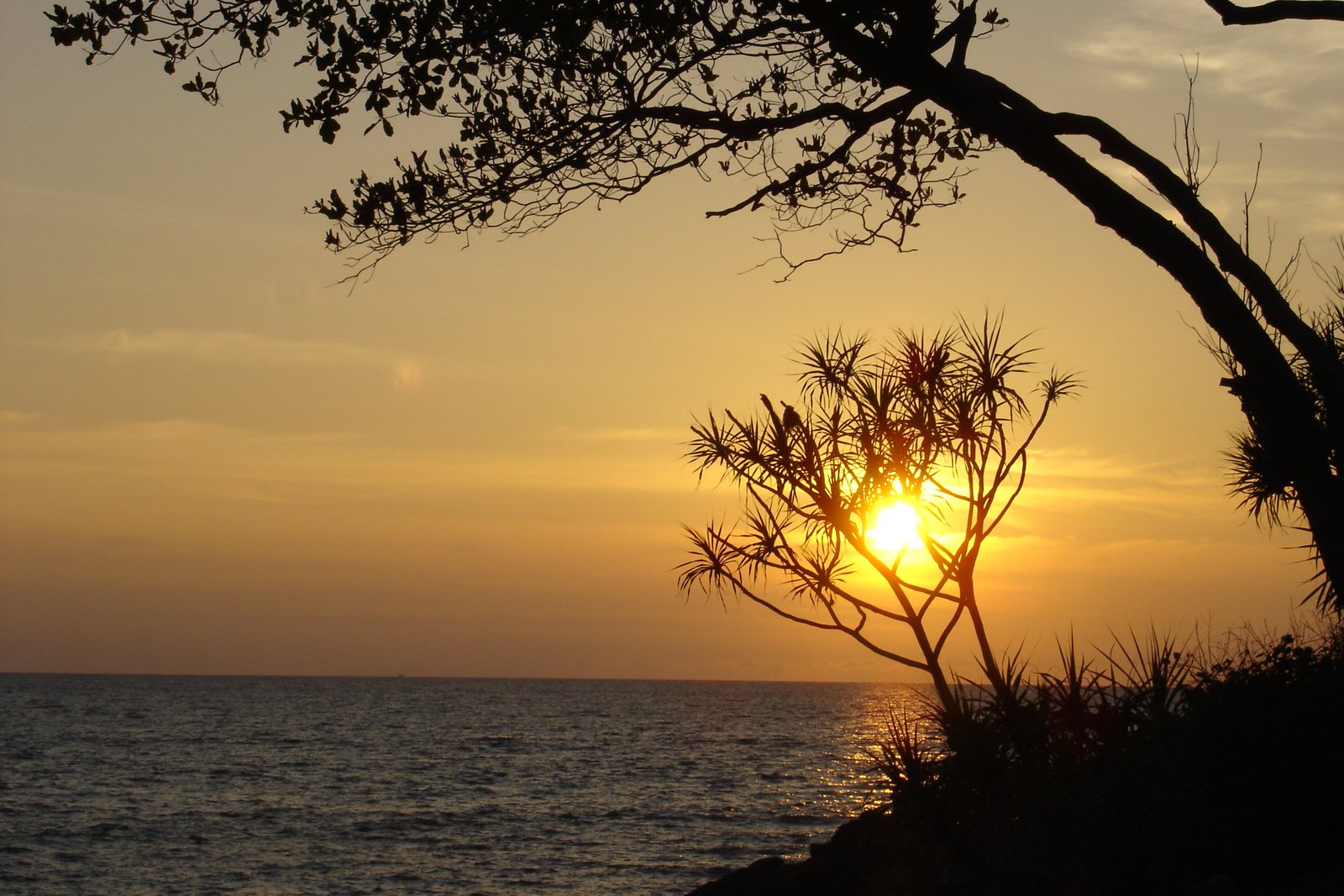
From the hill, the view looks back north along the whole curve of the beach towards town. In the late afternoon the sun is low in the west and lights the beach from the side, and the sand glows below — the one good evening frame of the bay. For a proposal in Hua Hin, the beach beneath the hill works at sunrise or in the late afternoon, off temple ground and with the ring well away from the monkeys.
The night market for the last frames
After dark, the night market in town gives the last pictures of the day: rows of lit stalls, smoke from the grills catching the light, a family walking between them with something to eat. It is an easy end to an evening session that started on Khao Takiab. Shoot from the edges of the walkway, keep moving through the crowd, and ask before photographing a vendor or their stall.
Khao Sam Roi Yot National Park, an hour south
About an hour south of town, Khao Sam Roi Yot National Park is where limestone hills rise straight from the coast of the Gulf, with freshwater marshes between them, a stream lined with mangroves and white-sand beaches below. Short, steep trails climb to viewpoints over the peaks — rough rock underfoot, so proper shoes — and sunrise is the time to make the climb. The marshes and the mangroves are softer, flatter frames for a family that will not hike.
It is a national park: foreign visitors pay their own entrance fee, and photography done as paid work inside a park can need the park's permission and a fee of its own, which the photographer clears in advance. It is half a day, not an add-on to a morning on the beach: plan it as its own session.
What the seasons change
November to February is the most comfortable time: cooler mornings, dry air, clear skies. Hua Hin gets less rain than most of the Thai coast, but its wet months come late — the heaviest rain usually falls around September and October, so those two months are the ones to keep a spare day for. The weeks around Christmas and New Year are the busiest: book early. The hot season runs from about mid-February to mid-May, with April the hottest month, and then a session belongs to the first hour after sunrise and nothing much later.
Songkran, the Thai New Year, is a public holiday from 13 to 15 April, when water is thrown in the streets and nobody stays dry, cameras included. Plan a session away from the celebrations, or join in with the gear protected.
Drones are hard for a visitor: every drone must be registered with both NBTC and CAAT, insured and approved before each flight, and the national park adds rules of its own. Ask whether the photographer flies a registered drone rather than bringing your own.
Planning a Hua Hin photoshoot
The start time is the decision, and in Hua Hin it is early. A morning session begins on the beach at sunrise and carries on to the fishing quarter, with the station as a third stop if the light is already hard. An evening session starts on Khao Takiab in the late afternoon and ends at the night market. Either suits a couples session in Hua Hin, and the morning version is the classic family photoshoot.
Coming from Bangkok, arrive the day before rather than driving down for a sunrise; three hours on the road before dawn shows in every frame. Book a weekday if you can. An hour covers the beach at sunrise done properly; ninety minutes adds the fishing quarter or the station. Bring a light shirt or a sarong for Khao Takiab, a bag that closes, and water.
A photographer who works the town knows which stretch of the beach is empty at dawn, how early the riders come out and where the monkeys gather on the hill — and rescheduling for bad weather is free for both sides. Read the destination page for Hua Hin, check how it works, and browse photographers online.
Want professional photos in Hua Hin?
Browse portfolios, compare packages, and book a verified local photographer in minutes.