Eloping in Thailand: the complete guide to paperwork, places and photographs
An elopement in Thailand is two separate projects, and mixing them up keeps couples anxious for months. One is legal: a marriage registered at a Thai district office, or at home. The other is the day itself — two people, vows, a beach reached by longtail or a hillside above Chiang Mai, and an hour of soft light at either end of the day. The second is what most couples come for, and it does not depend on the first. What spoils it is the wrong coast for the month, vows planned for noon, a national-park beach used without asking, or a temple you turned up at unannounced.
The legal part, as far as it goes
A legal marriage in Thailand is registered at a district office, an amphoe, and that registration is the legal act. A ceremony on a beach, a blessing by monks or vows in a garden is not a legal marriage by itself.
Foreigners first get an affirmation of freedom to marry from their own embassy, translated into Thai and legalised by the Ministry of Foreign Affairs. Each embassy sets its own process, so check yours early — before you book flights — and get the answer in writing. Since January 2025 the same applies to same-sex couples, under the Marriage Equality Act.
That is all we will say about the paperwork, on purpose. Timelines and document lists belong to your embassy and the office where you register, and they change. Whether a marriage registered in Thailand is recognised at home is a question for your own authorities.
Register at home, marry here
Many couples register at home, before or after the trip, and keep the Thai day for the ceremony and the photographs. It takes every office hour out of the trip and frees the day: the vows can be at sunrise on a Sunday, on a sandbar that exists only at low tide, or on a ridge above the rice fields.
A symbolic ceremony can be as small as you like. Some couples bring a celebrant, some read to each other with no officiant, some bring nobody at all. Ceremonies with an arch, chairs and a celebrant are arranged by the venues, each on its own terms — check before you go. Two people saying a few words at the waterline is a different thing, and a photographer who works the coast knows which beaches suit it.
Krabi: a cliff-lined beach reached by longtail
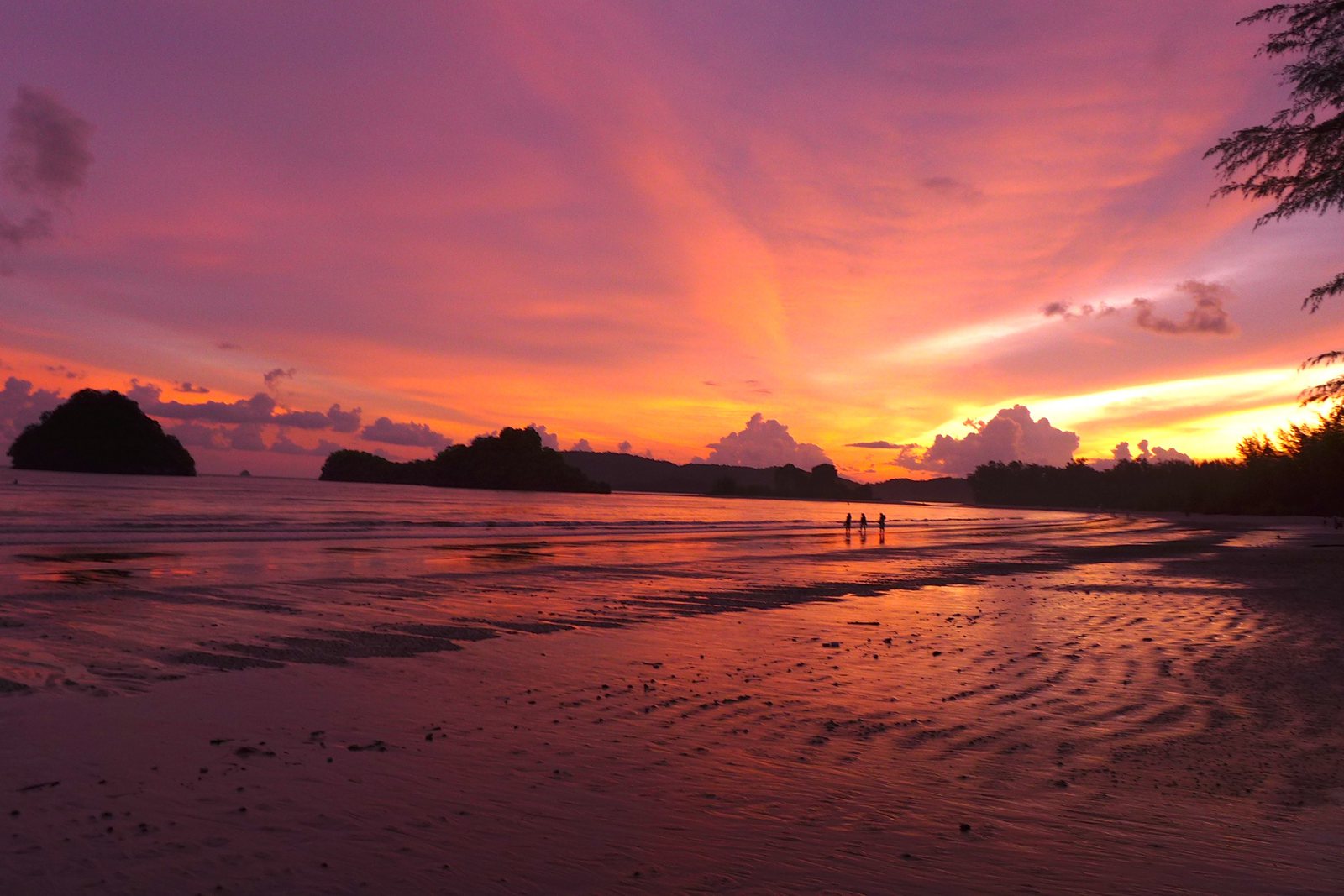
Krabi is where the limestone comes down to the Andaman Sea. Railay is cut off from the road by walls of rock, so the only way in is a short longtail ride from Ao Nang or Krabi Town. Phra Nang Cave Beach, at the tip, has stalactites hanging from the cliffs over the sand and a cave shrine at one end — a place of offering, not a backdrop. It is calmest early in the morning, before the day visitors arrive; in the evening the Railay cliffs turn orange.
The boat is part of the day. Longtails pull up on the sand and you usually wade out to board, so the dress travels in a dry bag and the hem gets wet anyway; flat sandals and a towel save the portraits. The couple at the prow of a ribboned longtail is the frame Krabi is known for. The sandbar at Thale Waek, between Koh Tup and Chicken Island, appears only at low tide — check the tide table — and the islands offshore lie inside national parks, with their own entrance fees and rules.
From about November to April the sea is flat and the boats run without drama. From about mid-May to mid-October the monsoon brings swell, boats are cancelled at short notice, and the cliffs are at their greenest. See eloping in Krabi.
Koh Phangan: the north coast, far from the parties
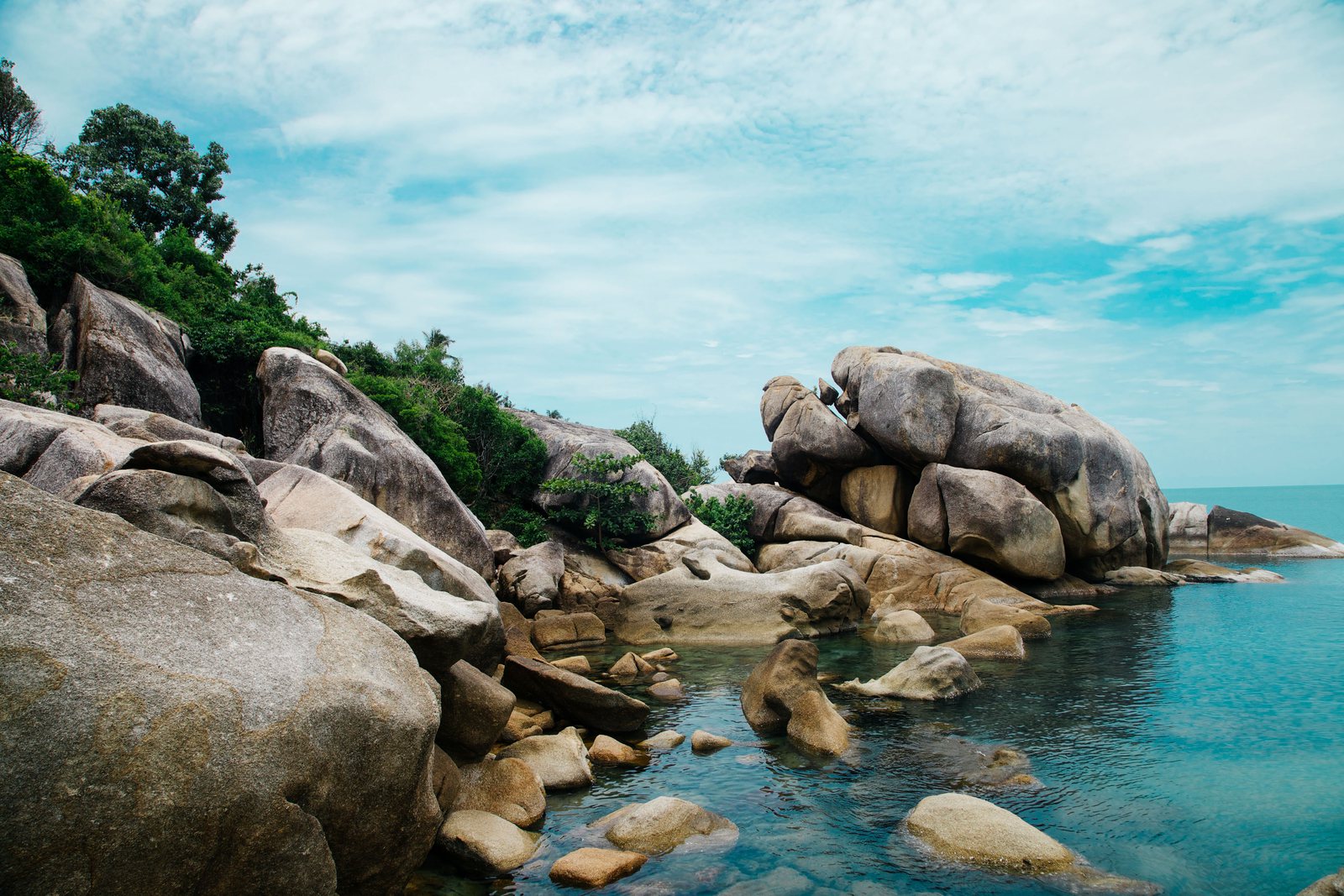
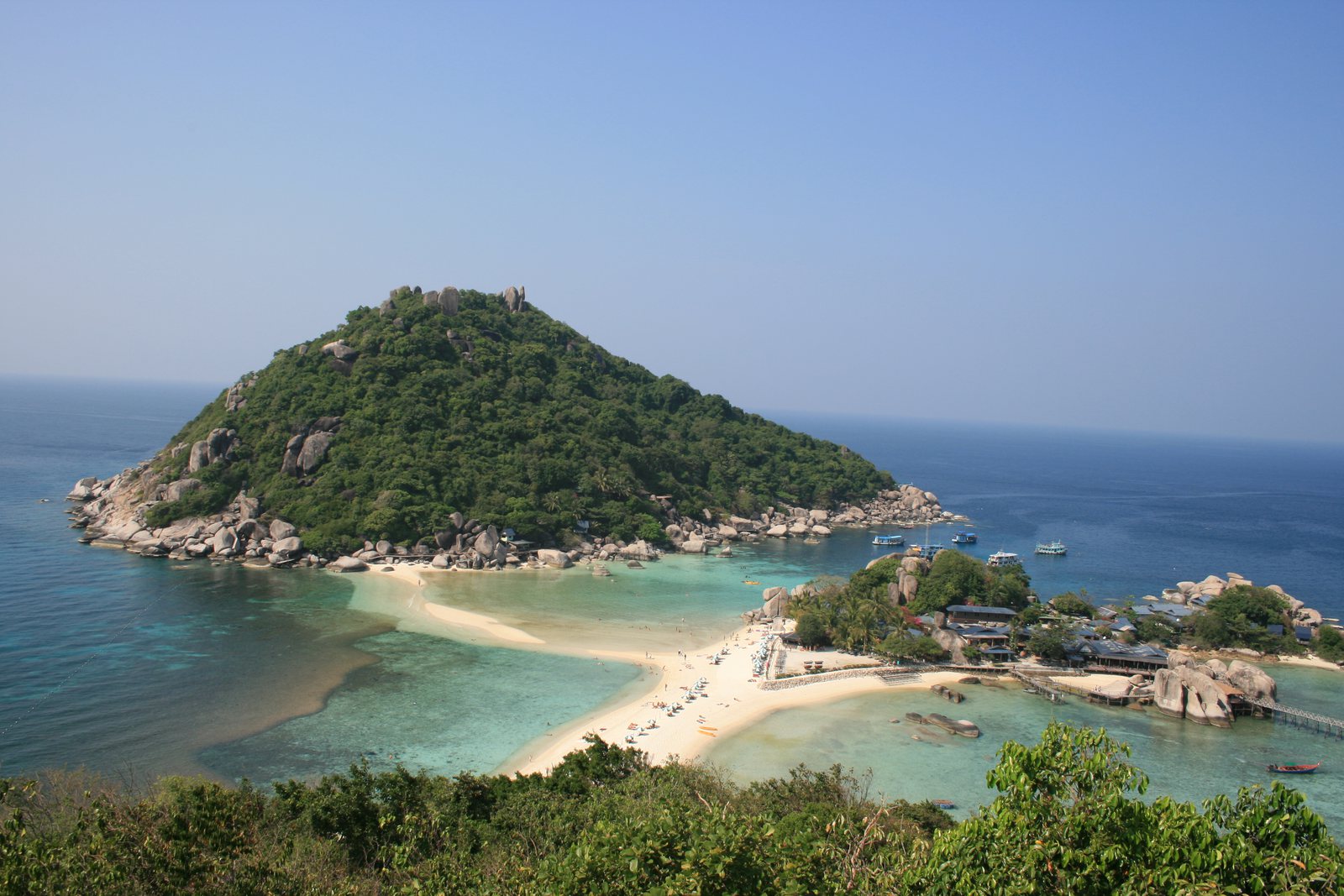
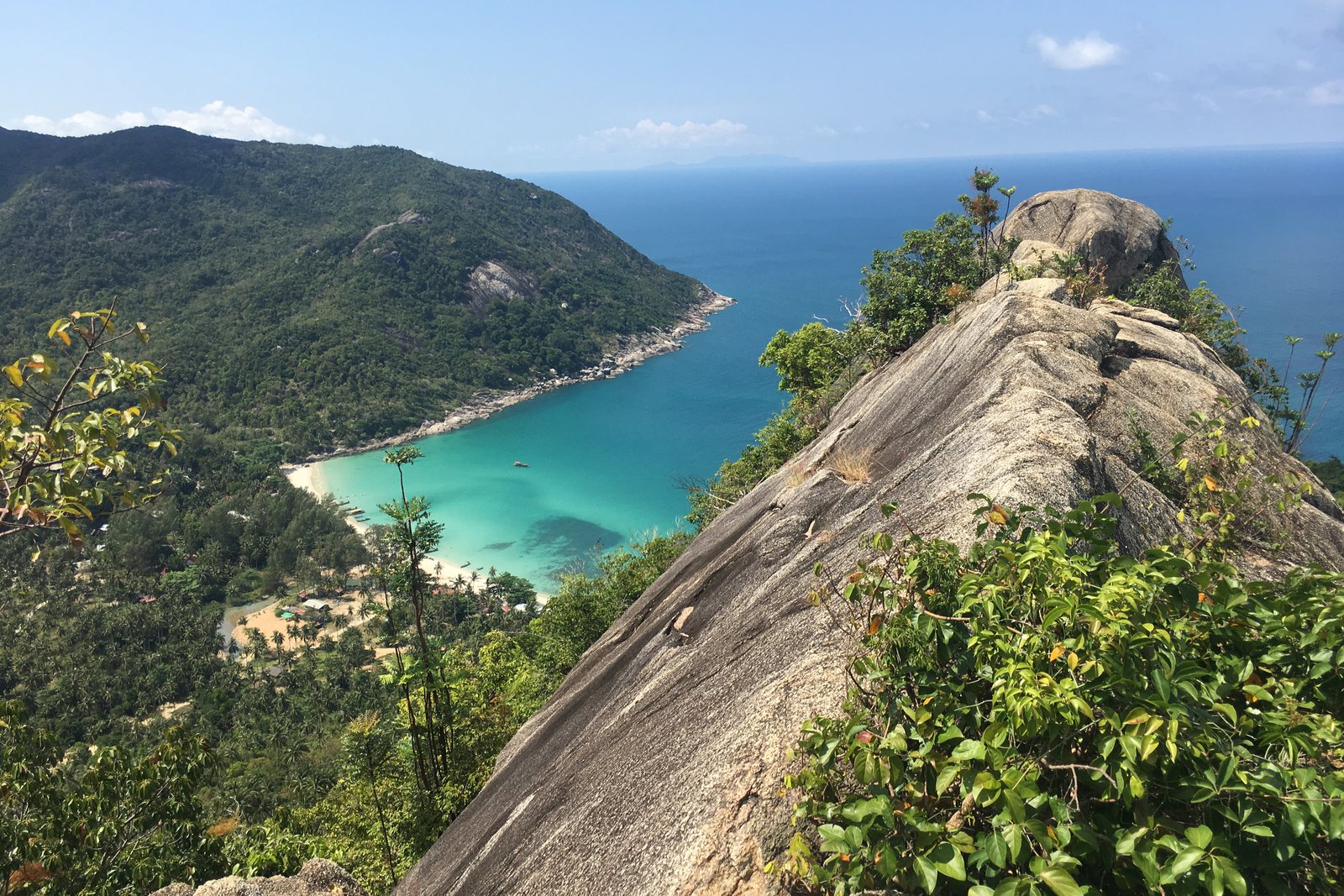
Koh Phangan is known abroad for the Full Moon Party on Haad Rin, and most of the island has nothing to do with it. Bottle Beach on the north coast is the classic hideaway, reached by boat from Chaloklum or a steep jungle trail. Around Thong Nai Pan the coast faces the sunrise — the place for vows at first light. On the north-west coast the islet of Koh Ma is tied to the beach at Mae Haad by a sandbar that surfaces at low tide, so the two of you can walk out across the water; the tide table decides when the session starts.
Every month around the full moon the party fills Haad Rin's Sunrise Beach with thousands of people and the ferries with passengers: choose days away from it. Phangan has no airport and is about half an hour by boat from Koh Samui. It follows the Gulf calendar — dependable from about January to August, driest February to April, wettest October to December, when rough seas can cancel the boats. See eloping on Koh Phangan.
Phi Phi: a beach before the day boats
The Phi Phi Islands are a ferry ride from Phuket or Krabi, and their problem is the day-trip boats. Phi Phi Don has no cars, and a longtail at first light gives you the bays without the crowds. For the vows, choose a Phi Phi Don beach the day boats don't reach, at dawn or in the last hour before sunset.
Phi Phi Leh is national park. At Maya Bay boats moor on the other side of the island and visitors walk in on a boardwalk; there is no swimming, time on the beach is limited, and the bay has closed every year for about two months (1 August to 30 September in 2025 and 2026) — check the current dates. Foreign visitors pay their own entrance fee, and photography done as paid work inside a park can need the park's permission and a fee of its own, which the photographer clears in advance. Maya Bay is a place to visit, not to stage vows. In the monsoon, from about mid-May to mid-October, the crossings can be rough.
Khao Lak: empty sand facing west
Khao Lak is the calm side of the Andaman: long beaches backed by forested hills, about an hour and a half by road north of Phuket airport, with room to walk for kilometres without a crowd. The beaches face west, so the last hour turns soft and gold at the waterline, with nobody to edit out behind you. Khao Lak–Lam Ru National Park protects the headland at the southern end, and park rules apply there too. The Similan Islands offshore, open from mid-October to mid-May, are a day out, not a ceremony spot. From May to October red flags go up on the beaches, and a red flag means no swimming, literally.
Chiang Mai: hills, forest and rice fields
Not every couple wants sand. The hills around Chiang Mai give you forest, temples in the trees and rice fields, green from about August and gold towards the harvest in late October. From November to January the mornings are cool enough for a layer and the skies are clearest; from about February to April smoke from seasonal burning hangs over the mountains, usually worst in March.
Temple ground is used only with the temple's permission, asked first: rules for ceremonies and shoots are set temple by temple. Loy Krathong and Yi Peng, usually in November, are beautiful and crowded, with sky lanterns banned in much of the city and releases held at organised events — check the current year's rules, and do not plan a lantern of your own.
A Thai-style day can start with a morning blessing by monks chanting, arranged through the venue or the temple. Shoulders and knees are covered, shoes come off before a hall, nobody points their feet at a monk, and a woman does not touch a monk or hand him anything directly. Ask before the photographer works during the chanting.
The shape of a two-person day
The sun rises and sets between roughly six and seven o'clock all year and climbs fast, so the soft light is short at both ends. The day that works: portraits or the blessing at sunrise, a long break through the midday heat, the vows in the last hour before sunset, and a few minutes of blue light after it.
Wear light fabrics that forgive wind and humidity, flat sandals for sand and boats, and bring a shawl for temples. Choose a weekday if you can. The weeks around Christmas and New Year are the busiest — book early — and Songkran, the Thai New Year, is a public holiday from 13 to 15 April, when nobody stays dry, cameras included. Keep a spare day for weather, and in the monsoon one before an onward flight. Leave your own drone at home — registration with NBTC and CAAT can take a visitor up to two weeks — and ask whether the photographer flies a registered one.
Planning an elopement photoshoot in Thailand
Choose the coast by the month, then the place: the Andaman from about November to April, the Gulf from about January to August, the north from November to January. An hour around sunset covers the vows and the portraits; two hours adds the boat; a longer day covers a morning blessing and the beach in the evening.
Tell the photographer what the day is before anything else — two people, vows, which moments are private. They know the tide, the boats and where a park permission is needed. The photographer confirms within 24 hours, payment is held until the photos are delivered, rescheduling for weather is free for both sides, and elopement packages show their own cancellation terms before you book. Read what an elopement photoshoot usually covers, check how it works, and browse photographers online.
Want professional photos in Krabi?
Browse portfolios, compare packages, and book a verified local photographer in minutes.