Bangkok Photo Spots Guide: Wat Arun from the river, Wat Pho at opening, Chinatown at night
Bangkok is a city you photograph around the heat. Its two good windows are short and they barely move: the old city on the east bank of the Chao Phraya from opening time until the tour groups and the high sun arrive, and the river from late afternoon until the temple lights come on. After dark there is a third, Chinatown, which hardly exists for a camera until the stalls are lit. What spoils a Bangkok session is the stretch in between — flat, hard light from mid-morning, pavements at their fullest — and a couple turned back at a temple gate for bare shoulders.
Wat Pho at opening time
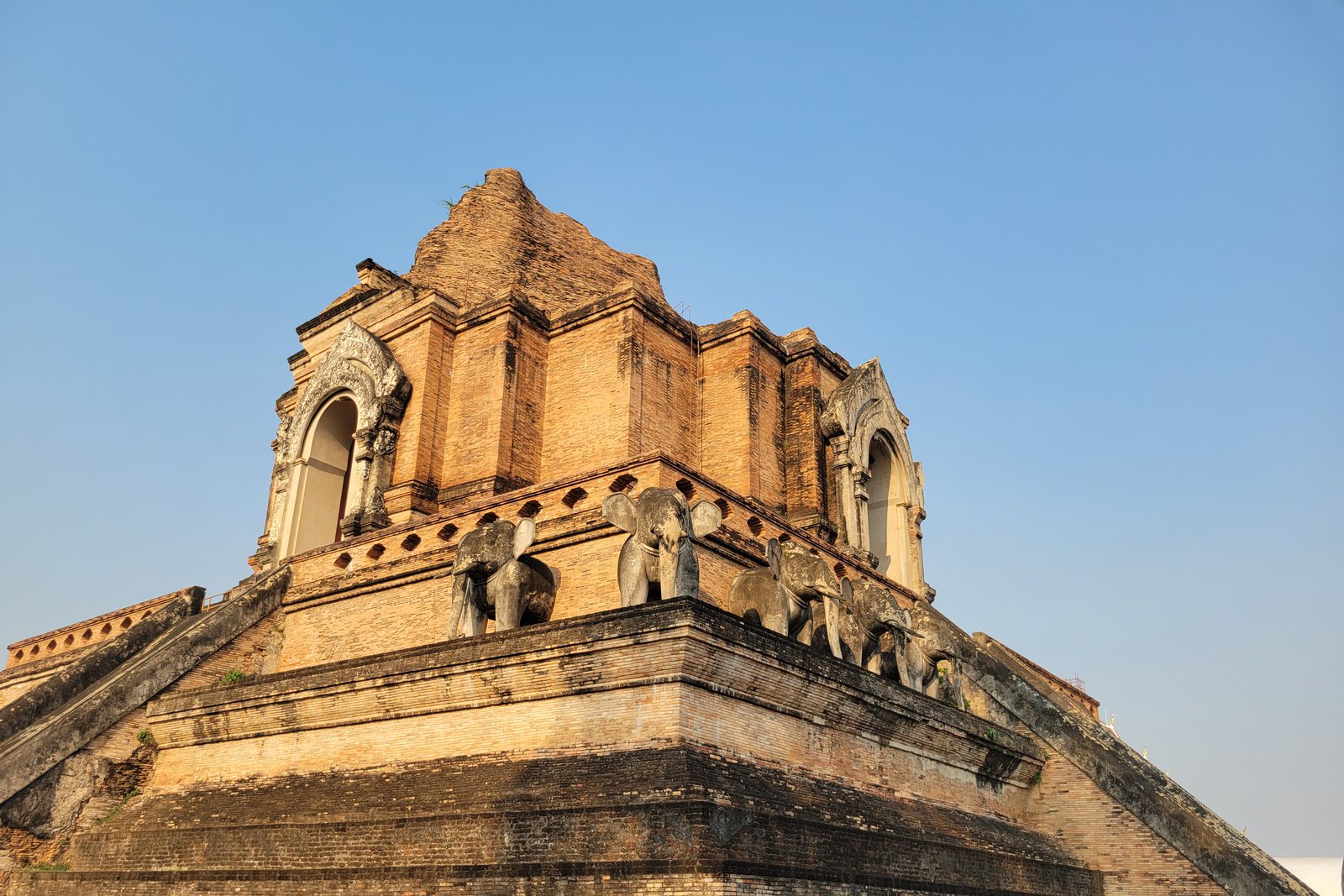
Wat Pho is the best argument for an early start. Its courtyards are a maze of chedis faced in glazed tiles, cloisters lined with seated Buddha images and gateways that frame one courtyard from the next, and for the first hour after the gates open they are close to empty. Check the hours the night before. A low sun catches the tiles from the side, which is when the colour reads; by the time the tour groups arrive, the light has turned hard and the shade has shrunk to the cloisters.
The temple's most famous image is the long reclining Buddha, covered in gold leaf, the soles of its feet inlaid in mother-of-pearl. Photograph it on its own: the hall is a place of worship, and a couple posing in front of the image is exactly what visitors are asked not to do. The couple frames belong outside, among the chedis and in the gateways.
Dress is checked at the gate: shoulders and knees covered for everyone, men included, and shoes off before entering any hall — slip-on shoes save time at every door. Foreign visitors pay an entrance fee. Never point your feet at a Buddha image or a monk, keep your head lower than the image when you sit, and keep the kiss and the lift for the street outside the walls. Voices stay low.
The Grand Palace, a short walk north, is the strictest site in the city: shoulders and knees covered, and no photography inside the chapel of the Emerald Buddha. It is not a place for a session. Rules for photographers are set temple by temple — one Bangkok temple banned wedding and commercial shoots outright in 2024 — so the photographer clears each site before the day, and any arranged shoot on temple ground starts with asking the temple.
The river as a moving backdrop
The Chao Phraya is not scenery but a working street. Express boats, cross-river ferries, longtails and strings of barges behind a tug cross the frame all day, and that traffic is the backdrop: a couple at the end of a pier with a boat sliding past behind them looks like Bangkok in a way no wall does. The piers on the old-city side are the easy places to stand, and a ride on the river is a session in itself.
Across the water, the khlongs of Thonburi are where the city began. A longtail turns off the river into canals lined with wooden houses on stilts, potted plants on the landings and small temples with steps down to the water. The light under the eaves stays soft most of the day, which makes the canals the answer to the bright hours. These are people's homes: the boat keeps moving, and nobody photographs into a window.
Wat Arun from the Tha Tien side
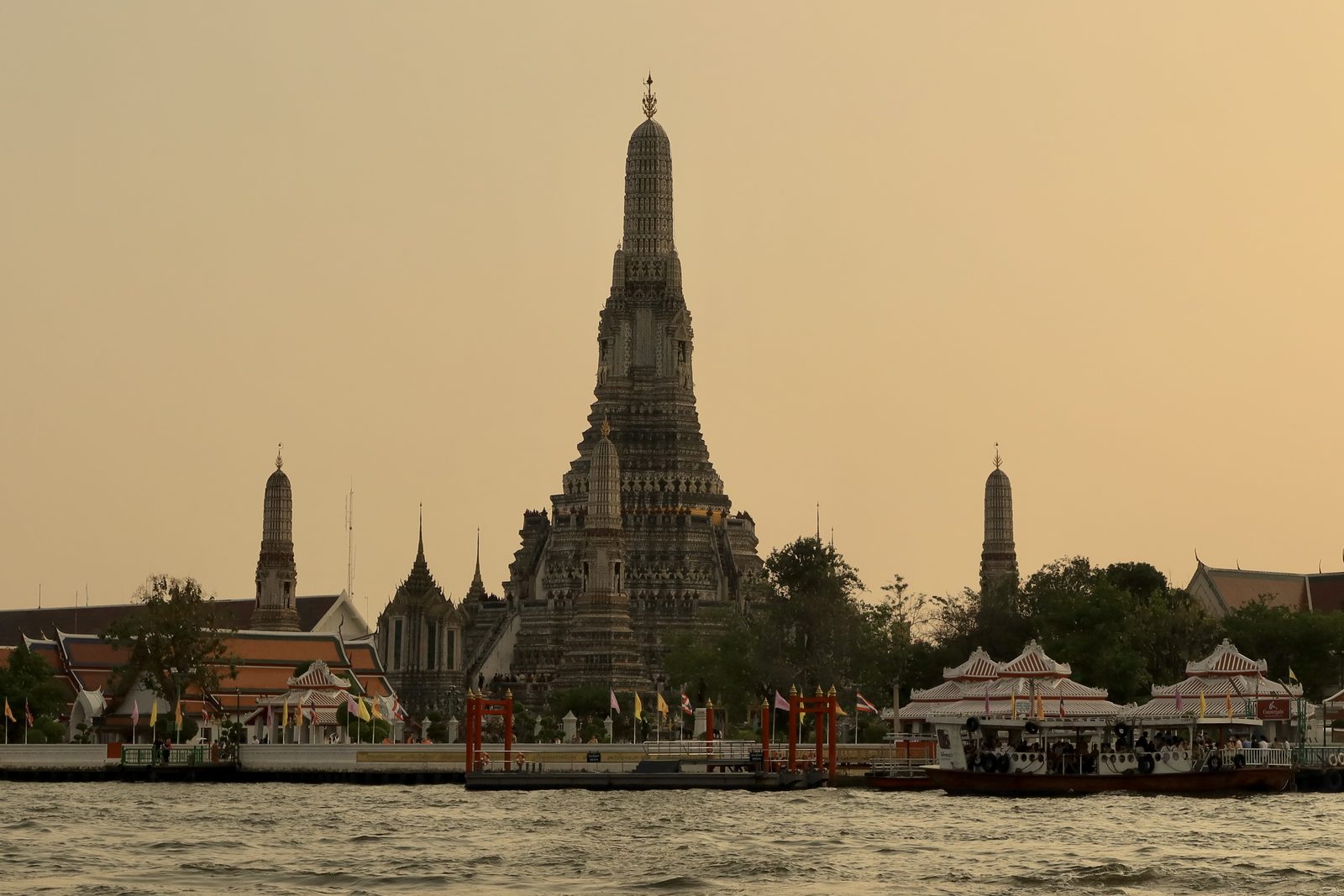
Wat Arun, the Temple of Dawn, is shot at sunset, and from across the river. Its central prang, studded with fragments of porcelain, stands on the west bank, so in the late afternoon the sun goes down behind it. From the riverside on the Tha Tien side, by Wat Pho, the temple turns to a silhouette against the sky — and then, as the sky goes blue, its lights come on. That second moment is the picture, and it lasts minutes. Be in place before it: the riverside fills.
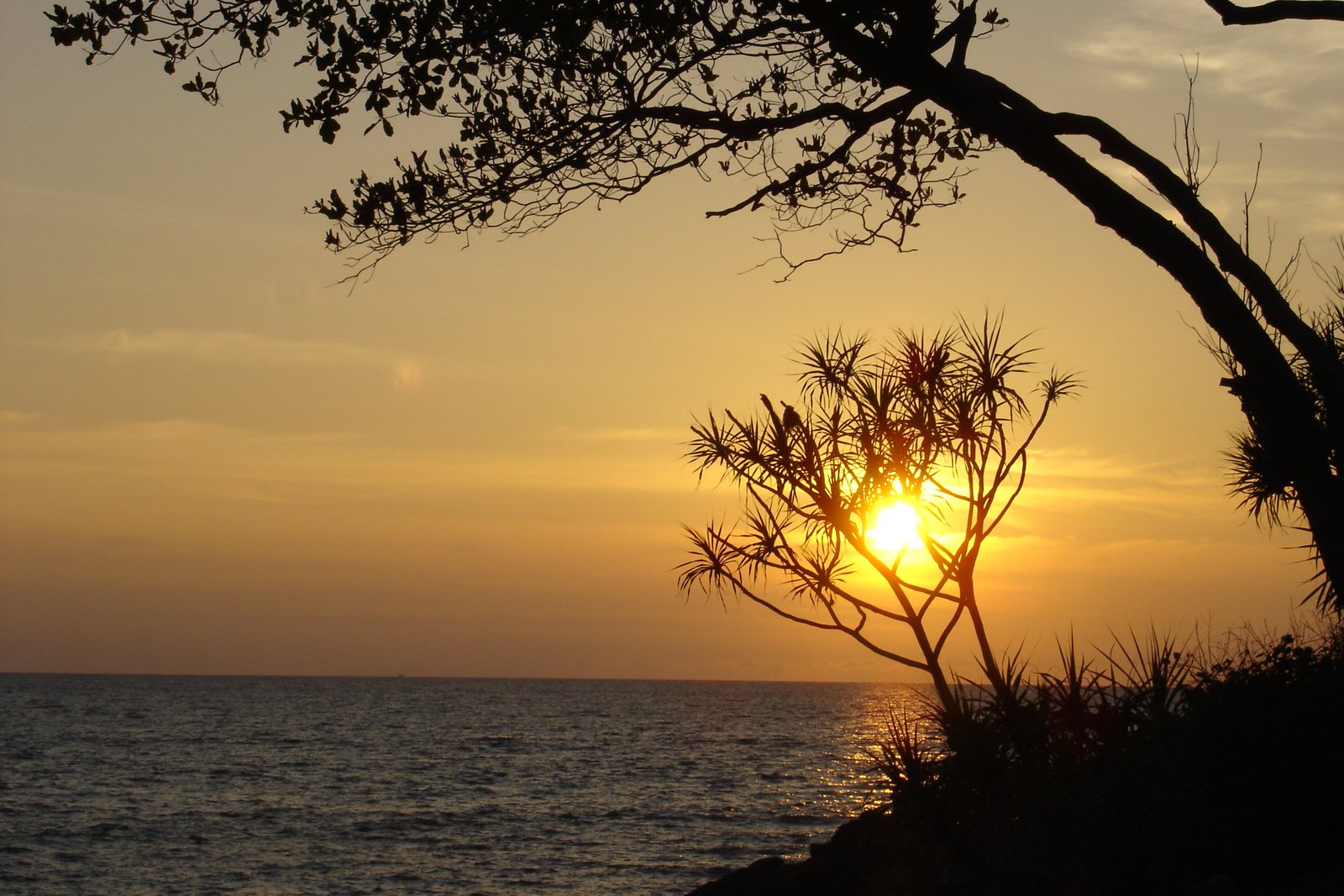
Sunset in Bangkok moves by only about an hour across the year, and the sun drops fast, so the photographer times the evening to the day rather than the season.
To shoot at the temple itself, the cross-river ferry from Tha Tien takes a few minutes. Go in the morning, when the sun is on the east face and the porcelain is lit from the front. Foreign visitors pay an entrance fee, and the dress rule is the same: covered shoulders and knees. Thai traditional dress is rented nearby, and temple rules apply in costume too; since January 2026 the temple has required photographers who work with costume-rental shops to complete its etiquette training. Check that it still applies when you book.
Phra Sumen Fort at dusk
When Tha Tien is crowded, go north to Banglamphu and the riverside park at Phra Sumen Fort, a whitewashed eighteenth-century bastion at the top of the old city. In the evening it belongs to joggers rather than tourists: open lawn, the white walls of the fort, the river behind, and an express-boat pier a couple of minutes away. It is the quiet alternative for a proposal in Bangkok.
Yaowarat and Talat Noi after dark
Yaowarat Road, the spine of Chinatown, is the city after dark: neon signs stacked over the street, gold shops, food stalls spreading across the kerbs, smoke from the grills catching the light. It is busy, loud and better at night than at any other hour. The traffic does not stop for photographs, so the frames come from the pavements and side lanes, never the road. Rain improves it: wet tarmac doubles every sign.
Talat Noi, a short walk towards the river, is the quieter half. Its lanes are old shophouses, workshops with engine parts stacked outside, murals and a Chinese shrine — one of the oldest neighbourhoods in the city, and still a working one. It photographs well at dusk. People live and work here: ask before photographing inside a workshop, and accept a no.
The skyline from the river is the finish. A boat after dark passes the towers lit along both banks: a session that began with Wat Arun at sunset ends on the water.
Ayutthaya, the day trip north
Bangkok's best day out for a camera is Ayutthaya, about an hour and a half north by road or rail. It was the capital of Siam for four centuries, until the Burmese army sacked it in 1767, and what survived is weathered red brick and pale stucco on an island where three rivers meet. At Wat Mahathat the sandstone Buddha head held in the roots of a tree is photographed on its own; visitors kneel or crouch so that no head in the frame is higher than the Buddha's, and the guards are firm about it. With little shade, it is a morning or late-afternoon place; the Ayutthaya page has the rest.
What the seasons change
November to February is the kind season: cool, dry air, clear evenings and the most comfortable temple mornings of the year. The weeks around Christmas and New Year are the busiest: book early. From March the heat builds to its peak in April; a session then is the first hour after sunrise or the last before sunset, and nothing in between. The rains run from about mid-May to mid-October and usually arrive as a heavy afternoon downpour rather than a grey day: plan around it, and use the hour after it, when the streets shine and the air is clean.
Two festivals change the city. Songkran, the Thai New Year, is a public holiday from 13 to 15 April: water is thrown in the streets, nobody stays dry, cameras included — choose a session away from the celebrations, or join in with the gear protected. Loy Krathong falls on the full moon of the twelfth Thai lunar month, usually in November, when small offerings are floated on the river and the banks are crowded; check the date for your year.
Leave your own drone at home: it needs registration with both NBTC and CAAT, insurance and approval before each flight, which can take a visitor up to two weeks, and it may not fly over towns or crowds without authorisation. Ask whether the photographer flies a registered drone.
Planning a Bangkok photoshoot
The start time is the decision. A morning session begins at Wat Pho's opening and is over before the heat; an evening session starts on the river in the late afternoon, catches Wat Arun as its lights come on and ends in Chinatown. Both suit a couples session in Bangkok. For a family, the morning version is Lumphini Park at first light, with monitor lizards on the lawns — wild animals, watched from a distance — then a longtail through the canals; see family sessions in Bangkok.
An hour covers one part of the city done properly; two hours covers the river at sunset and Chinatown after dark. The old city at eleven and Chinatown at two does not work: the light is wrong for both. Bring a light shirt or a sarong in a bag for the temple stops, shoes that slip off, and water.
A photographer who works the city regularly knows which pier gives the clean line to Wat Arun, which temple will say no and when the downpour usually comes — and rescheduling for bad weather is free for both sides. Read the destination page for Bangkok, see what a couples photoshoot usually covers, check how it works, and browse photographers online.
Want professional photos in Bangkok?
Browse portfolios, compare packages, and book a verified local photographer in minutes.