Ayutthaya Photoshoot Guide: the Buddha head in the roots, three chedis, a sunset by boat
Ayutthaya is the easiest way to put Thailand's history into a session without fighting Bangkok's crowds for it. The old capital of Siam sits on an island where three rivers meet, about 80 kilometres north of the city, and its ruins photograph in tones that flatter almost anyone: weathered red brick, pale stucco, saffron cloth draped over some of the Buddha images, green lawns between the temples. What spoils it is the sun. The ruins are open ground with almost no shade, so a session that drifts into the middle of the day ends in squinting and sweat — and one that forgets these ruins are still sacred ends with a guard stepping in.
An early start from Bangkok
Ayutthaya was the capital of Siam for four centuries, until the Burmese army sacked it in 1767, and it has been a UNESCO World Heritage site since 1991. What survived is spread across the island and the far banks of the Chao Phraya, Pa Sak and Lopburi rivers around it, so a session is a route between three or four places rather than one spot.
The drive from Bangkok takes about an hour and a half, depending on traffic, and trains run from the city too. To be at the first temple when it opens, leave Bangkok soon after dawn; to have both ends of the day — opening time and sunset — without a long drive on either side, spend a night in Ayutthaya. Most of the major ruins charge foreign visitors an entrance fee at the gate, and the hours are set site by site: check them before you go.
Wat Mahathat at opening: the Buddha head in the roots
Wat Mahathat holds the image most people come to Ayutthaya for: a sandstone Buddha head held in the roots of a fig tree. It is calm for the first hour, before the tour groups arrive, and the light under the tree is soft at that time of day.
This is the one place in Ayutthaya where the temple rules are enforced in front of you. The head is a sacred image, photographed on its own and never posed with — no couple beside it, no hands framing it, nobody leaning in for a selfie. Visitors kneel or crouch to take the picture so that no head in the frame is higher than the Buddha's, and the guards are firm about it, with photographers too.
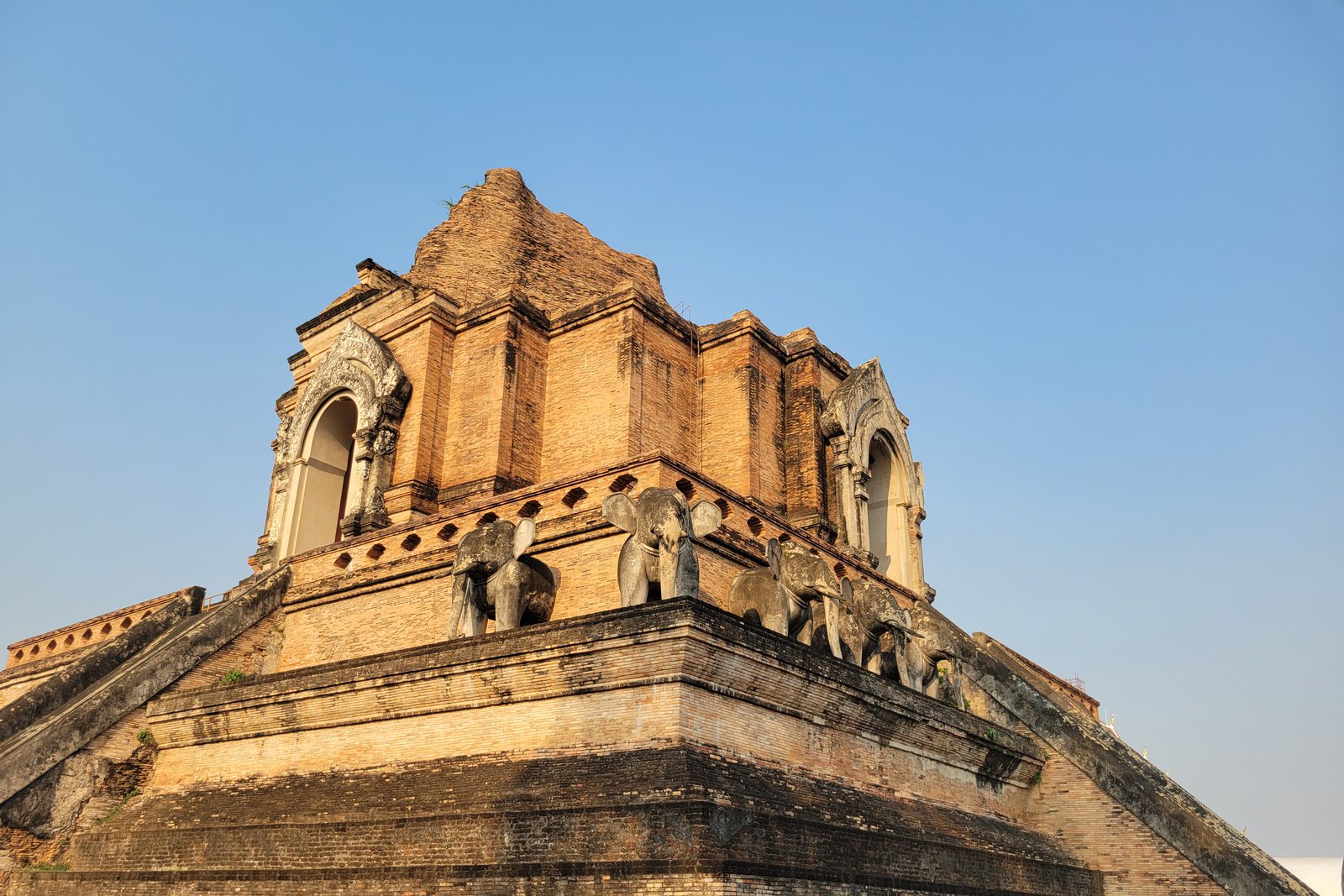
The session's own frames belong to the rest of the ruin: the rows of brick chedis and prang, the weathered seated Buddhas along the old walls, the long brick paths where the morning sun comes in low and turns the brick from brown to orange. Shoulders and knees covered, here and everywhere monks are present.
Wat Phra Si Sanphet: three chedis in a line
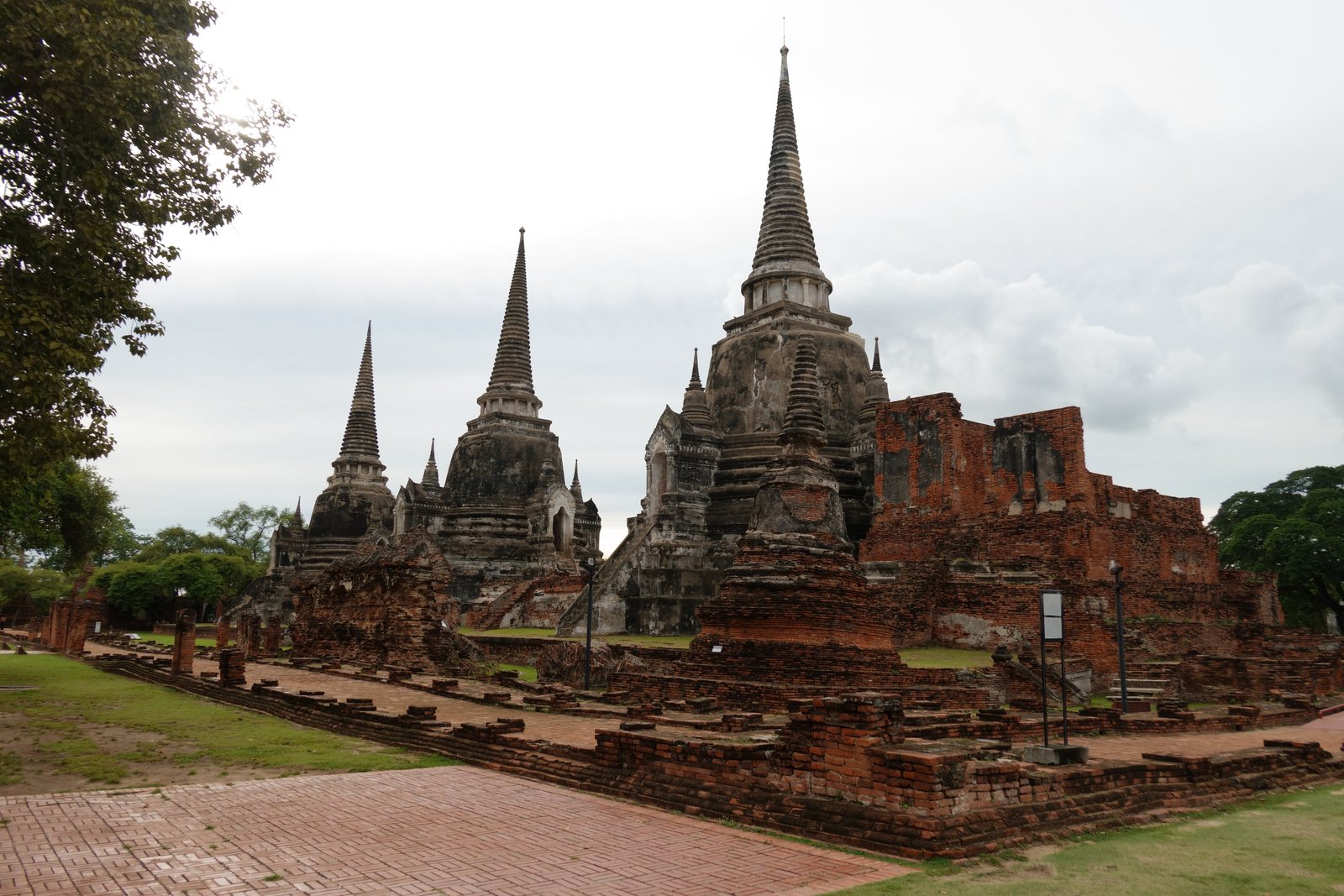
Wat Phra Si Sanphet is the frame that says Ayutthaya in one picture: three tall bell-shaped chedis standing in a row on a brick terrace, with lawns in front of them. It wants a wide lens and some distance, and the two of you small in the frame rather than filling it — the scale is the point. Come early in the morning or in the last two hours of the day, when the brick turns warm; at noon the terrace is a griddle and the light is flat.
The chedis are a World Heritage monument, not a set. Nobody climbs the terraces or the brickwork for a picture, here or at any other ruin, and a photographer who suggests it is one to avoid. The lawns in front and the paths around the terrace give every angle the session needs.
Wat Chaiwatthanaram at sunset
On the west bank of the river, outside the island, Wat Chaiwatthanaram is where the day ends. Its central prang, a tall tower in the Khmer style built in the seventeenth century, stands on a raised terrace ringed by smaller towers and a gallery of seated Buddha images, many of them damaged. In the last hour the sun goes down behind it, and the towers turn from orange to a dark outline against the sky.
It is the busiest ruin at the end of the day — this is the sunset frame everyone knows — so arrive early enough to walk the grounds while the light is still warm on the brick, and keep the silhouette for last. Some couples come in rented Thai dress for exactly this hour. The Buddha images in the gallery are photographed on their own; the two of you stand on the lawns and the paths, not on the terraces.
The island from a longtail
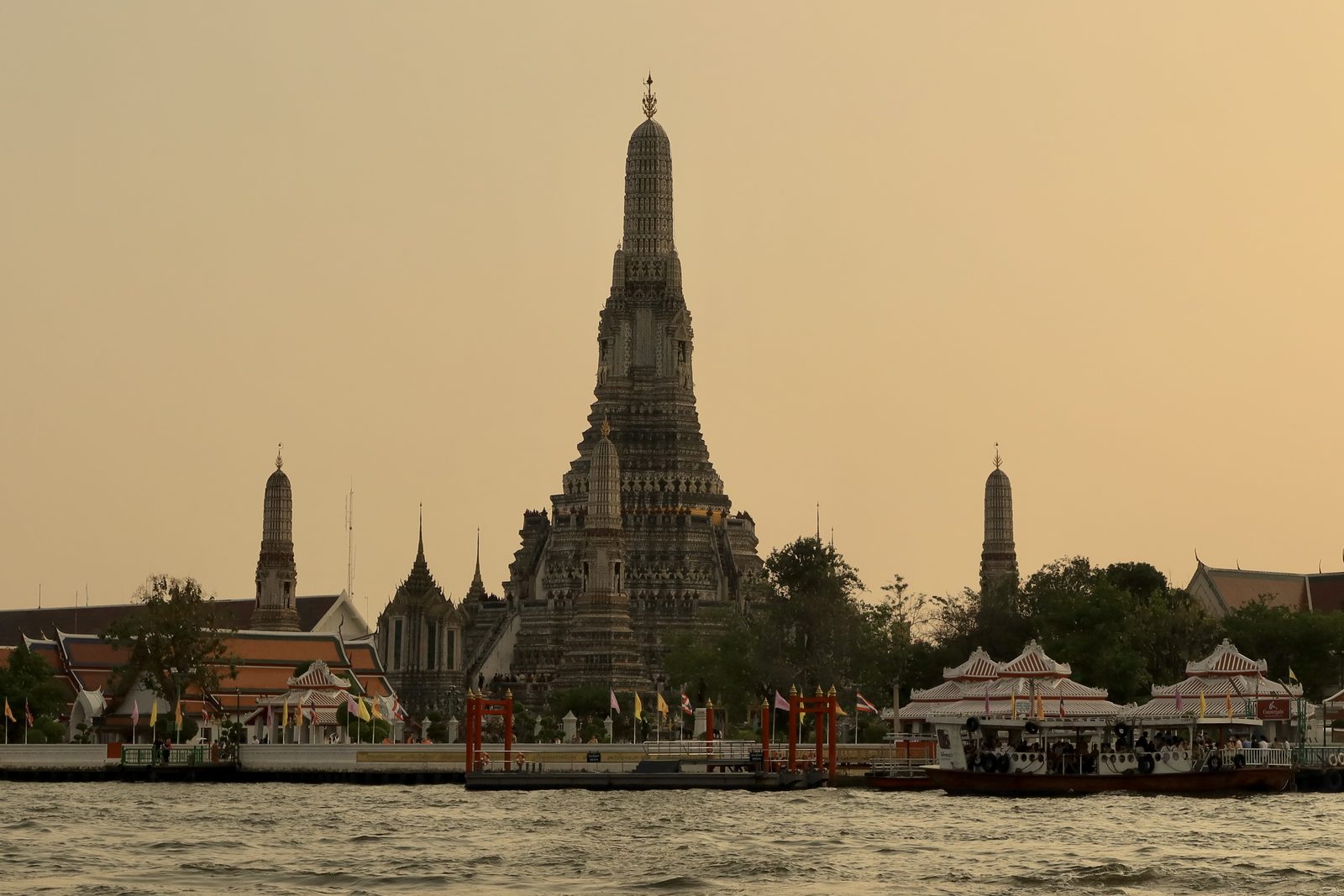
A longtail boat around the island at the end of the day shows Ayutthaya from the water: ruins and working riverside temples slide past, along with riverside houses, barges and the traffic of three rivers. A loop takes about an hour, and Wat Chaiwatthanaram stands right on the bank, which makes it the natural turning point for a boat at sunset.
On a boat the photographer works close — two people at the bow, the river behind them — and the light comes off the water low and warm. It is also the quietest way to propose in Ayutthaya: no audience, the ruins passing in the last light. Ask about life jackets, and in the late rainy season expect the river to run high and fast.
Bicycles, lawns and the reclining Buddha
Between the ruins the island is flat, with wide lawns and quiet roads, and rented bicycles are how many visitors get around — which makes the bicycle a frame of its own: two people riding between brick chedis, or children pedalling across a lawn with a ruin behind them. For a family session in Ayutthaya this is the format that works: flat ground, room to run, short hops between sites. Carry water for everyone, and keep everyone off the brickwork.
On the western side of the island, Wat Lokayasutharam has a long reclining Buddha lying in the open air, often draped in saffron cloth. It is a sacred image like any other: photographed on its own, never climbed on or posed beside, feet never pointed towards it. Where a temple is still in use, a session is quieter, more distant and shorter than among the open ruins, and kisses and lifts belong outside the temple walls.
Thai dress among the ruins
Renting Thai traditional dress near the temples and walking the ruins in it has been popular since the 2018 TV drama Love Destiny. It makes a striking session — silk and gold against weathered brick — and two things are worth knowing. Temple rules apply in costume: covered shoulders, no climbing, no posing with sacred images. And the costumes are warm, so wearing them through the hottest hours of the day is the most common mistake.
Dressing takes time as well, so leave room for it before the light you want. The photographer should know where the rentals are and how long dressing usually takes, and fit it into the route rather than the other way round.
Heat, rain and the months that work
The cool months from about November to February are the most comfortable and the busiest; book them early, above all around Christmas and New Year. From March the heat builds to its peak in April, and the open ruins become hard going by mid-morning — plan for the first hours after opening or the last two before sunset, and nothing in between. In mid-April, Songkran, the Thai New Year, is a public holiday from 13 to 15 April: water is thrown in the streets, nobody stays dry, cameras included.
The rains run from about mid-May to mid-October, usually as a heavy afternoon downpour rather than a grey day; a morning session is the safer bet, and the wet season leaves the lawns at their greenest. Late in the rains, around September and October, the rivers can run high, and in wet years floodwater has reached the riverside temples — if your trip falls then, check the news the week before. The sun rises and sets between roughly six and seven all year and climbs fast, so the soft light at either end is short.
Drones are hard for a visitor in Thailand — registration, insurance and approval before each flight — and heritage sites add rules of their own. Ask whether the photographer flies a registered drone rather than bringing your own.
Planning an Ayutthaya photoshoot
Think in two windows, not one long session: an hour at opening (Wat Mahathat and Wat Phra Si Sanphet) and an hour and a half to sunset (Wat Chaiwatthanaram and the boat), with the middle of the day for lunch, shade or the road. A day trip from Bangkok holds one of them comfortably; a night on the island gives you both. Either suits an engagement session in Ayutthaya — see what an engagement photoshoot usually covers.
Bring a light layer that covers the shoulders, trousers or a skirt past the knee, shoes that slip off, a hat and more water than seems reasonable. If you want Thai dress, say so when you book, so that dressing time goes into the plan.
A photographer who works here knows which gate opens first, where the guards draw the line at Wat Mahathat and which bank gives the best sunset that month. Read the destination page for Ayutthaya, check how it works, and browse photographers online.
Want professional photos in Ayutthaya?
Browse portfolios, compare packages, and book a verified local photographer in minutes.