Best Photo Spots in Phuket: the Old Town at dawn, the bay viewpoint and west-coast sunsets
Phuket is big enough to hold several different sessions, and the mistake is to treat it as one beach. It sorts by hour and by coast. Morning belongs to Old Phuket Town on the island's east side, where the pastel shophouses are calm before the shops open; late afternoon belongs to the west coast, a chain of bays facing the Andaman with the sun going down straight into the sea. In between is the island at its least photogenic: flat, harsh light from mid-morning and the beaches at their fullest. And the season decides more than the hour, because from about mid-May the sea itself changes.
Old Phuket Town before the shops open
The Sino-Portuguese shophouses of Thalang Road and Soi Romanee were built in the tin-mining boom and restored in pastel colours, with shuttered upper windows and shaded walkways along the front. Soi Romanee, a short lane off Thalang Road, is the frame most people come for: a run of brightly painted fronts that reads best looking straight down its length. Early morning is the time, while the shutters are still down and before the delivery vans and the first visitors; the light in the lane stays soft until the sun climbs, and turns gentle again in the late afternoon.
This is a street people live on, not a set. Doorways stay clear, the steps in front of a house belong to whoever lives there, and a resident sweeping a shopfront is not part of the session unless they say so. The Old Town works in any season, which makes it the wet-day plan B for the whole island. On Sunday evenings Thalang Road turns into a walking-street market (check that it is running): lively and fun, but not the evening for clean frames.
The Karon Viewpoint over three bays
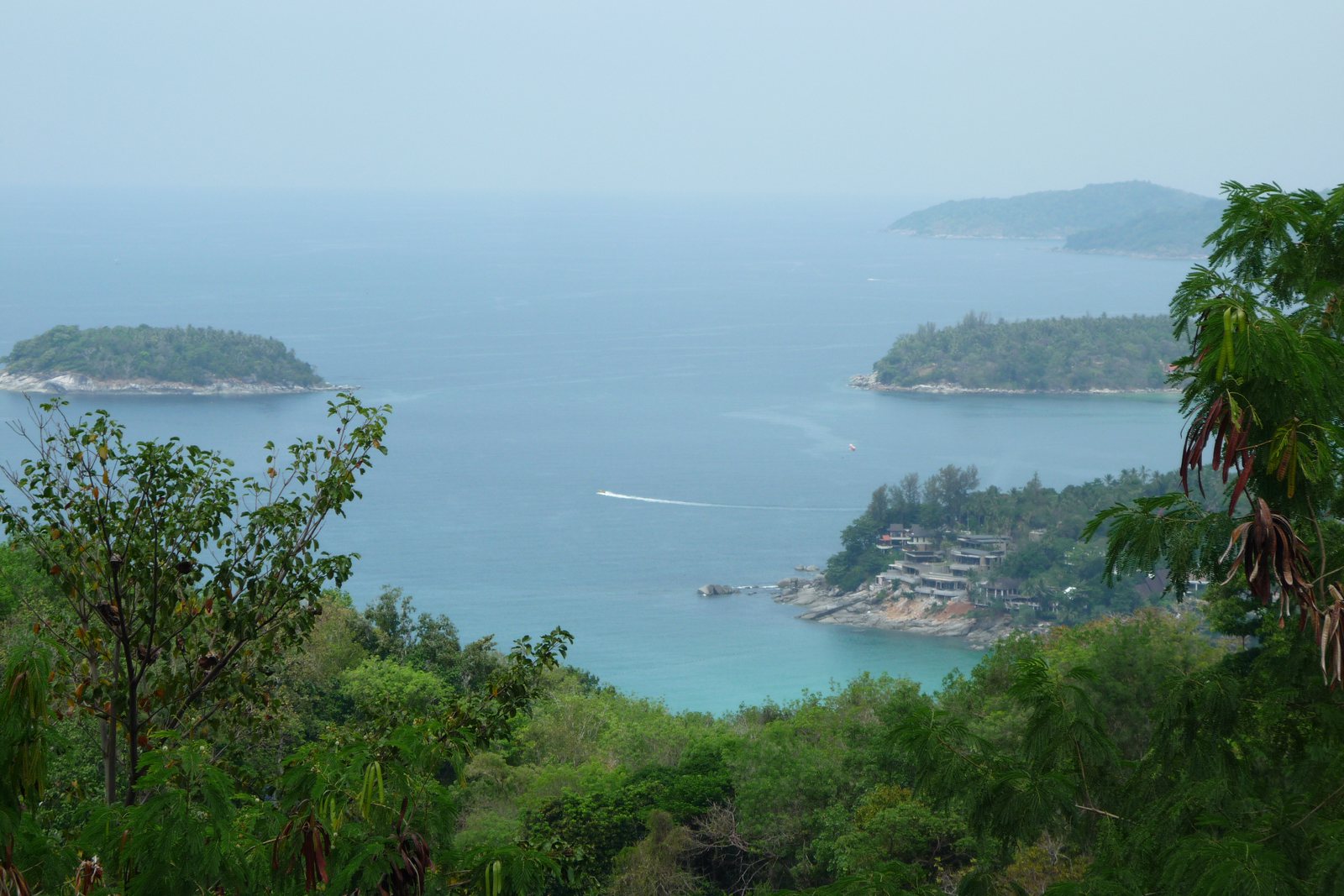
The viewpoint everyone calls Karon is not above Karon at all. It sits on the hill road between Kata Noi and Nai Harn and looks north along the coast over three bays at once — Kata Noi below, then Kata, then Karon. It is a roadside platform rather than a park and a regular stop for island tours, so it is quiet early and at its best in the late-afternoon light. Treat it as a fifteen-minute stop on the way south rather than a session of its own: one wide frame with the coast behind you, then on to the sand.
Kata, Karon and the coves between
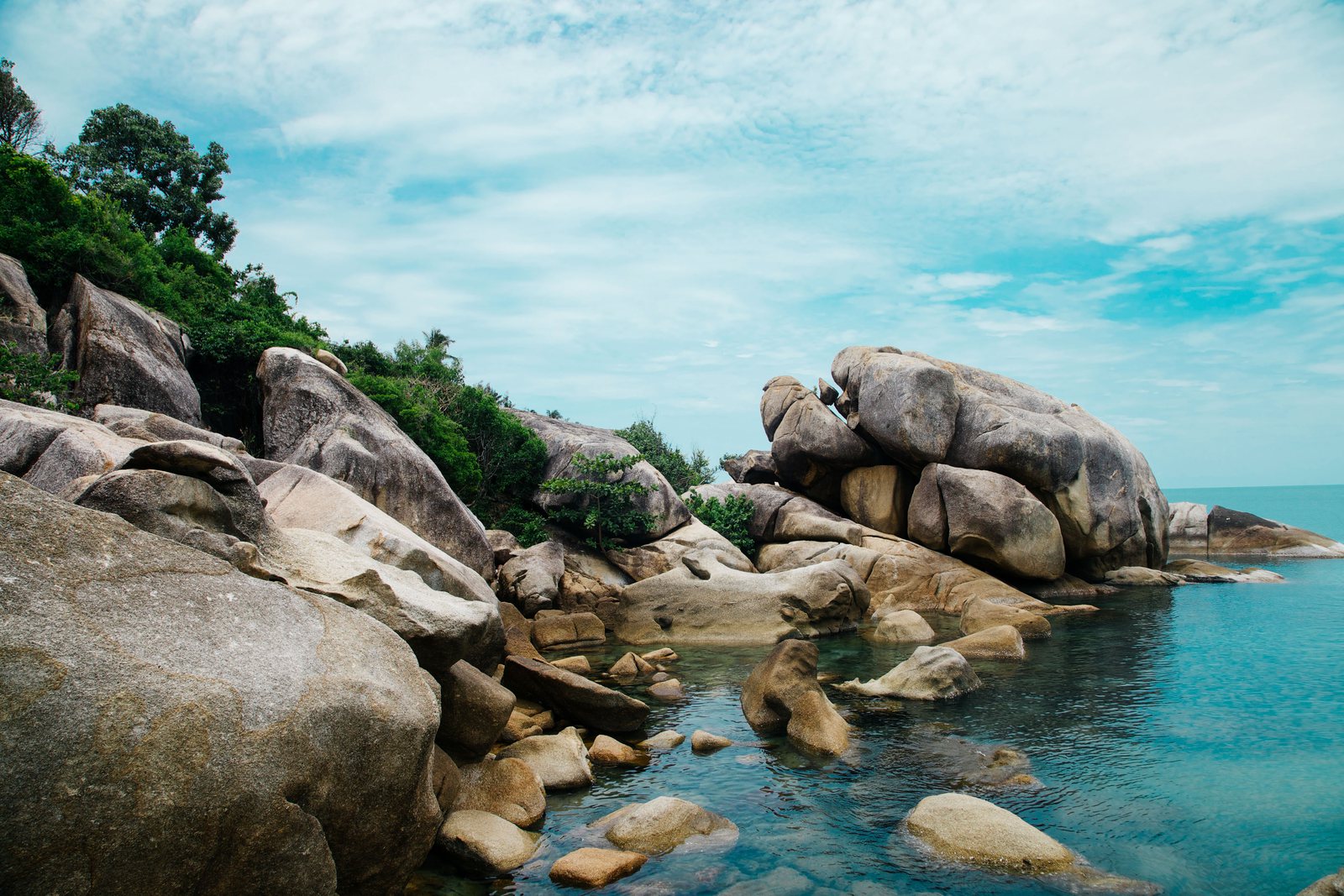
The west coast is where Phuket's sessions end. Kata, Karon and the smaller coves between them face the Andaman, so in the last hour before sunset the water turns gold and the sun drops straight into the sea. In the dry season the sea is calm and clear enough to wade into for a frame, and wet sand at the water's edge doubles the sky. The busiest stretches fill up in high season, so the photographer works the ends of the beaches and the coves where the sand is empty, and frames out to sea rather than back towards the road.
Kata Noi, the smallest of the three bays, is the easiest to keep clean. Karon is long and open, good for a walking frame that needs distance. A sunset session on any of them is best started about an hour before the sun touches the horizon: the light worth having comes in the second half of that hour and the first minutes after.
Nai Harn and Ya Nui in the south
The south of the island is quieter. Nai Harn is a wide bay with green hills around it and room for children to run, and Ya Nui, a small cove just north of the cape, has longtails pulled up on the sand — the frame that says Andaman without saying resort. Both work for a couples session in Phuket and for families, and both are a short drive from Promthep Cape, which makes them the natural answer to the island's most crowded sunset.
Promthep Cape, the famous sunset
Laem Promthep, Promthep Cape, at the island's southern tip, is where the day traditionally ends: the sun going down over the Andaman beyond a long rocky headland. It is also the busiest place on the island at that hour, and the crowd thins only once the sun has set. There are two honest ways to use it. Arrive well before sunset and accept company in the frame, or take the sunset from Ya Nui or Nai Harn below and come up to the cape afterwards, when most people have left and the sky still holds its colour. For a proposal it is the hardest place in Phuket to keep a secret.
Phang Nga Bay by boat
North-east of the island, the limestone towers of Phang Nga Bay rise straight out of green water — a full boat day rather than a session, from the piers on Phuket's east coast. The bay is a national park: foreign visitors pay its entrance fee, and a professional shoot inside it can need the park's permission, which the photographer clears in advance. The famous islets are where every tour boat goes, so an early start buys the quieter channels. In the monsoon, boats are cancelled at short notice. Plan no session for the evening after a boat day: sunburn and salt show in every frame.
Beyond the island: Phi Phi, Krabi and Khao Lak
Phuket is the base for the rest of the Andaman. The Phi Phi Islands are a ferry ride away, and the way to beat the day boats there is to sleep on the island; Maya Bay is run under strict national-park rules and has closed every year for about two months (1 August to 30 September in 2025 and 2026), so check the current dates. Across the bay, Krabi is limestone cliffs and longtails, with Railay reachable only by boat. North of the airport by road, Khao Lak has long, empty west-facing beaches, and the Similan Islands offshore, open from mid-October to mid-May.
The monsoon and the dry season
From about November to April the Andaman coast is dry, calm and clear: flat sea, clean horizons, the season the west coast is built for. The weeks around Christmas and New Year are the busiest of the year, so book early. From about mid-February to mid-May the heat builds, April the hottest month, and sessions move to the first and last hours of the day.
The southwest monsoon runs from about mid-May to mid-October, usually wettest in September. It brings big surf and heavier rain, and a red flag on a west-coast beach means no swimming — literally, not as advice; when the flags are up, the photographer keeps the session on the sand. Boat trips are cancelled at short notice, so leave a spare day before an onward flight. The same months give the greenest hills, the emptiest beaches and dramatic skies between the showers, and the Old Town is always there as the plan B. Rescheduling for bad weather is free for both sides.
Drones are hard for a visitor. Every drone has to be registered with both NBTC and CAAT, insured and approved before each flight, and none may fly within nine kilometres of an airport without approval — which rules out the beaches around Phuket's, in the island's north-west. Ask whether the photographer flies a registered drone rather than bringing your own.
Planning a Phuket photoshoot
Pick one half of the day. A morning in the Old Town and a sunset on the west coast are two different sessions with a drive across the island between them; squeezing both into one hour does neither justice. For a honeymoon the sunset is usually the one — see what a honeymoon photoshoot covers — and the Old Town makes a good second session on another morning.
An hour covers one beach at sunset or the Old Town done properly. Ninety minutes gives the viewpoint and a beach. Keep the session away from the evening after a boat trip and away from the day of a flight, and in the monsoon months give it a spare evening.
A photographer who works the island knows which cove stays empty at sunset in high season, when the flags are up and which lane in the Old Town has the light at eight. Read the destination page for Phuket, check how it works, and browse photographers online.
Want professional photos in Phuket?
Browse portfolios, compare packages, and book a verified local photographer in minutes.