Koh Phangan Photoshoot Guide: the quiet island away from the Full Moon Party
Koh Phangan is known abroad for one thing, and most of the island has nothing to do with it. The Full Moon Party fills Haad Rin's Sunrise Beach every month; away from that south-eastern tip, Phangan is green, hilly and slow, with coves reached by dirt road or longtail boat and long stretches of sand with nobody on them. Three things decide a session here, and none of them is the camera: the date, because of the moon; the tide, because of the sandbar at Koh Ma; and the transport, because the roads to the best bays are steep. Get those three right and the island does the rest.
The Full Moon Party, and how to plan around it
Every month around the full moon, the party takes over Sunrise Beach at Haad Rin: thousands of people, full ferries and minimum stays at the hotels nearby. The full moon moves through the calendar, so look up the dates that fall in your trip before you book anything — never assume.
Unless the party is the shoot, plan around it. Avoid travelling on the ferries in the days around it, keep sessions well away from Haad Rin on those nights, or simply stay on the north and west coasts, which have the empty sand and, on the west, the sunsets. The rest of the month Haad Rin is an ordinary beach town, and the rest of the island barely notices the party at all. What you should not do is find out on arrival.
Bottle Beach and the ridge above it
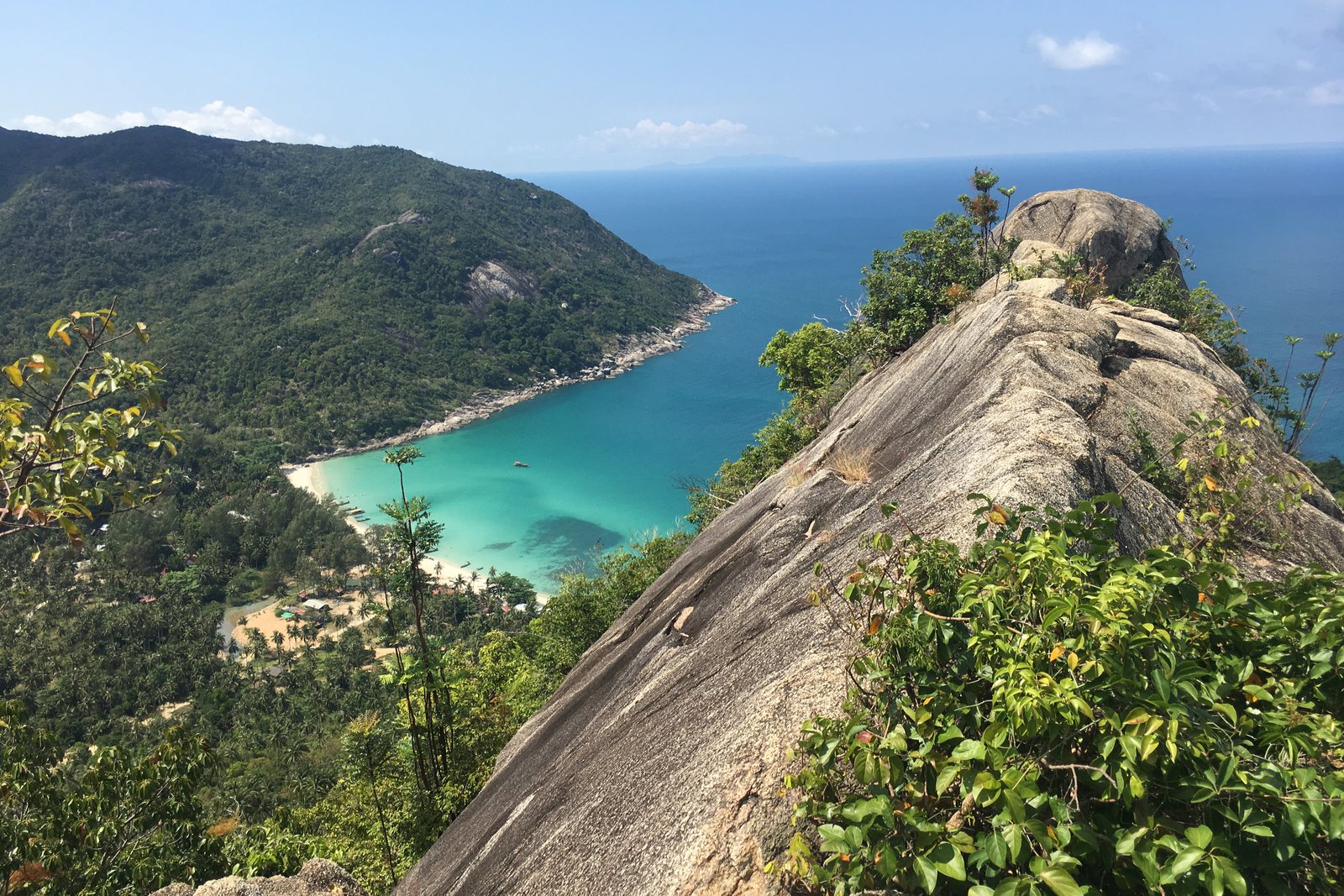
Bottle Beach, on the north coast, is the island's classic hideaway: a single curve of sand between jungle-covered headlands, reached by boat or on foot. The easy way in is a longtail from Chaloklum, the fishing village along the coast, a ride of about a quarter of an hour; the hard way is a steep jungle trail. Agree the boat back before you go out, because there are fewer of them late in the day.
Above the bay, a viewpoint on the ridge looks down on the whole curve of the beach, and it is the frame the island is known for. The climb is steep and the rock at the top is small: proper shoes, water, and the dress or the shirt in a bag until you are up. The bay faces north, so the sun sets to one side rather than into the sea; it is a place for the morning and the golden hour, and for a small ceremony on sand that is reached mostly by boat.
Koh Ma and the sandbar at Mae Haad
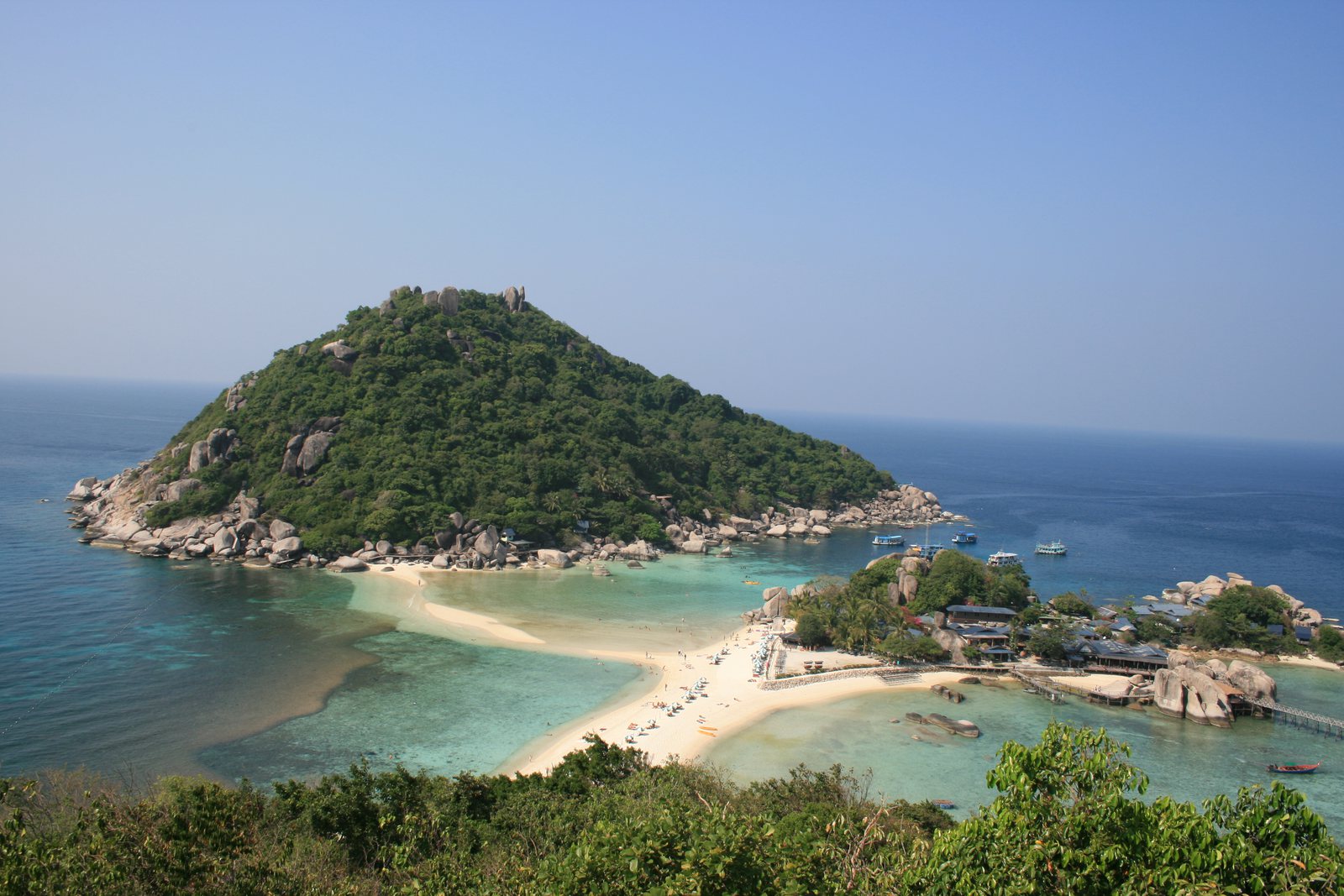
On the north-west coast, the islet of Koh Ma is tied to the beach at Mae Haad by a sandbar that surfaces at low tide, so a couple can walk out across the water. It is one of the most distinctive frames in the Gulf, and the tide table decides when the session starts, not the sunset. On some days low water falls in the golden hour; on others it falls at noon, and then the answer is another day or another beach. The photographer reads the tide for your dates before proposing a time.
The water on either side is shallow reef: walk on the sand, never on the coral. For a proposal on Koh Phangan, the sandbar as the water drops away is hard to beat — two figures out on a strip of sand with the sea on both sides. For a family, the walk out feels like an expedition to a child.
Thong Nai Pan, facing the sunrise
In the north-east, the two bays of Thong Nai Pan face the sunrise. In the dry months the sand is soft and the water calm, and at first light the bay is lit from the sea, with the jungle hills behind still in shadow. It suits a sunrise elopement or a family that wakes early anyway.
The roads to the north-east bays are steep and winding, so the photographer plans the transport. A scooter is not how anyone should arrive at a session in a dress, and it is not how anyone should leave one after dark.
Haad Yao and Haad Salad for the sunset
The west coast is where Phangan's evenings end. Haad Yao and Haad Salad face the sunset, with the sun going down into the sea; Haad Yao has soft sand and calm water in the dry months, and both are far enough from Haad Rin to be quiet on a party night. A sunset session is best started about an hour before the sun touches the horizon: the light worth having comes in the second half of that hour and the first minutes after it.
Ang Thong by boat
West of Samui, Ang Thong's limestone islands — forty-two of them, rising out of green water — make a full boat day rather than a session, with a steep climb to the viewpoint over the archipelago. It is a national marine park: foreign visitors pay an entrance fee, a professional shoot inside it can need the park's permission, which the photographer clears in advance, and sunscreens containing certain coral-damaging chemicals are banned in Thailand's marine parks, so read the label. The park closes for several weeks around November and December each year; check the current dates. Plan no session for the evening after the boat day: sunburn and salt show in every frame.
Eloping on Koh Phangan
Phangan is the easy add-on to Samui for an elopement or a honeymoon that wants jungle and empty sand rather than a resort lawn: a ceremony on a north-east bay or on Bottle Beach, portraits on the sandbar, and the west coast for sunset. See what an elopement photoshoot usually covers, and elopements on Koh Phangan.
The legal side is separate from the beach. A marriage in Thailand is registered at a district office (amphoe); foreigners first get an affirmation of freedom to marry from their own embassy, translated into Thai and legalised by the Ministry of Foreign Affairs. Each embassy sets its own process, so check yours early. Since January 2025 the same applies to same-sex couples. Many couples register at home and keep the Thai day for the ceremony and the photographs. Ceremonies are arranged by the venues, so check before you go.
Getting there, and the Gulf's calendar
Phangan has no airport. It is about half an hour by boat from Koh Samui, which has one, and boats also come from the mainland and from Koh Tao to the north. Rough seas from about October to December can cancel the boats, so leave a spare day before an onward flight.
The island runs on the Gulf's calendar, not the Andaman's. The best weather is from about January to August, the driest months about February to April, and the heaviest rain falls from about October to December, with November usually the wettest — which makes Phangan the summer answer while the Andaman coast is in its monsoon. The weeks around Christmas and New Year are the busiest of the year even though they fall at the wet end of the Gulf's calendar, so book early and keep a spare day. In the hot months, about mid-February to mid-May, sessions move to the first and last hours of the day.
Leave your own drone at home: it needs registration with both NBTC and CAAT, insurance and approval before each flight, and it may not fly over crowds without authorisation, a full-moon beach included. Ask whether the photographer flies a registered drone.
Planning a Koh Phangan photoshoot
Choose the date before the beach: look up the full moon, then the tide at Mae Haad, and build the session on whichever of the two coasts the day suits — sunrise in the north-east, sunset on the west. An hour covers one beach properly; Bottle Beach with the viewpoint is closer to half a day once the boat is counted. Rescheduling for bad weather is free for both sides, which matters in the last months of the year.
A photographer who works the island knows which nights to avoid, when the sandbar is out and which road is passable after rain. Read the destination page for Koh Phangan, check how it works, and browse photographers online.
Want professional photos on Koh Phangan?
Browse portfolios, compare packages, and book a verified local photographer in minutes.